A Los Angeles Home Overlooking the Hollywood Sign
Editor Heeseung Shin | Photographer Yerin Mok
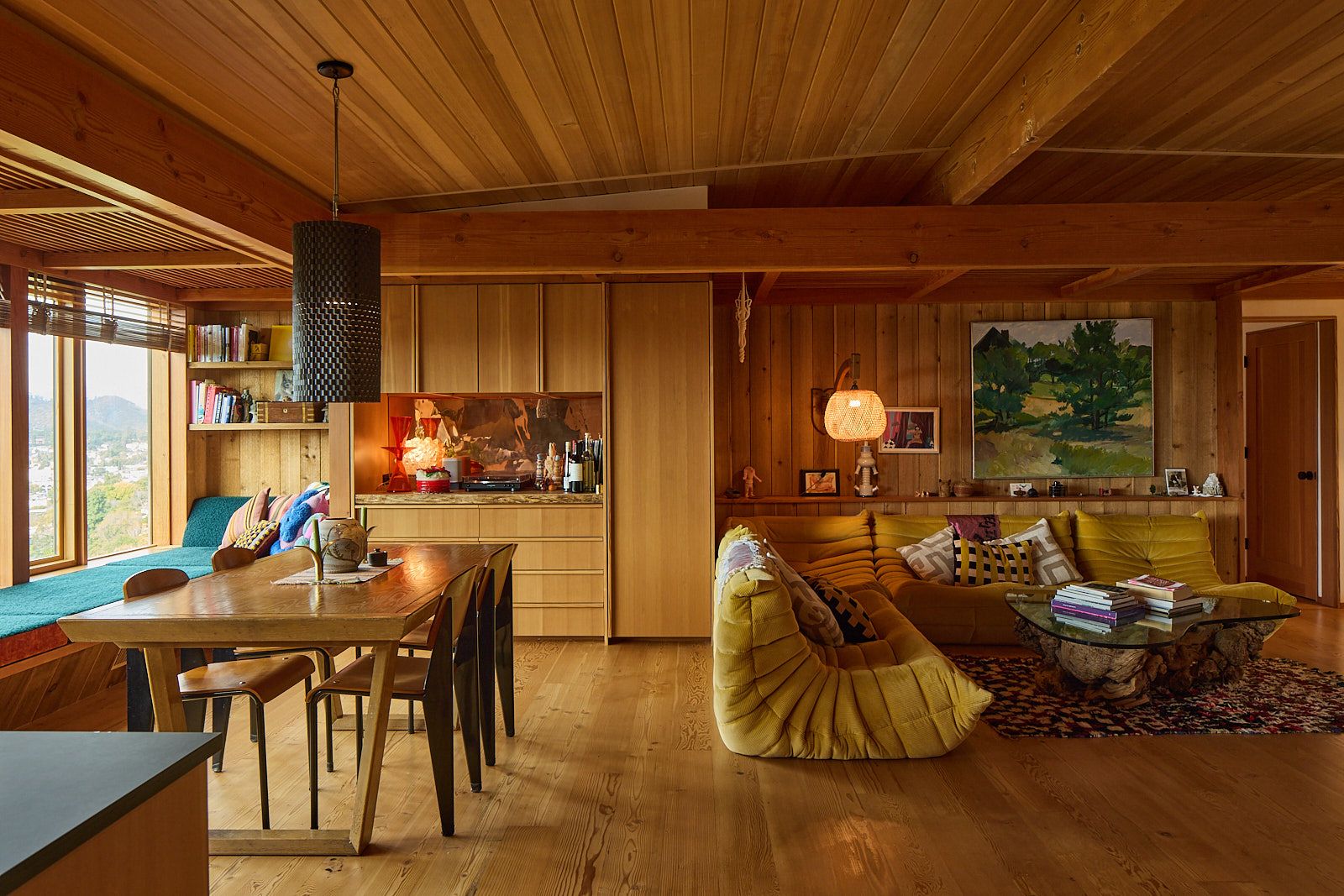
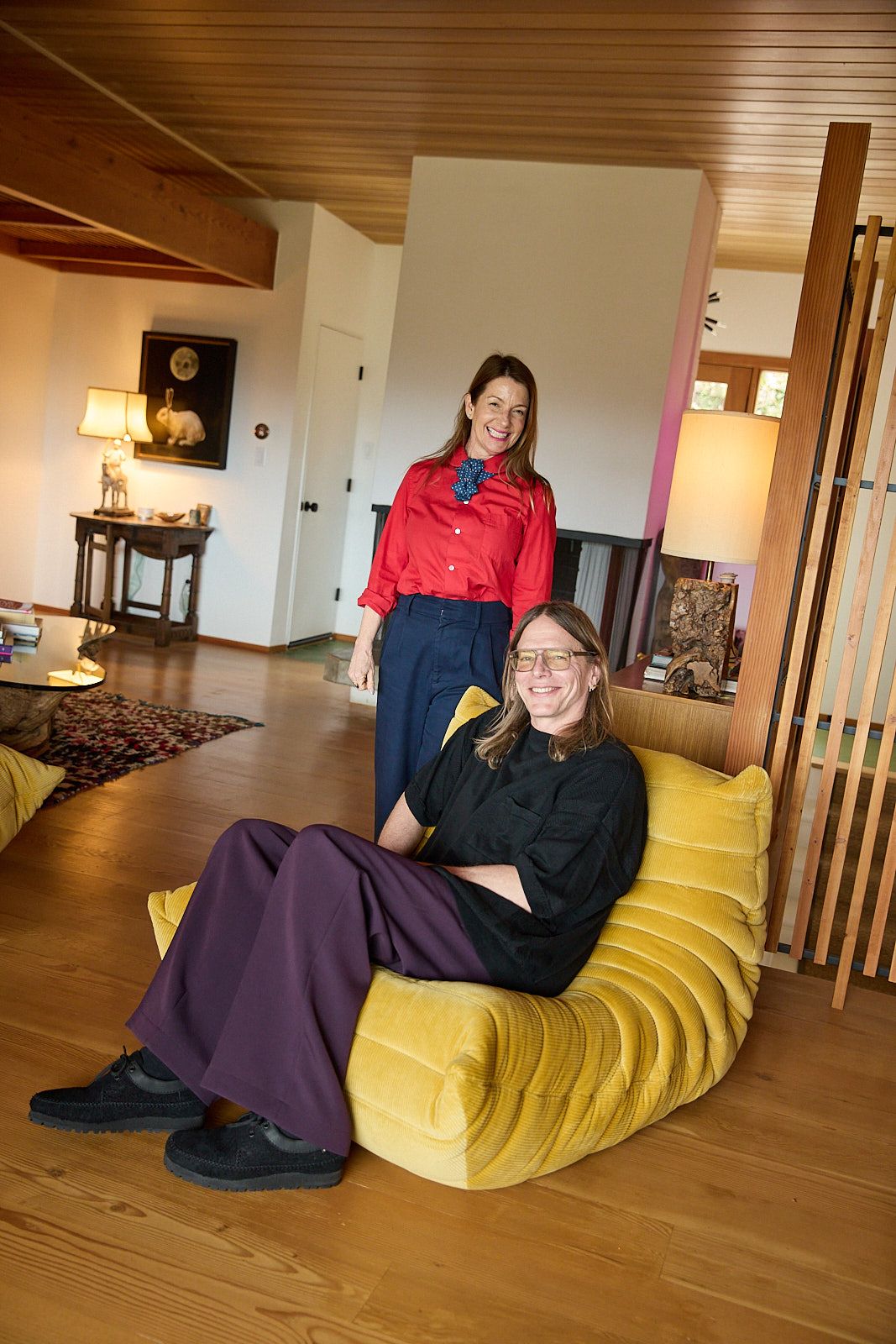
Open views of the Hollywood Sign blend naturally with a mustard corduroy Togo sofa that stretches across the space in front of the fireplace. This is the Los Angeles home of film production designer James Chinlund and artist and illustrator Clare Crespo. The Togo invites people to lean back and lets easy conversation flow on its own. It honestly reflects the life of a couple who care for the great horned owls that visit their home and enjoy serving dishes from home.
This interview is featured in Issue 8 ‘Togo’.
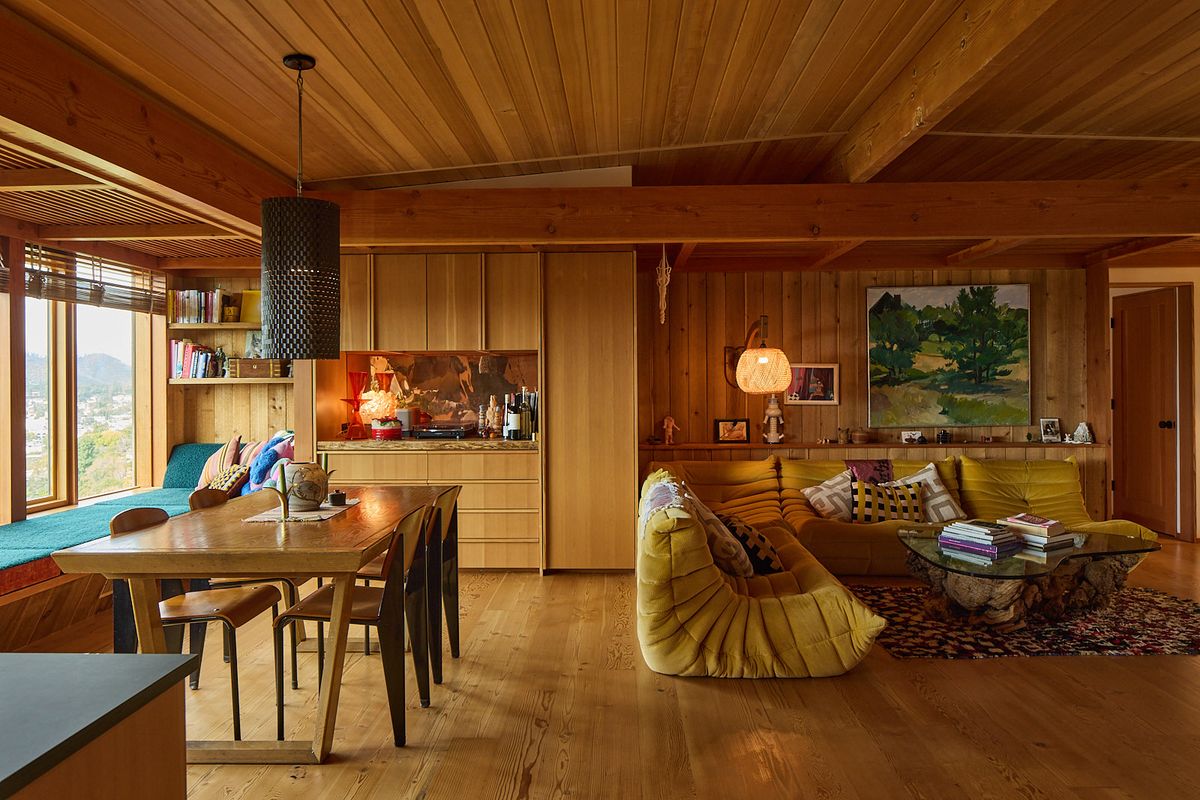
On entering this house on a high hill in Silver Lake, Los Angeles, the first thing to catch the eye is the view through the living room’s floor-to-ceiling windows, which reaches all the way to the Hollywood Sign. But after a moment, when attention turns to the interior, it is the Togo sofa in the middle of the living room that sets the mood.
Arranged in an L shape, the mustard corduroy Togo spreads out in front of the fireplace and anchors the room. How the house has changed over time, how the couple work and think, and how their tastes connect to everyday life all come into focus through the sofa.
James is a film production designer. He describes characters through space. He has worked on many major Hollywood productions, including The Avengers and The Lion King, and has collaborated regularly with directors known for their exacting eye, such as Darren Aronofsky. His process is one of deep research and close observation, repeated again and again. He considers what choices a person has made in life, why their space is so messy, what furniture they would choose, and even how they would move through their kitchen.
He said he particularly enjoys location scouting, when he visits real people’s homes. “I love going into someone’s house, looking at their kitchen, seeing where they put their fruit. It makes me think about why they put it there.” He said such observations ultimately broaden his perspective, adding that he tries to keep an open mind.
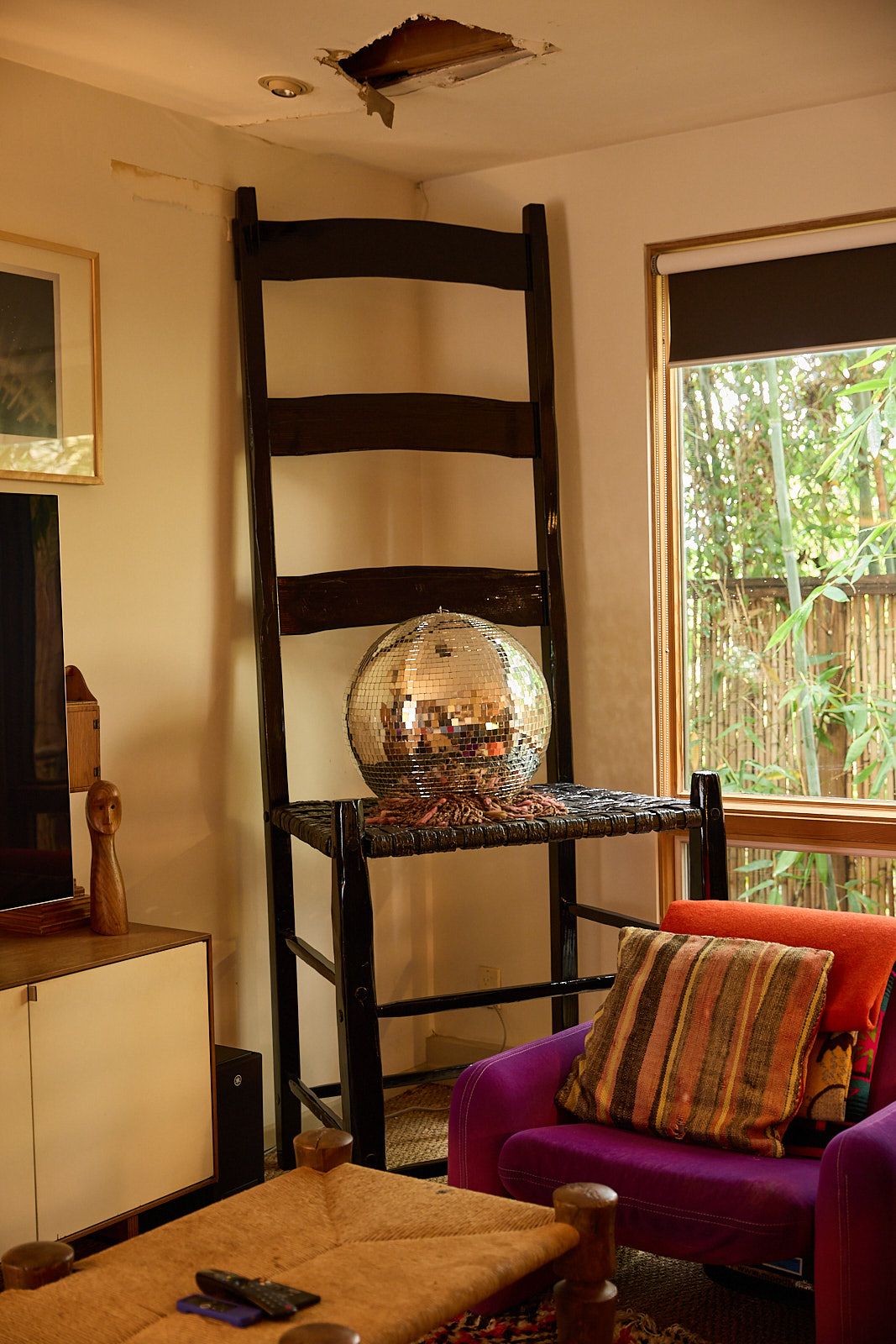
Clare is a writer and artist. She draws on food, everyday life, and nature, and has carried those sensibilities into a wide range of work. She once created a cooking show and books for children, and the set was actually built in the garage of this house. James designed the set, a space where puppets and mechanical props appeared together.
Recently, amid the emptiness she felt after her daughter left for college, she found herself reconnecting with the great horned owls that return to Silver Lake Reservoir every year. Watching the owlets leave the nest, she thought she was looking for ways to help them. At some point, her perspective shifted. “I thought I was helping the owls. Then it suddenly hit me. I was actually the one being helped.”
Through the order of nature, she came to understand the way children leave the nest and how parents learn to accept it. That experience will eventually become a book. Her work is closer to feeling than explanation, and closer to sincerity than intention. “If kids respond right away, that means it’s real. They know immediately when it isn’t genuine.”
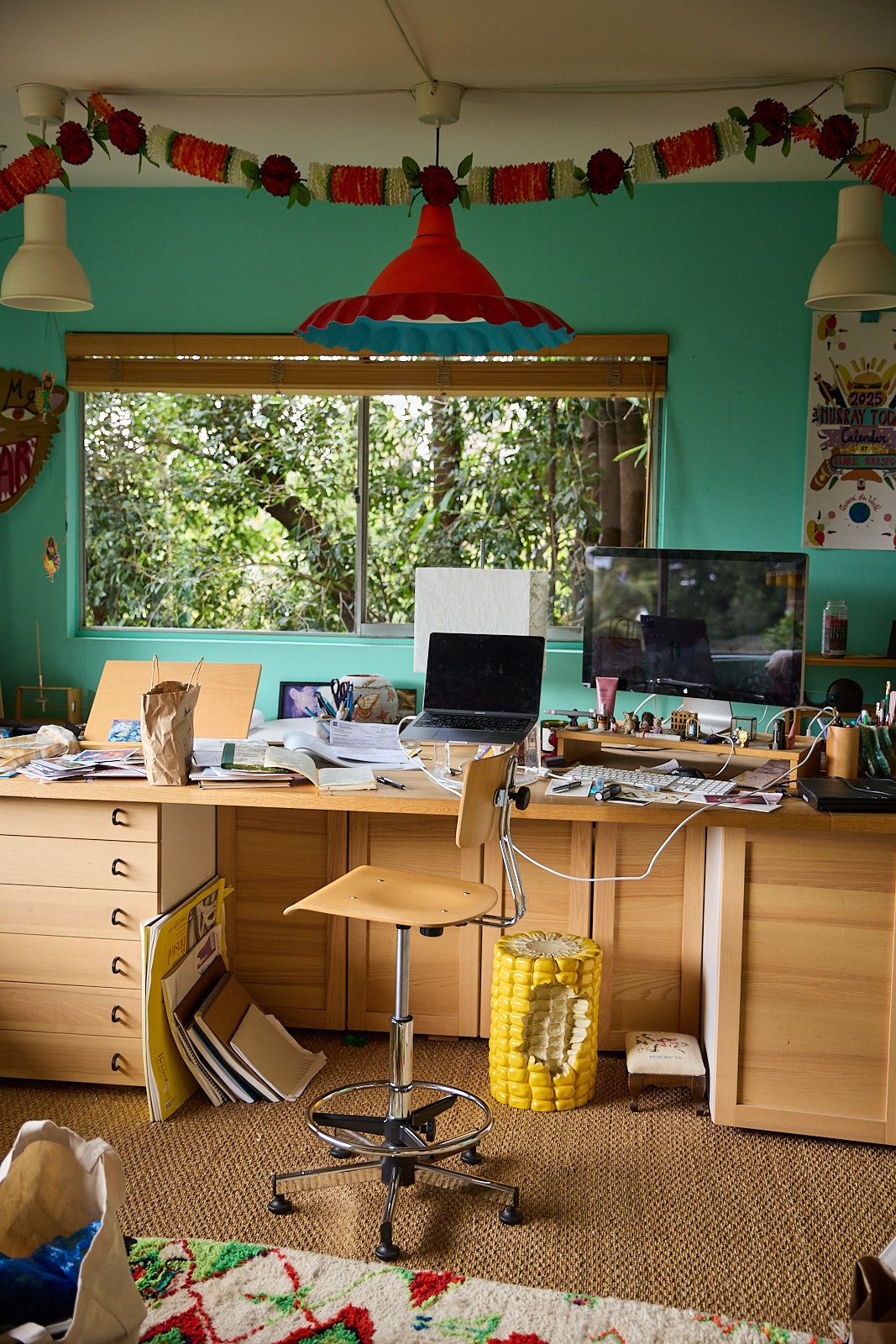
Their professions differ, but their approach to work is similar. Both build on observation and tell stories through space and the senses. That approach carried over to how they decorated their home and chose objects. When they first moved in more than 20 years ago, previous owners had gradually expanded the house beyond its original form. The view was great, but the layout was simple and the house lacked character.
James recalled that time. “It was a neighborhood we wanted to live in, and as our daughter grew, we needed space for the family. We thought it had plenty of potential to become a house we could grow with. But it felt too plain, and we felt it needed a focal point.” The renovation took place over many years, but it was the Togo that completed the feel of the house. They first brought in a green Togo they fell for at first sight. After 18 years, they replaced it with one in mustard corduroy.
The Togo is lighter than it looks. Its modules can be separated, moved to other rooms, and put back together into a single piece. “I like that you can take it apart and put it back together freely. It’s not stuck in a mold,” Clare said. James added, “Furniture is usually rigid and formal, so the choices feel limited. But this wasn’t like that. It looked like a happy chair. It was playful, like a fantasy.”
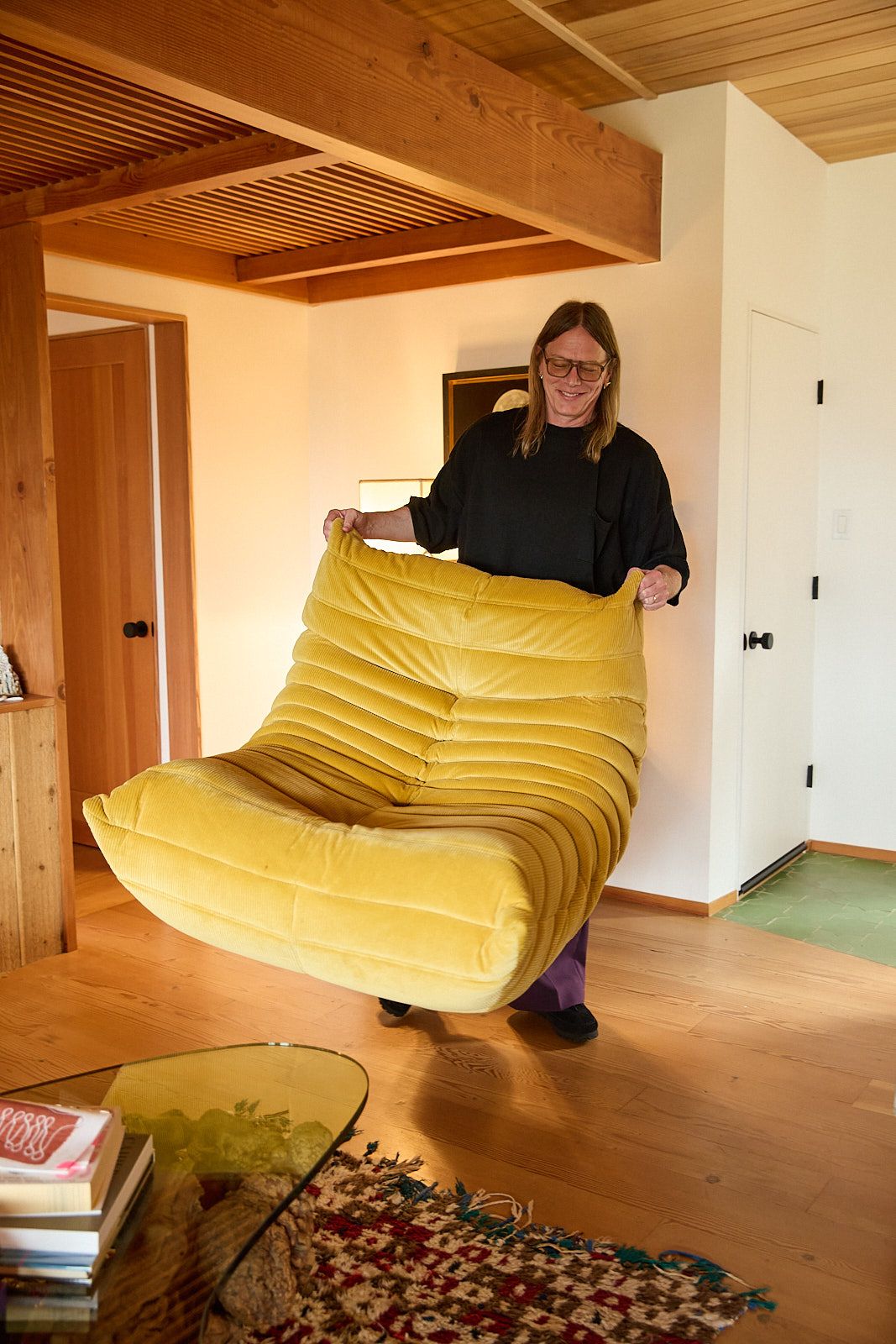
The corner piece that joins the two sides of the sofa was another element Clare loved. “When you sit in the corner, you just lean back. Even now, when family or guests sit there, it creates an atmosphere where relaxed conversation flows naturally. It has a clear character, but it isn’t overwhelming.”
James said choosing a sofa calls for care. “Most of them are similar. But the Togo feels adventurous. You can sense that someone made it with a clear intention.” He added that the Togo is not a piece of furniture one can easily change once chosen. “Once you buy it, you can’t come back later and ask to change the fabric. Once you pick it, you have to stick with it. So you need to be really sure.”
Choosing the same model twice shows that the family’s life has unfolded along a single continuous line. The change of fabric, meanwhile, seems like a small marker separating different chapters of that time.

Because James works with space and scale all day, he prefers a simple, orderly home. Yet that simplicity is less an empty minimalism than the distillation of years of observation. Clare, on the other hand, is passionate about miniatures and collects them.
The miniature automata she found in an old shop in London are among her most treasured possessions. “It was a dusty shop. There were toys in the front room, and when they took me to the back room, there were even more special, tiny things. I almost lost my mind when I saw them.” The intricacy of small worlds crafted by someone’s hands thrills her. “If the house caught fire, I’d grab these and run (laughs).”
She once resolved to cut down on her belongings, recalling the advice of Marie Kondo, but it was not easy. “Everything I’ve brought into this house brings me joy. That’s why I can’t really declutter (laughs).” This difference works as a balance within the home. There are many small objects, yet the space never feels cluttered. The Togo sits at the center of it all. With its low, open form, it seems to be the point where two different sensibilities meet at the same level.
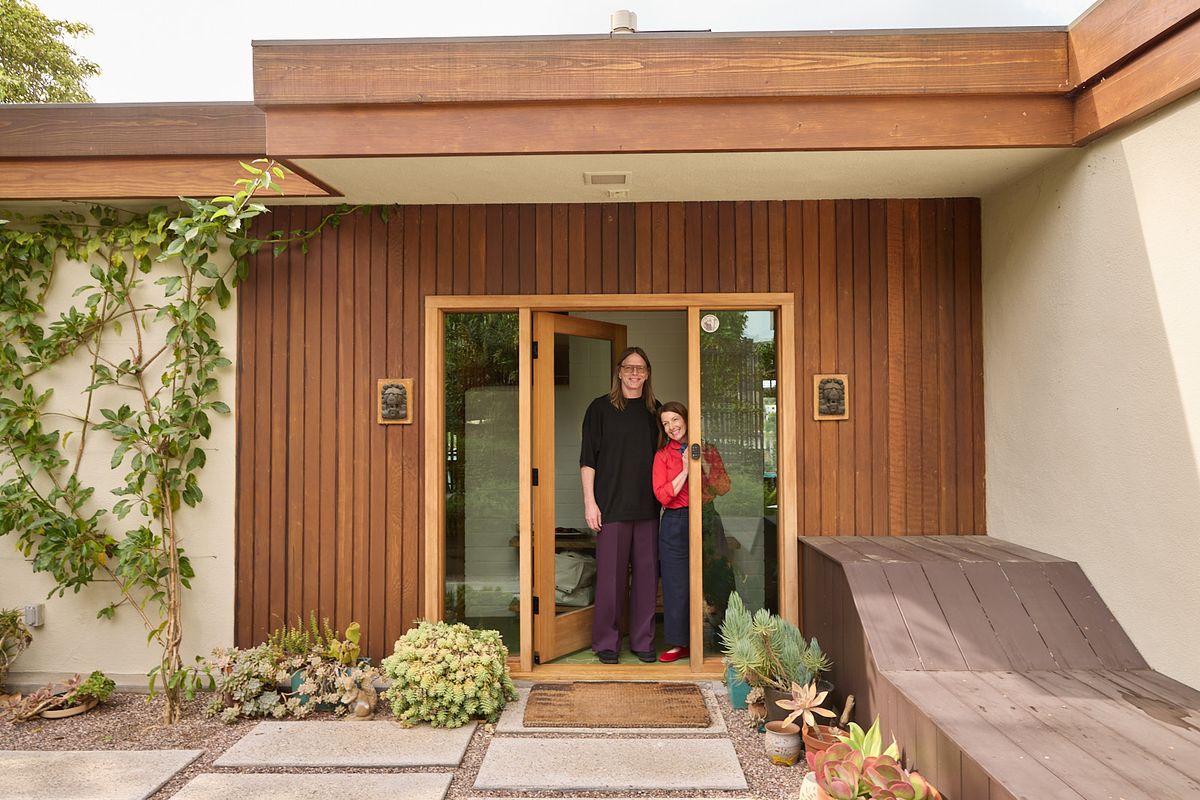
James and Clare are on the shy side, but they love inviting people into their home. For James, the objects around the house, each with its own story, serve as conversation starters. “I don’t have to explain anything. The house speaks for me. It conveys warmth without words.”
Clare carries those conversations on through food. Originally from Louisiana, she often cooks dishes from her home state when throwing parties. “People here in LA are surprised. They go, ‘What is this?’” Unfamiliar flavors blend with the space the couple has created to make memorable moments. Asked how she chooses projects, Clare answered, “Excitement over money.” What matters more to her is whether a project sparks her imagination and moves her.
James said film work has a big impact on family life, since projects run long and often require him to be away from home for extended periods. “So I only choose projects I truly believe in.” If advertising and fashion work serve to awaken and sustain his senses, film demands a far more concentrated energy. “Thousands of choices add up to a two-hour running time. That accumulation is what gives a film the power to move an audience.”

The Togo mirrors the way they approach life. Its form is distinct but never exaggerated, slightly off the rules yet sturdy enough for everyday living. That was true of the green Kermit sofa that lasted 18 years, and it is true of the mustard sofa where we now sit facing each other.
James said he admires designers like Jean Prouvé, who designed buildings, furniture, and ways of living as a single system, while Clare said she loves “candy-like chairs that look like Muppets.” Their tastes differ, but both respond to the attitude a form conveys.
In this house, the Togo is the centerpiece without being excessive. Its enveloping structure and low height naturally invite people to sit, lean back, and stay. Layered within its folds are their observations, their playfulness, and the texture of the time they have spent together. Perhaps the quickest way to understand this house is simply to sit on the Togo.
Want to dive deeper?

Issue.08 Togo
Designed by Michel Ducaroy in 1973, the Togo departs from the conventions of the traditional sofa. Its signature wrinkled surface, low seat resting directly on the floor, and all-foam construction offered a comfort and innovation on a different level from the sofa design of its day. Born of the 1960s and '70s, an era yearning for social and cultural change, the Togo reflected the zeitgeist—and its appeal remains just as strong today. Rediscovered through social media during the pandemic and embraced with explosive popularity, the Togo has become more than furniture: a cultural icon of free spirit and creative energy.