When the Sofa Was a Laboratory for Radical Design
Editor | Dami Yoo
In Europe in the late 1960s and early 1970s, popular culture, television, fashion magazines, and advertising images spread rapidly, and tastes and lifestyles changed dramatically. The living room shifted from a refined salon to a relaxed hideout, and the sofa stood at the center of that change. As the bold colors and humor of Pop Art and the sensibility of industrial materials filtered into design, sofas grew bigger or lower, softer or more daring. At the same time, voices calling for liberation, freedom, and expanded rights grew louder across society. Young people in particular refused to accept existing rules and hierarchies as a given. Amid these currents, a question naturally followed: Could the body and relationships become freer in the living room too? Designers proposed forms that embraced new movements of the body in place of the conventional way of sitting. New materials such as polyurethane and modular structures made this possible. The sofa became a laboratory for radical design that captured the changing spirit of the times more vividly than anything else. The rich vocabulary used to describe the sofas of this period, when Togo was born, reflects the dazzling character the era pursued.
This article is featured in Issue 8 ‘Togo’.
Boborelax (1967)
Designer: Cini Boeri
Manufacturer: Arflex
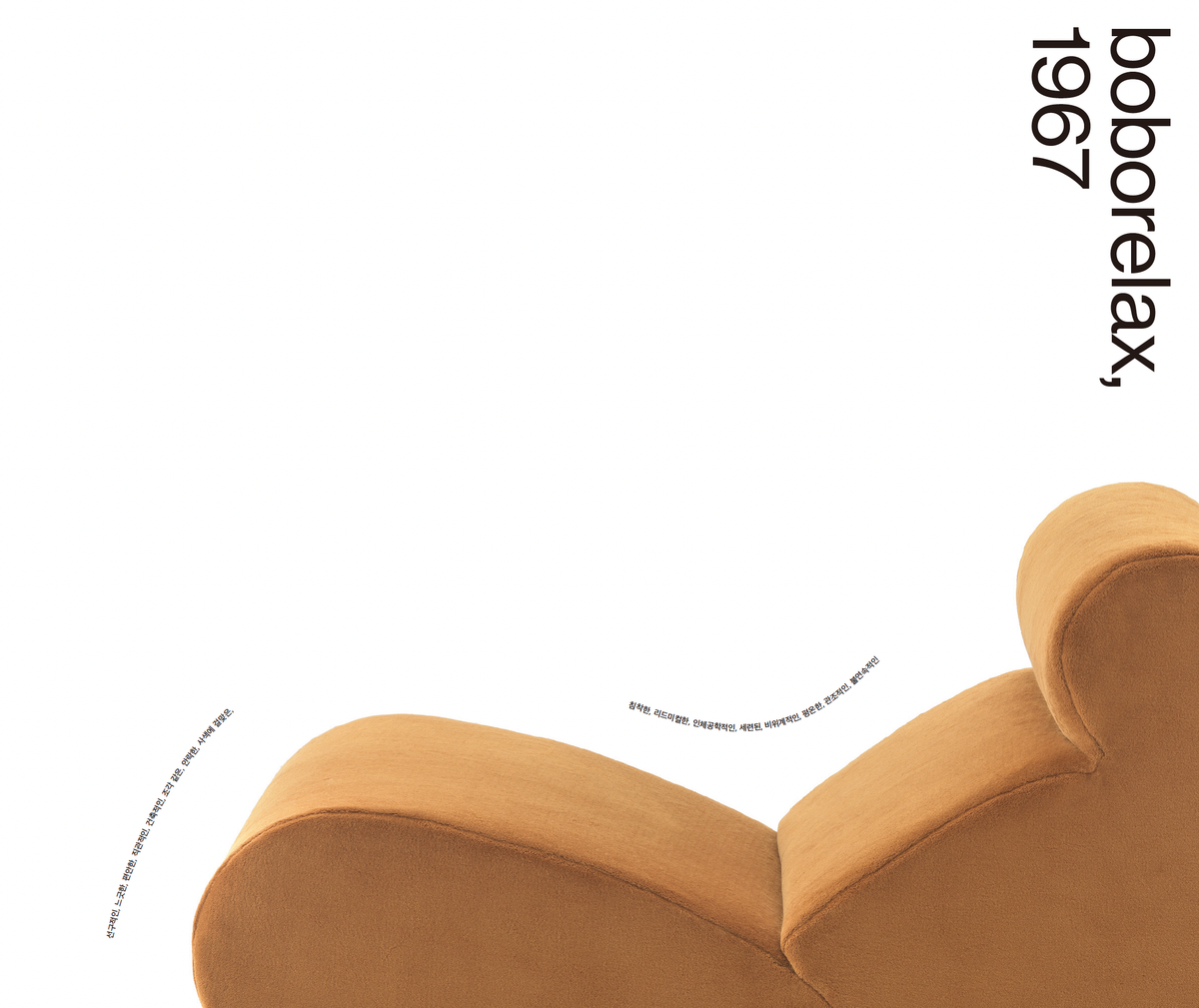
Cini Boeri was one of the leading women designers of postwar Italian design. She redefined furniture in terms of “use” rather than “ownership” and led the design scene in step with changing lifestyles. Boborelax belongs to Boeri’s Bobo series, and it clearly reveals her radical drive to reorganize the fixed rules of the living room. Its manufacturer, Arflex, actively experimented with new materials and structures and was at the forefront of innovation in Italian sofa design in the 1960s and 1970s. Unusually for the time, Boeri’s Bobo series built its form and seating comfort around polyurethane. The sofa was shaped so that its soft volume alone invites leaning and lying down.

Rumble (1967)
Designer: Gianni Pettena
Manufacturer: Poltronova
Rumble looks less like a sofa than a set of large rectangular blocks placed in the middle of a room. It almost feels like a kids’ café. Depending on how the modules are arranged within the frame, people can sit neatly together or sprawl freely, making it a “space with no right answer.” What makes this sofa interesting is its sense of mass, which far exceeds human scale. Rumble was inspired by the image of 19th-century artists working and living in spacious studios, and it was never meant to tuck cozily into a corner of the living room. Instead, it was given a solid volume and presence so that it would hold its own even in the middle of a large space. In the end, Rumble is less a piece of seating than a mass that creates new places and scenes within a room.
Superonda (1967)
Designer: Archizoom Associati
Manufacturer: Poltronova
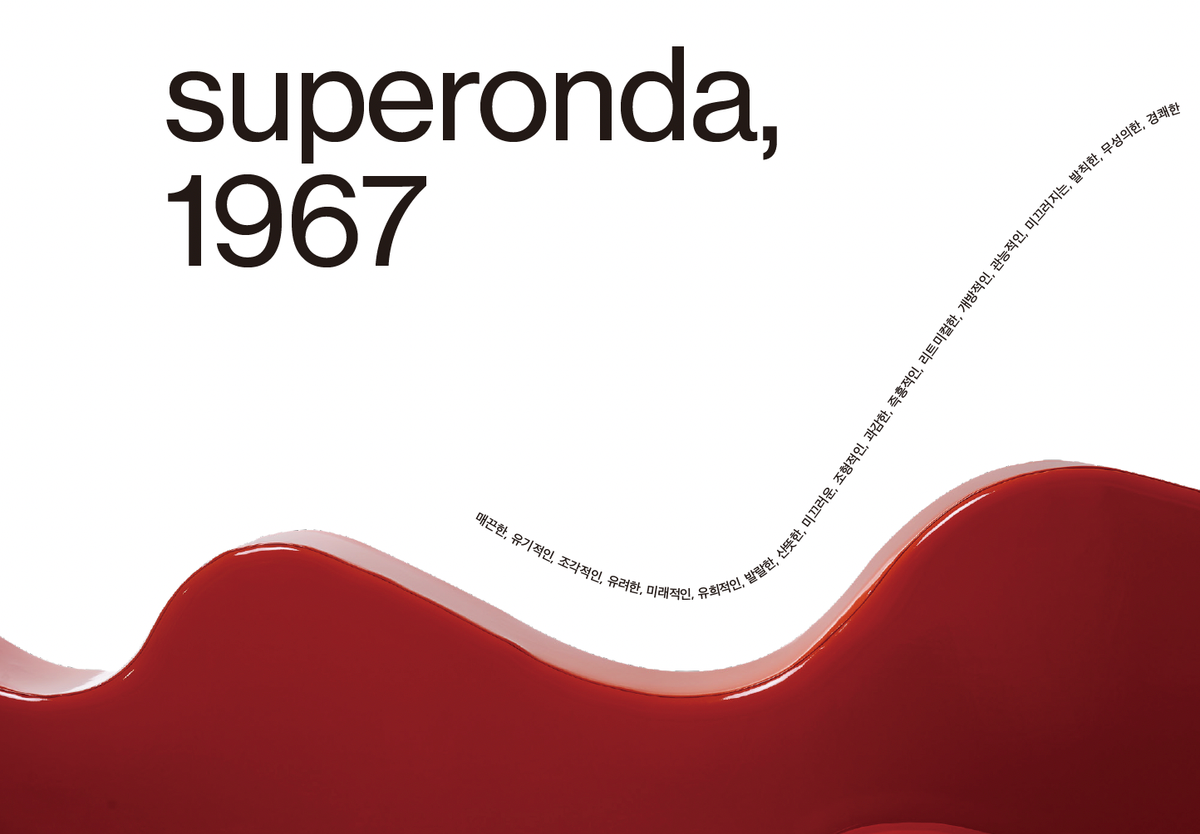
Amid the student and worker protests of 1968, Archizoom Associati questioned the rules of living spaces governed by tradition and bourgeois values. The group proposed furniture that used radical design ideas to draw out users’ creativity and imagination. Among these pieces, Superonda is considered one of the earliest frameless sofas. It consists of two wave-shaped pieces made by cutting a square polyurethane block in an S-shape. The two parts can be fitted together or stacked to change the form freely, so it can serve as a sofa, a bed, or a chaise longue. Its glossy faux leather cover, available in three basic colors of white, black, and red, further emphasizes its Pop Art image.
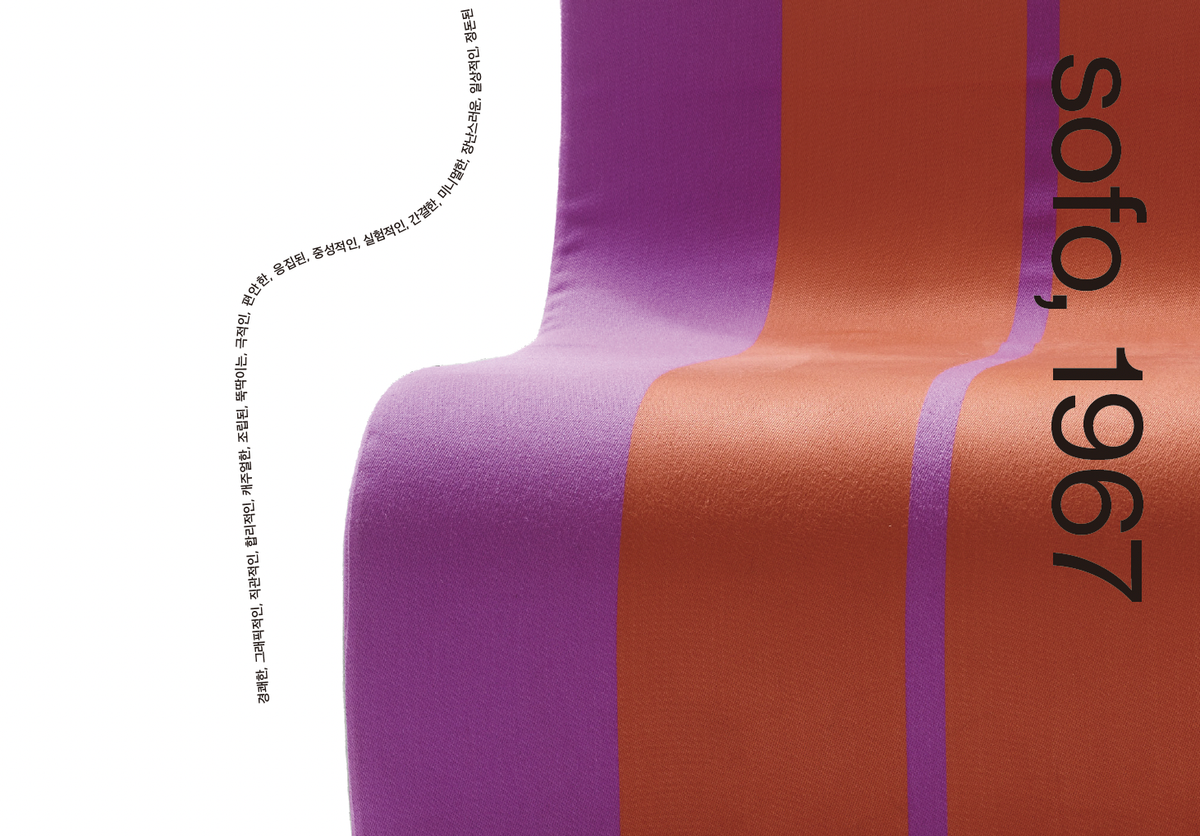
Sofo (1967)
Designer: Superstudio
Manufacturer: Poltronova Sofo is a modular sofa by Superstudio, a radical design group based in Florence, Italy. It deconstructs the traditional sofa form and makes “combination” itself the design. The basic unit is a cube cut into an S-shape. Users can link the modules in a long line like a train or stack them in layers to build a solid, block-like seating structure. In other words, Sofo is not finished furniture defined by someone else but a system that keeps being rearranged and expanded to suit the space and situation. In the simplest possible form, it embodies Superstudio’s vision of a utopian way of living and its experimental spirit of shaking up the rules of interiors.
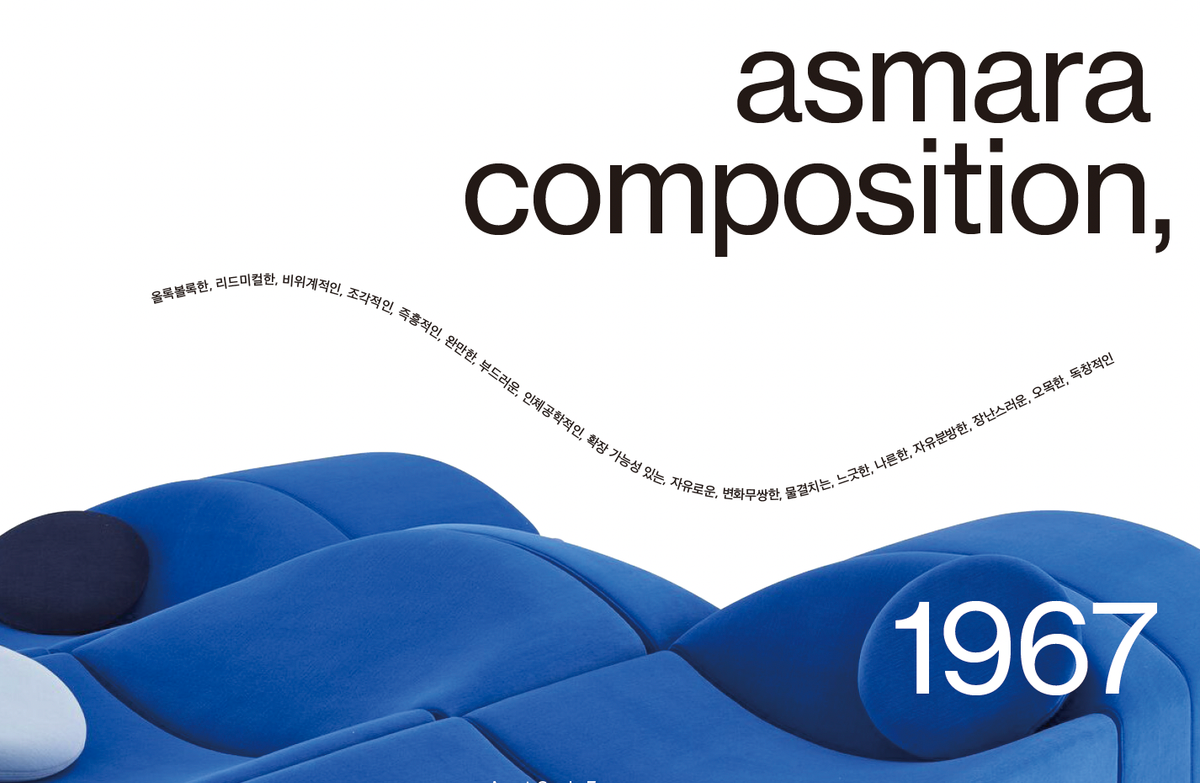
Asmara Composition (1967)
Designer: Bernard Govin
Manufacturer: Ligne Roset
This modular sofa is made of high-resilience polyurethane foam, and its fabric-covered concave and convex curves unfold continuously like a landscape. Described as a “low look,” Asmara was an early example of breaking away from the standard height and posture of conventional sofas to reflect a floor-centered way of living. Its three modules can be combined into endless organic, curved configurations, and its size can expand indefinitely depending on the number of pieces. Depending on the arrangement, it naturally encourages a range of postures, from reclining and lying down to perching. This approach treated furniture as a foundation for living rather than mere seating. US Vogue introduced it as “A new way of life!” and regarded it as a design that symbolized the shift of its time.
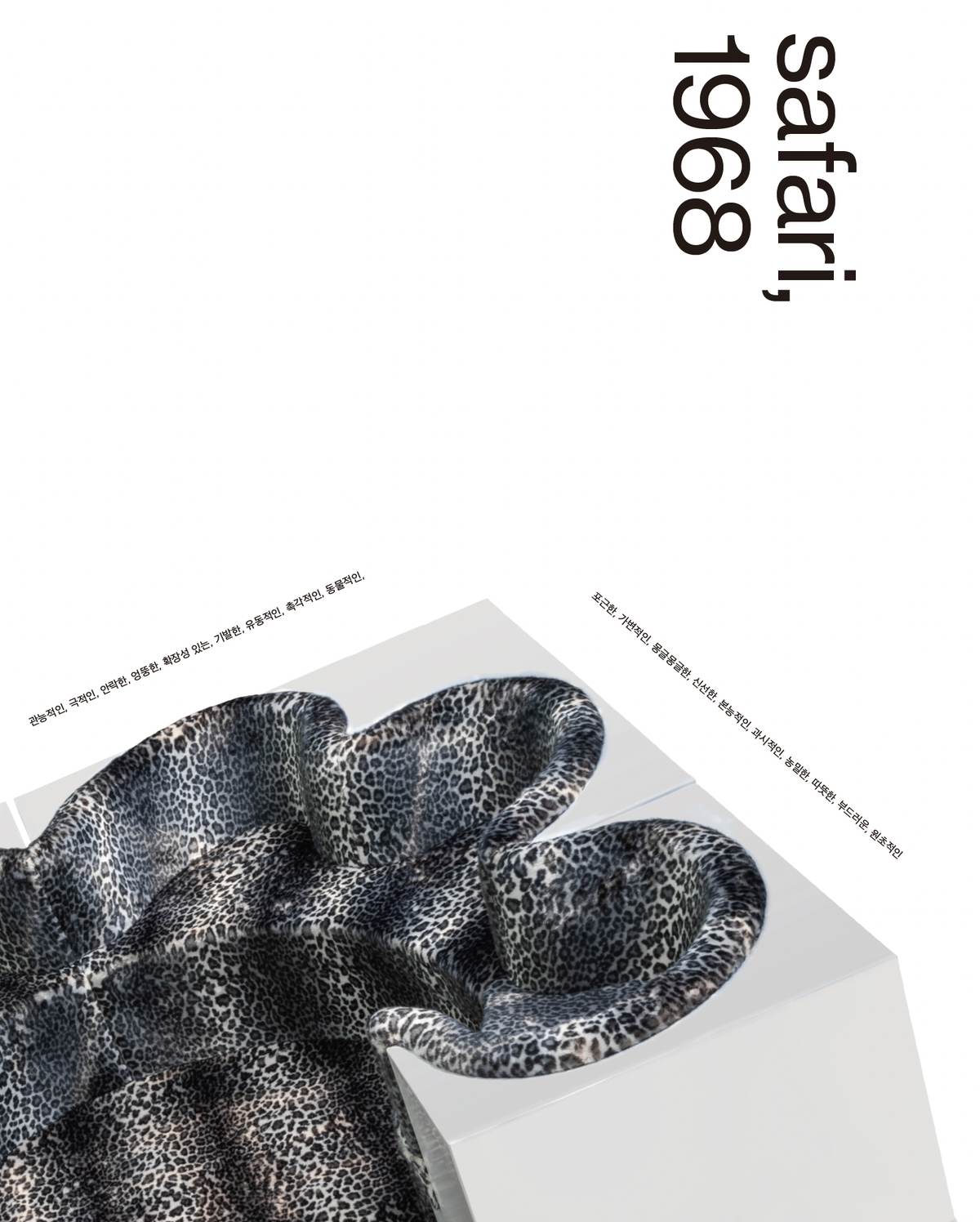
Safari (1968)
Designer: Archizoom Associati
Manufacturer: Poltronova
This sofa changes the look of a space depending on how its units are combined, creating a strong visual rhythm. It represents the experimental sense of form and structural imagination characteristic of the late 1960s. Under the influence of Pop Art, it satirized functionalism and strategically embraced ornament, kitsch, and the “grotesque” to subvert the established order of design. Each seat is cubic in form, allowing for various combinations. Its faux fur and leopard print were a cultural gesture echoing the language of artist Claes Oldenburg, who enlarged everyday objects such as shuttlecocks and hamburgers to monumental scale. Safari expresses comfort through bold imagery and turns the living room from a tidy space into an unfamiliar, playful stage.
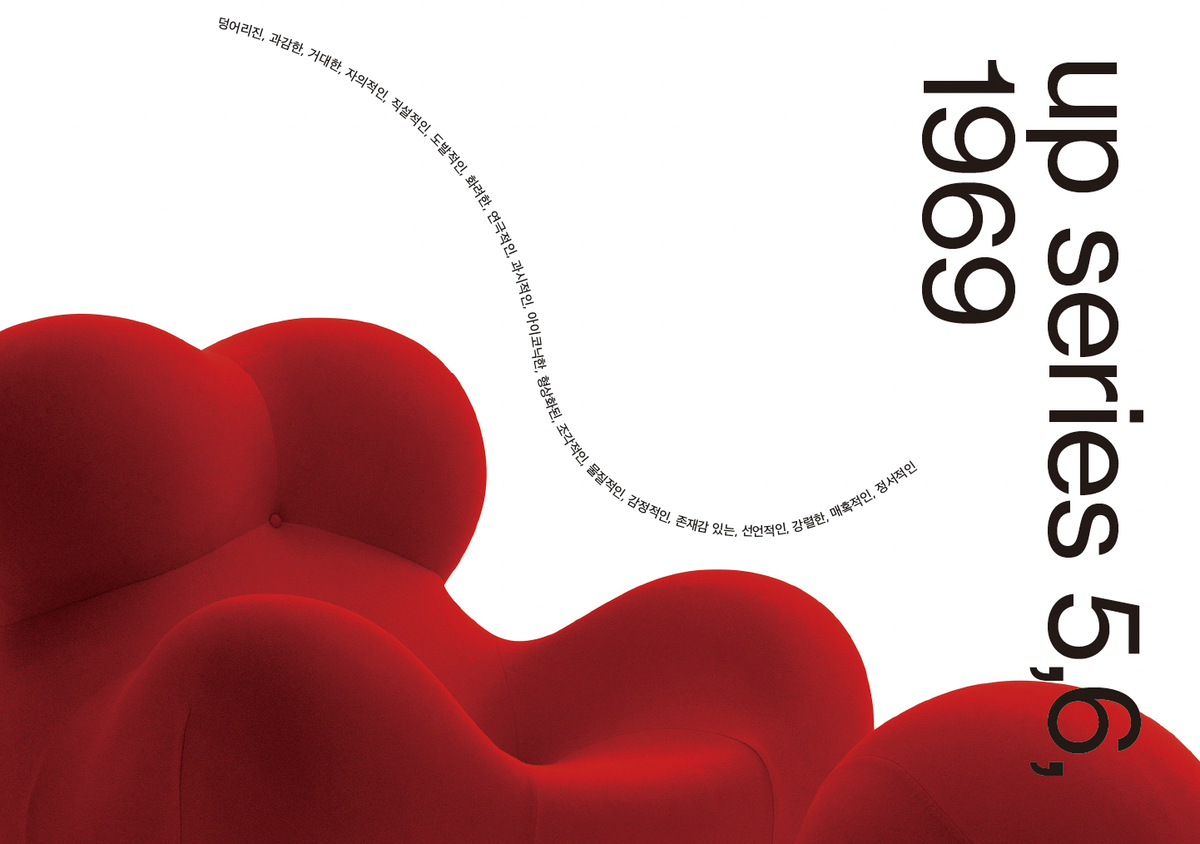
Up Series 5, 6 (La Mamma, Donna) (1969)
Designer: Gaetano Pesce
Manufacturer: B&B Italia
The set consists of UP 5, a curved silhouette resembling a voluptuous female body, and UP 6, an ottoman attached to it like a ball. While it puts cozy comfort first, it reflects Gaetano Pesce’s idea of bluntly exposing the reality of women bound by social prejudice and constraint. This bold form was realized in 1969 through B&B Italia’s accumulated expertise in polyurethane injection molding. It became a landmark example that actively and experimentally pushed the boundary between design and industrial production. That said, its way of addressing women’s liberation is so overt that it can read more like an exaggerated sign than a symbol. Such bluntness can be generously forgiven, since that was how the era expressed itself.
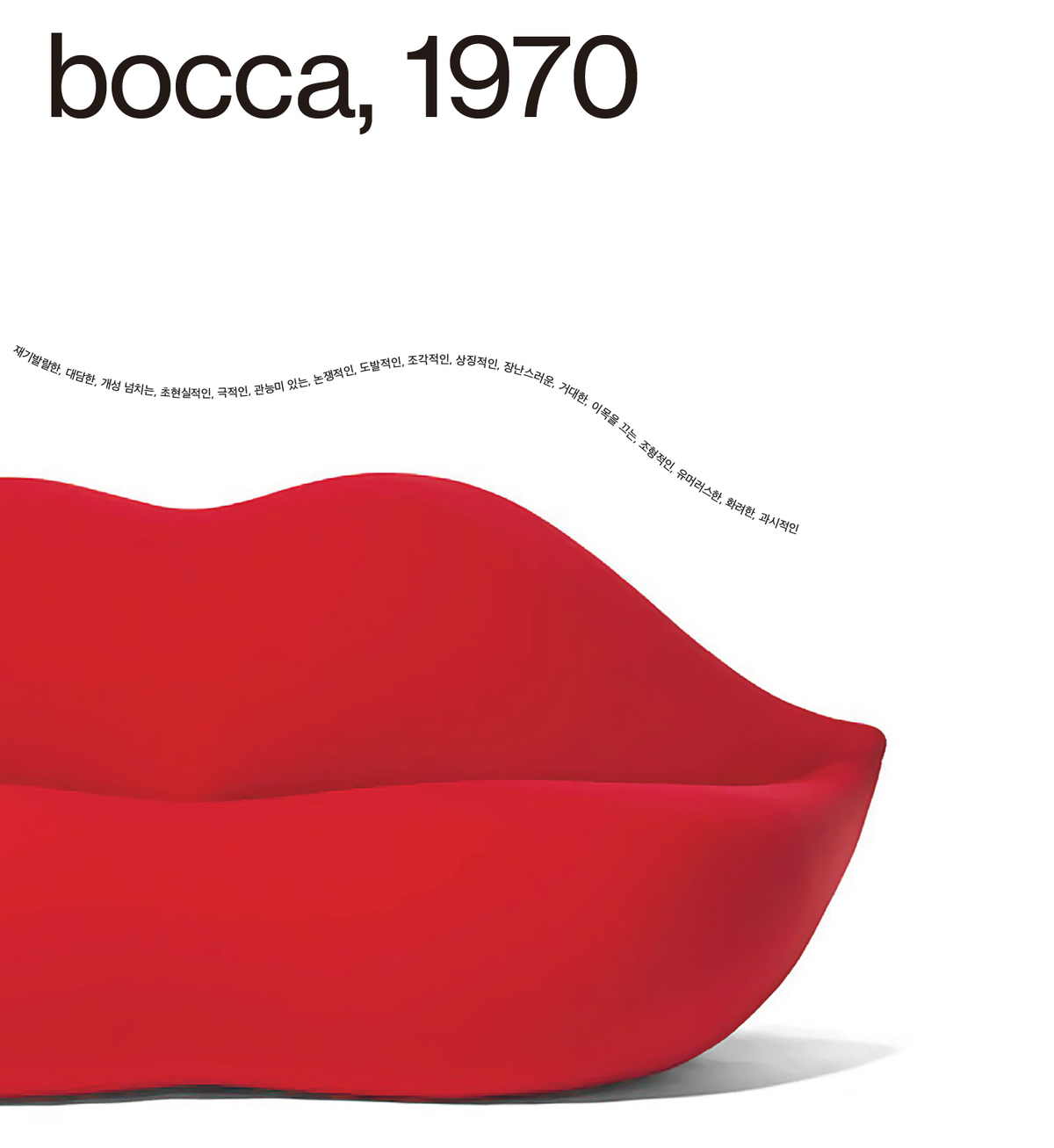
Bocca (1970)
Designer: Studio65
Manufacturer: Gufram
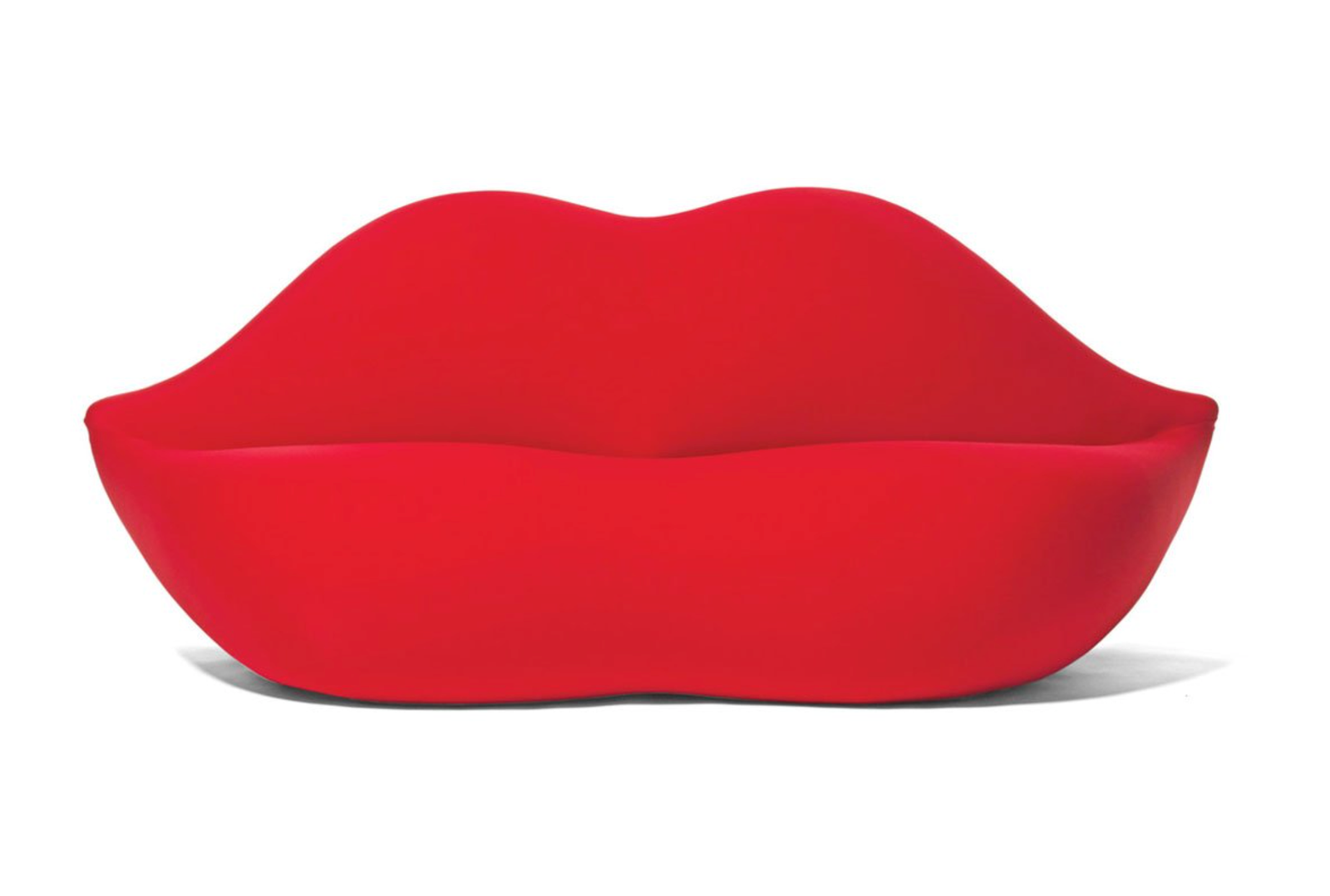
Bocca is both furniture and artwork, bringing the Surrealism of Salvador Dalí into reality. Inspired by Dalí’s installation ‘Mae West Room,’ the design combines the playfulness of Surrealism with the boldness of Pop Art, asserting its presence as both a functional sofa and a sculptural object. The name Bocca means “mouth” in Italian. The gossip and beauty standards created by 1960s fashion magazines cemented the belief that appearance mattered more than what lay within. The Bocca sofa openly displays the glamorous desires of that era without hiding them. As a result, rather than prioritizing comfort, it captures attention and instantly commands the center of a room. It is a Pop Art object one can sit on, representing the sensibility of Italian radical design in the 1960s and 1970s.
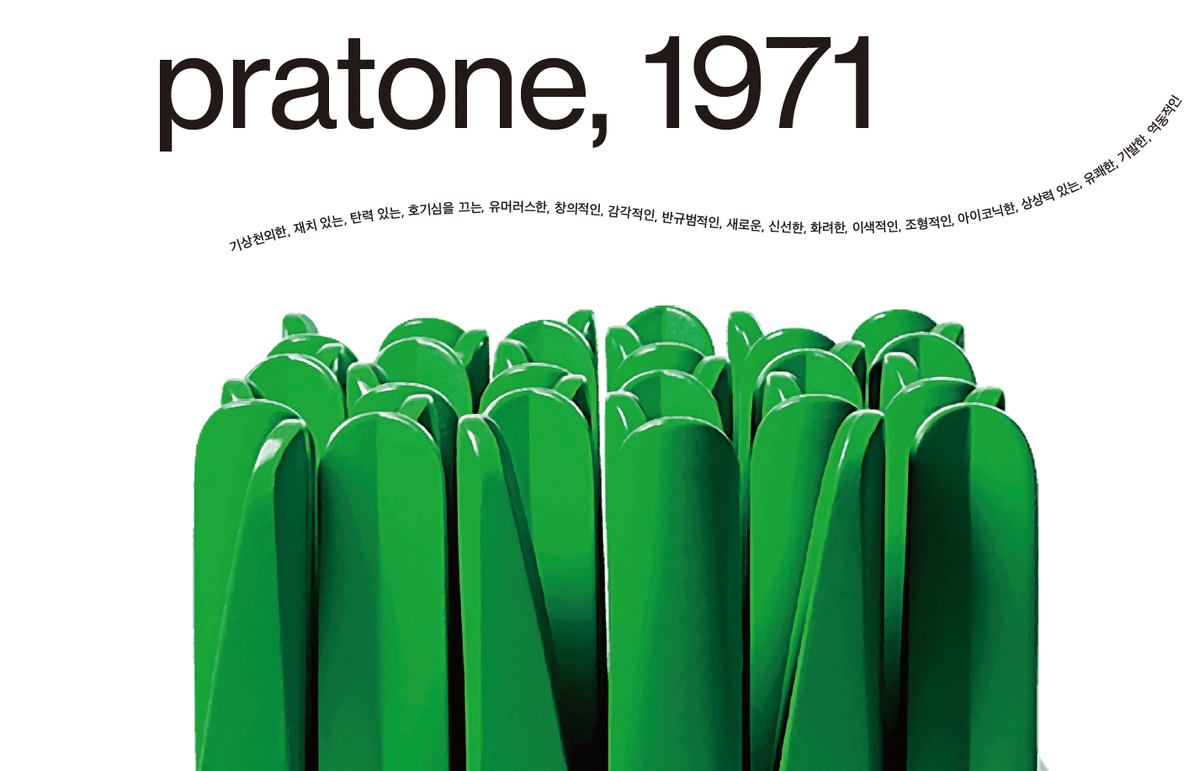
Pratone (1971)
Designers: Giorgio Ceretti, Pietro Derossi, and Riccardo Rosso
Manufacturer: Gufram
A small forest made of 42 blades. True to its name, which means “big meadow,” Pratone is a lounge seat designed for people to lean back as if sinking into a huge clump of grass. The giant lawn sculpted from polyurethane foam echoes the spirit of 1960s hippie culture and its longing for nature. By rendering a natural form in the emerging industrial materials of the day, it also sets out to highlight the striking contrast between the natural and the artificial. As playful and witty as its form, it symbolizes the imagination of 1970s radical design and presents the sofa in its boldest, most dramatic form.
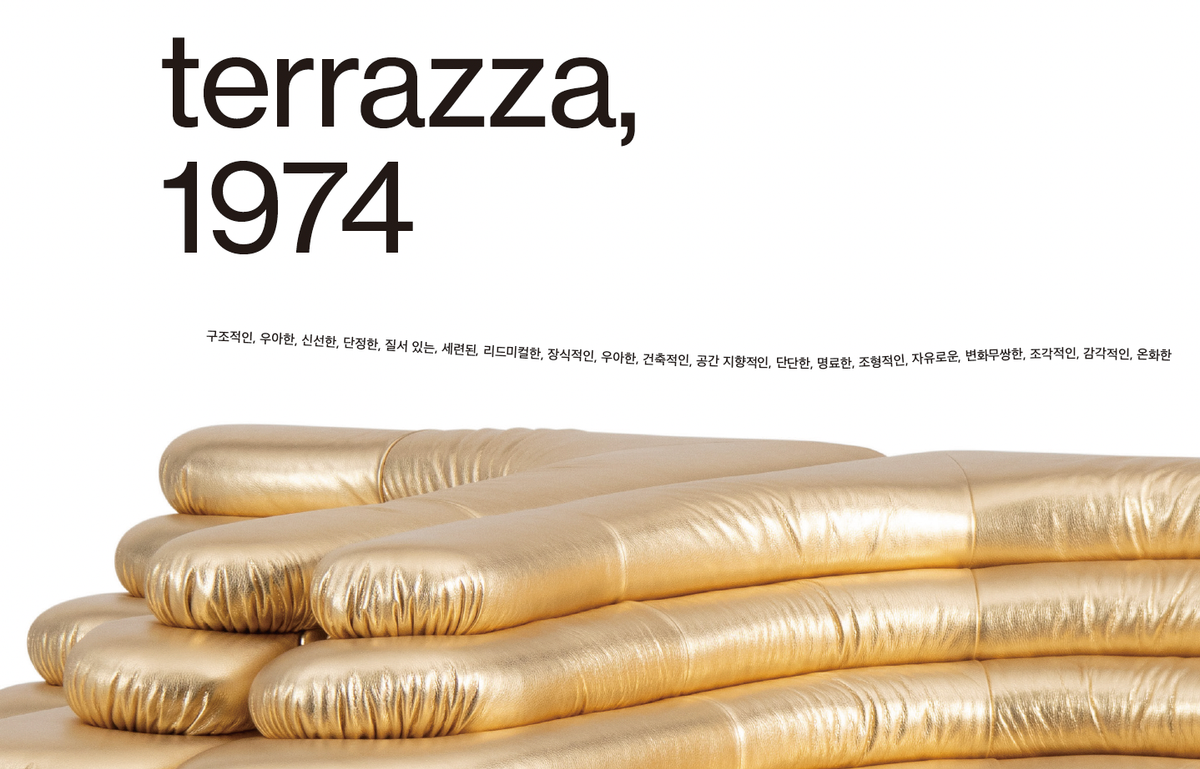
Terrazza (DS-1025) (1974)
Designer: Ubald Klug
Manufacturer: de Sede
Terrazza means “terrace” in Italian, as well as terraced farmland with stepped levels. True to its name, the sofa recalls the rhythm of winding slopes across a mountain vineyard somewhere in Switzerland. Its modular structure of continuous stepped levels allows the length and configuration to expand freely depending on how the units are combined. Its contours evoke mountains and valleys, creating a dynamic landscape within a space. The form is built by assembling foam without springs, legs, or an exposed frame, and its precise detailing, finished with Swiss leather craftsmanship, reveals the distinctive sculptural sensibility of the 1970s.
Want to dive deeper?

Issue.08 Togo
Designed by Michel Ducaroy in 1973, the Togo departs from the conventions of the traditional sofa. Its signature wrinkled surface, low seat resting directly on the floor, and all-foam construction offered a comfort and innovation on a different level from the sofa design of its day. Born of the 1960s and '70s, an era yearning for social and cultural change, the Togo reflected the zeitgeist—and its appeal remains just as strong today. Rediscovered through social media during the pandemic and embraced with explosive popularity, the Togo has become more than furniture: a cultural icon of free spirit and creative energy.