Making Chairs from Car Airbags, Tent Fabric, and Discarded Blankets

Editor Dami Yoo | Photographer Cijin Kim


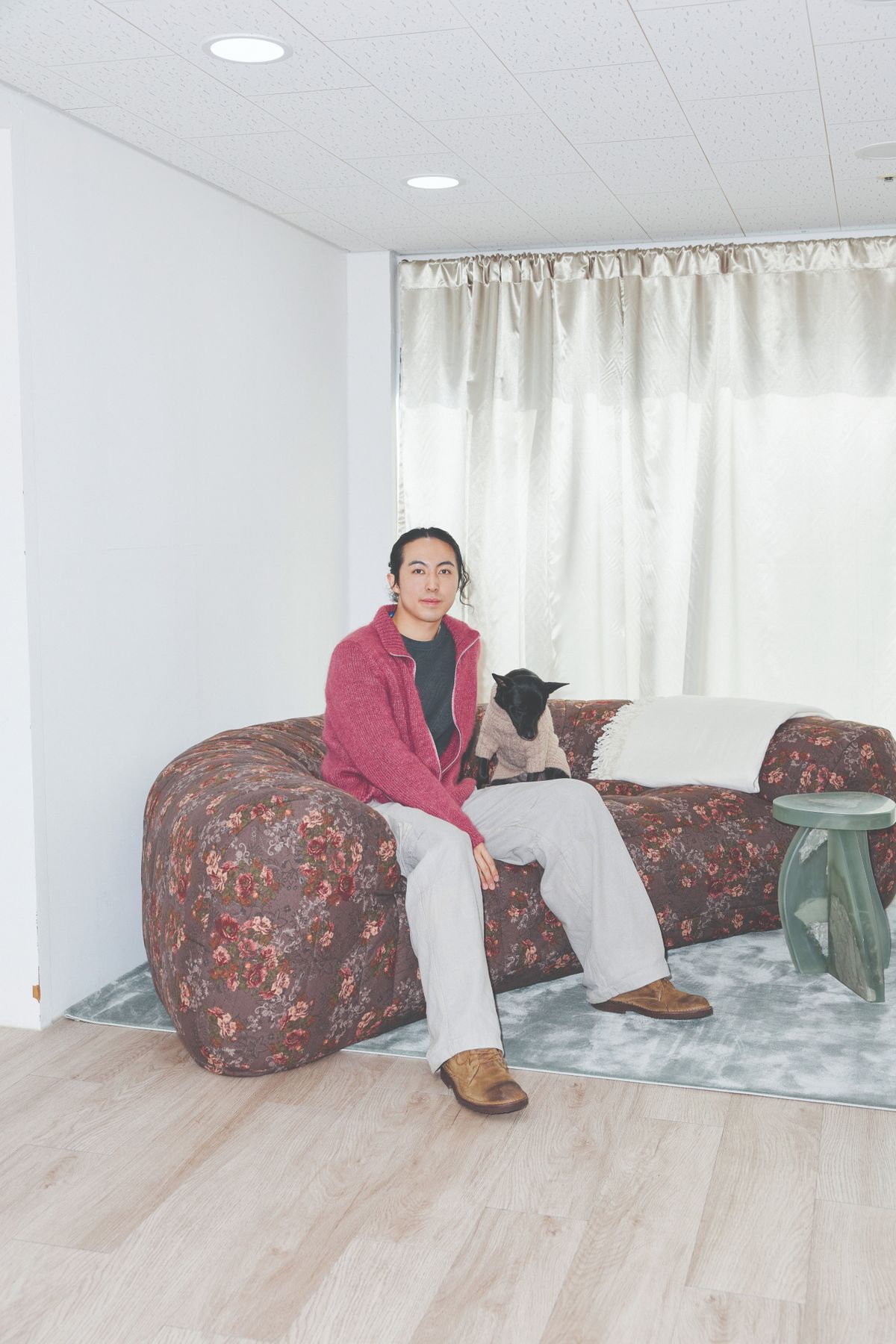
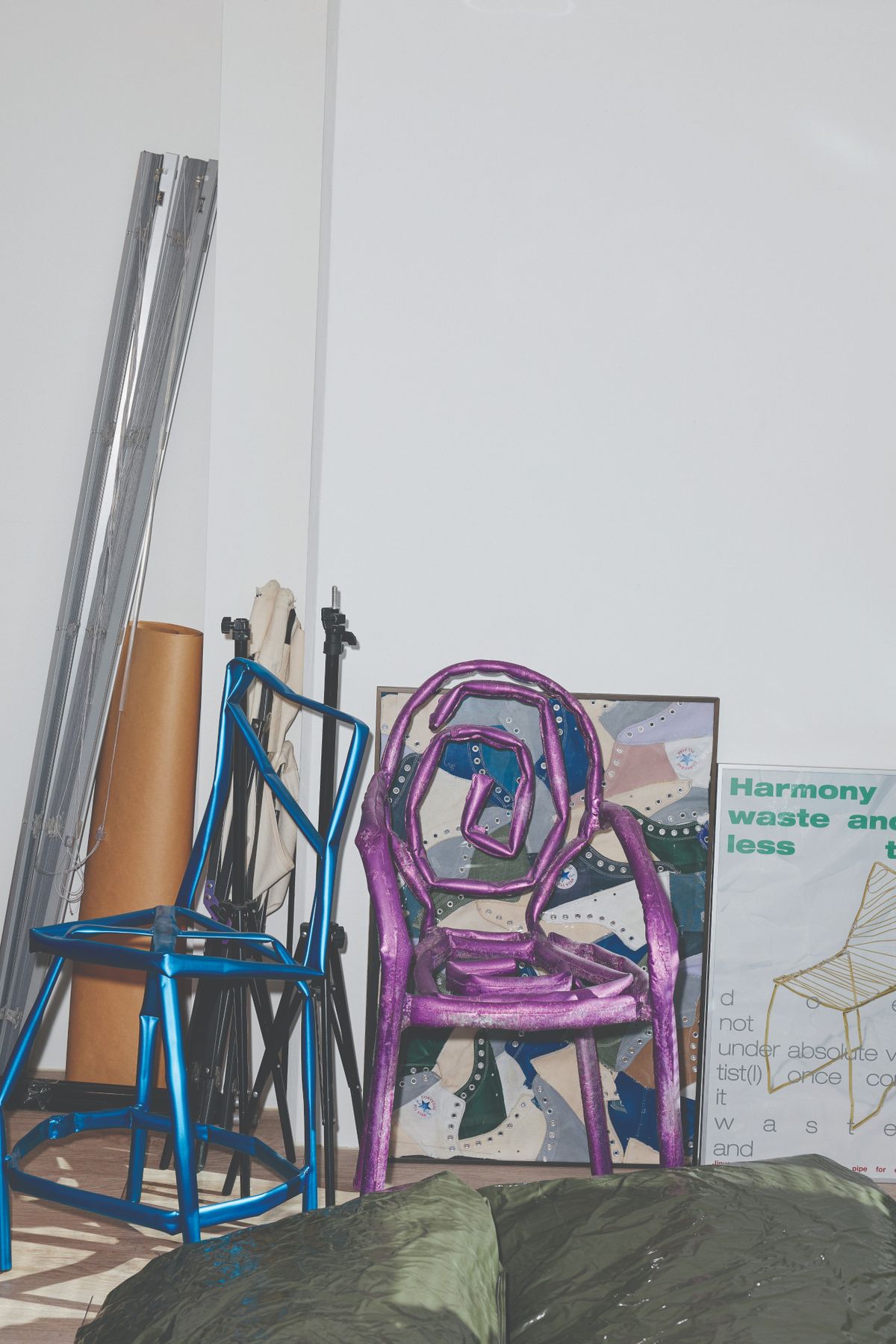
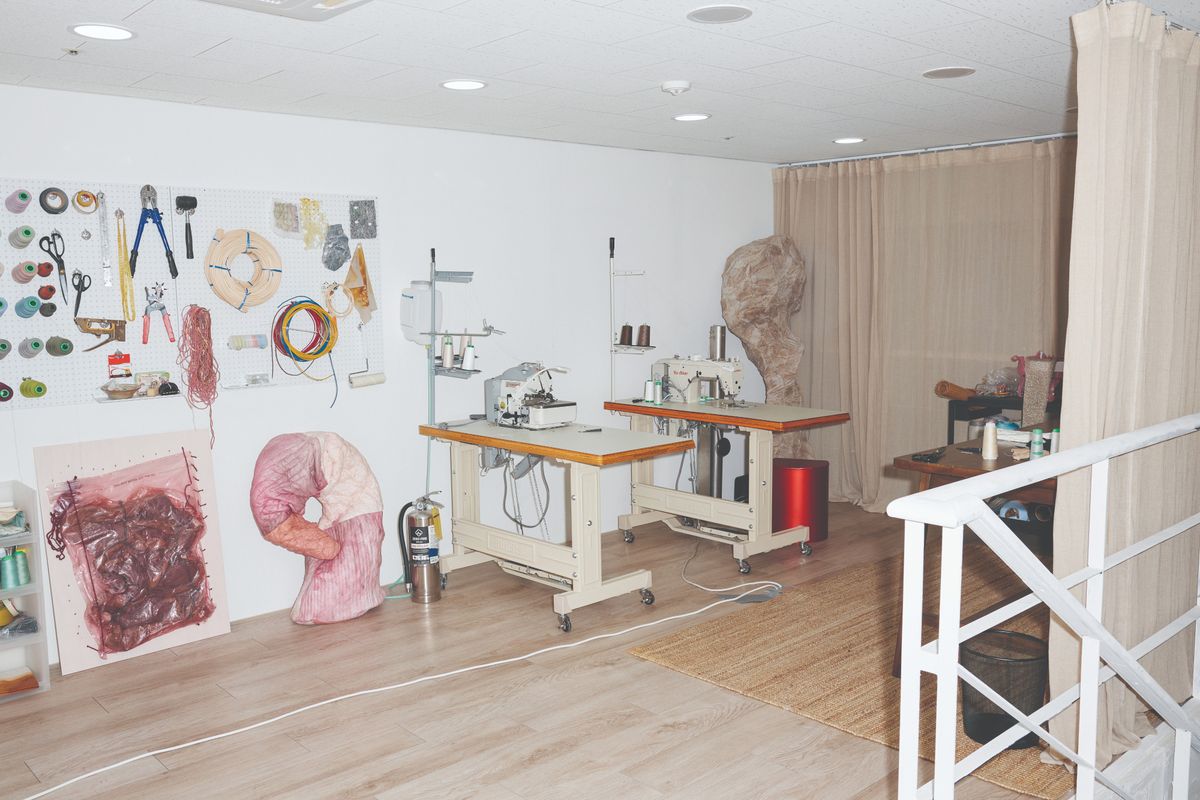
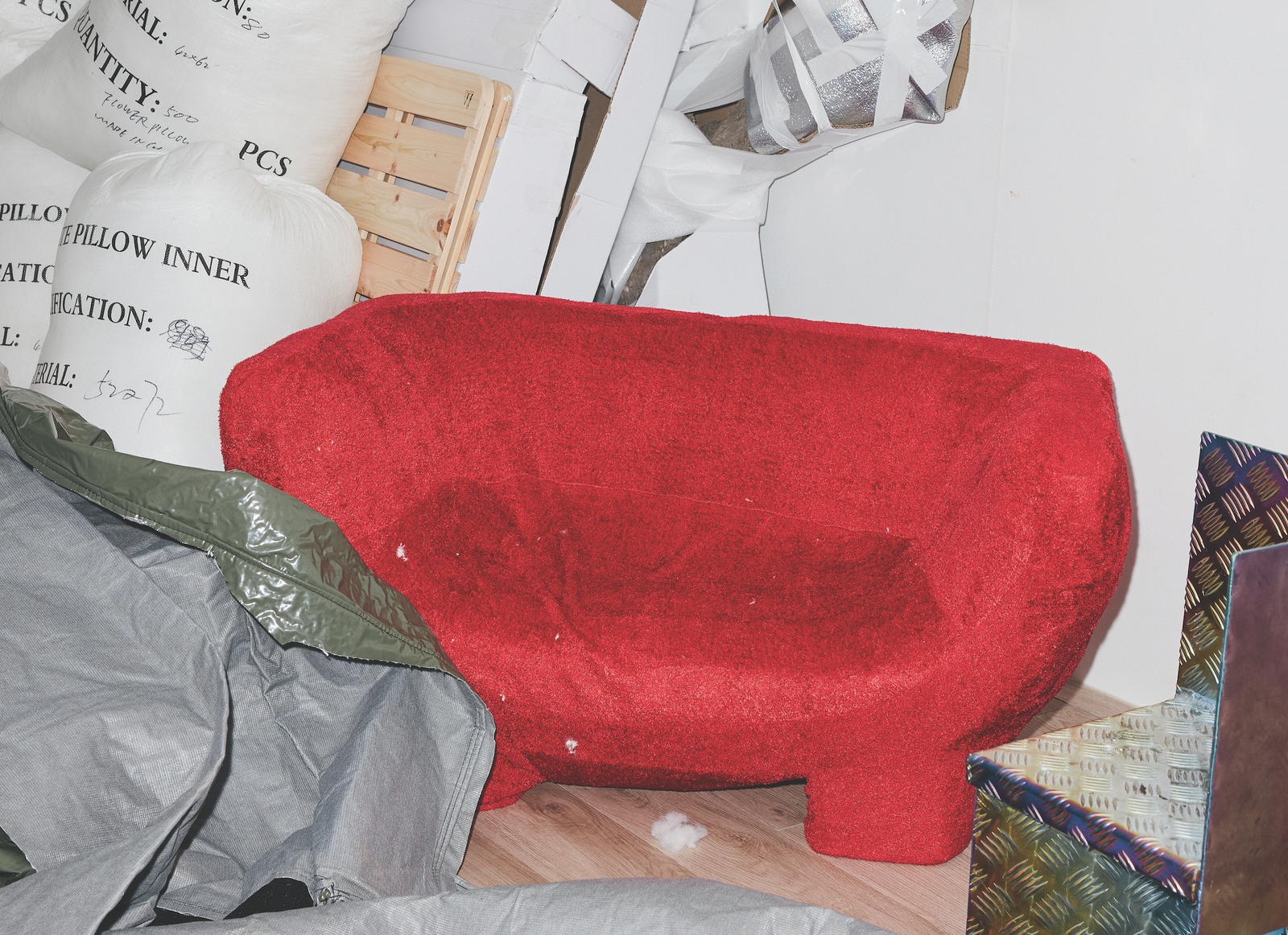
Jinyeong Yeon first drew attention as a furniture designer with chairs of strikingly original form. Having passed through the realm of art furniture, he is now shaping his identity as an artist whose work centers ever more on context and intent. Chairs and sofas still appear in his practice, but today they serve as a form — a vessel for meaning and message. To this he adds a method of dismantling and reassembling materials that have served out their industrial lives: car airbags, tent fabric, padded jackets, survival blankets. The same approach runs consistently through his collaborations with fashion brands such as Christian Dior, Nike, Kolon, and RE;CODE. By adding wrinkles, stains, and texture to materials on the verge of being discarded, he shows in concrete works how they might be used and perceived anew, under new conditions and in new contexts.

This interview is featured in Magazine C Issue 5, Togo.

©Cjin Kim
©Cjin Kim
What do design elements mean in your work?
They are closer to a means of conveying a story. So even when I make a sofa or a chair, rather than putting usability front and center, I let its function remain somewhat blurred. When a form like a sofa or a chair registers before the message of the work, I feel the story I want to tell does not fully come through. When preparing an exhibition, too, I compose the whole so that visitors experience it as a single scene rather than a lineup of individual pieces. I am also working on large-scale installations that focus less on furniture's function than on how furniture relates to space.
What is the main idea behind your work?
It begins with thinking about the passage from death to life. I liken discarded materials — deadstock padded jackets, tent fabric — to a state close to death: a husk. The state moving toward life, by contrast, I describe as skin. I have developed my work from this concept, and in my recent solo exhibition Skinship, I explored it through the relationship between skin and the human being.
What led you to start making sofas?
It began when I was working with padding. During the COVID-19 period I started making sofas from padded jackets left over in bulk as deadstock, and I felt that the coziness and comfort of padding suited the form of a sofa. Sofa-making has since become one of the main threads of my practice. In my solo exhibition Skinship, I presented "Wrinkle Flower Pupa," a wrinkled work reminiscent of a chrysalis — a choice meant to evoke both the husk and what exists inside it. Though it can be used as a sofa, I did not name it one; I intended it to be read as a sofa and an installation at once.


©Cjin Kim
©Cjin Kim
Which work has stayed with you most?
The one I completed most recently: "Wrinkled Habitat," a project carried out in the DMZ. Camp Greaves, located inside the DMZ, is a former US Army base now run as a tourist site and cultural complex. That sense of place — recognized as emblematic of Koreanness while still bearing the traces of a foreign military — became an important backdrop for conceiving the work. For this project I brought in tents actually used by the US military and incorporated them into the installation structure. The theme was the cycle from death to life, and I hoped the site's history and the material would mesh naturally. I had long wanted to exhibit in the DMZ, so realizing that wish made the project personally meaningful as well.
Tell us about the HATCHINGROOM project.
It is a large-scale installation created in collaboration with the Korean fashion brand HATCHINGROOM. Using deadstock fabric on the verge of being discarded, I built a comfortable, flexible lounge space. Taking the modular system of the Togo sofa as its motif, the project combines multiple units, and visitors can actually stay in and use it. By joining materials headed for disposal with a structure borrowed from the Togo, I composed a space where furniture and installation operate at once, with discarded materials as the starting point.


©Cjin Kim
©Cjin Kim
What keywords describe Jinyeong Yeon's work?
Death, life, circulation.
What is the most remarkable chair you have ever encountered?
The Togo. Since I often work with relatively large spaces, I have frequently drawn on the idea of the modular sofa. Whenever I wanted to bring a sense of comfort to a wide space, the Togo came naturally to mind, and it has given me a great deal of inspiration. Its natural wrinkles and modular structure occupy no small place in my creative universe. I love many iconic chairs and sofas, but the Togo is a deeply meaningful model for me personally.


Want to dive deeper?

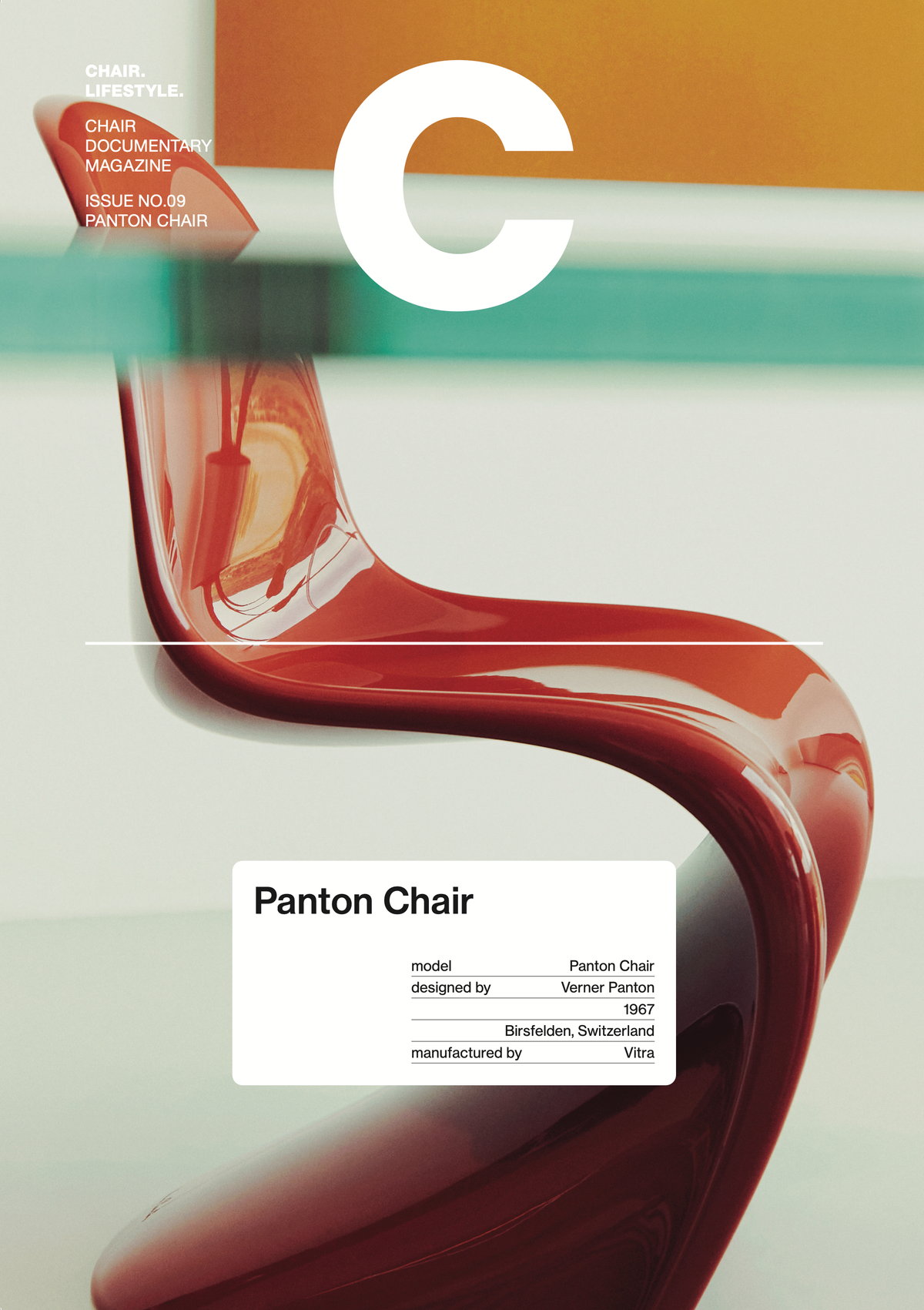
Magazine C TOGO cover

Issue.08 TOGO

Designed by Michel Ducaroy in 1973, the Togo departs from the conventions of the traditional sofa. Its signature wrinkled surface, low seat resting directly on the floor, and all-foam construction offered a comfort and innovation on a different level from the sofa design of its day. Born of the 1960s and '70s, an era yearning for social and cultural change, the Togo reflected the zeitgeist—and its appeal remains just as strong today. Rediscovered through social media during the pandemic and embraced with explosive popularity, the Togo has become more than furniture: a cultural icon of free spirit and creative energy.

Related Stories