
The Chair in Its Purest Form
Editor Dami Yoo
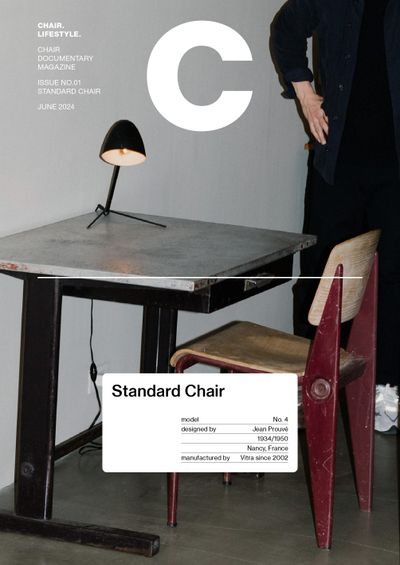
In 1950, Jean Prouvé gave the name “Standard” to his Métropole No. 305. The chair began with Chair No. 4, made in 1934, which served as its prototype. Through variations in material and design, it eventually became the Métropole No. 305. This evolution is both the history of the Standard chair and a record of Prouvé’s pursuit of his own standard. It is also the story of how a modern classic took shape.
The full article is featured in Magazine C Issue 1 ‘Standard chair’.
Standardization, practicality, and the classic Standard chair
A standard is the level or benchmark that ordinary people recognize and accept in a given situation. Establishing such a standard takes countless attempts, experience, repetition, and discussion. Once a standard is set, what follows becomes easier. At the same time, it becomes a foundation that opens up new possibilities. The Standard chair is a case in point. Its prototype was Chair No. 4, which Jean Prouvé made in 1934. Building on Chair No. 4, Prouvé accepted unavoidable circumstances, adapted to new conditions, and gradually developed it into a better chair. Throughout this process, his principle was clear. A chair must be sturdy and comfortable, the surfaces that touch the body should be smooth, the production method should be rational, and the chair should sit well within its space. Because these standards were firm, Chair No. 4 kept its distinct identity and value through many changes. Prouvé paid particular attention to the back of the chair, especially where the seat meets the rear legs. He judged that this area, which bears the most weight when someone sits, needed reinforcement, and so he devised legs with a triangular structure. The thick rear legs distribute the load according to the strength of each leg, creating a solid structure. A thorough functionalist, Prouvé believed that “a chair should be a chair.” He saw it as furniture for sitting and considered it the maker’s duty to create practical furniture for many people. In that sense, the triangular legs, somewhat rugged as they are, sum up his design philosophy. This is why the Standard chair has become “more than a chair” today. It is a classic shaped by a story of focusing on essentials and steadily advancing its maker’s principles and intentions.
Chair No. 4, the origin of the Standard chair
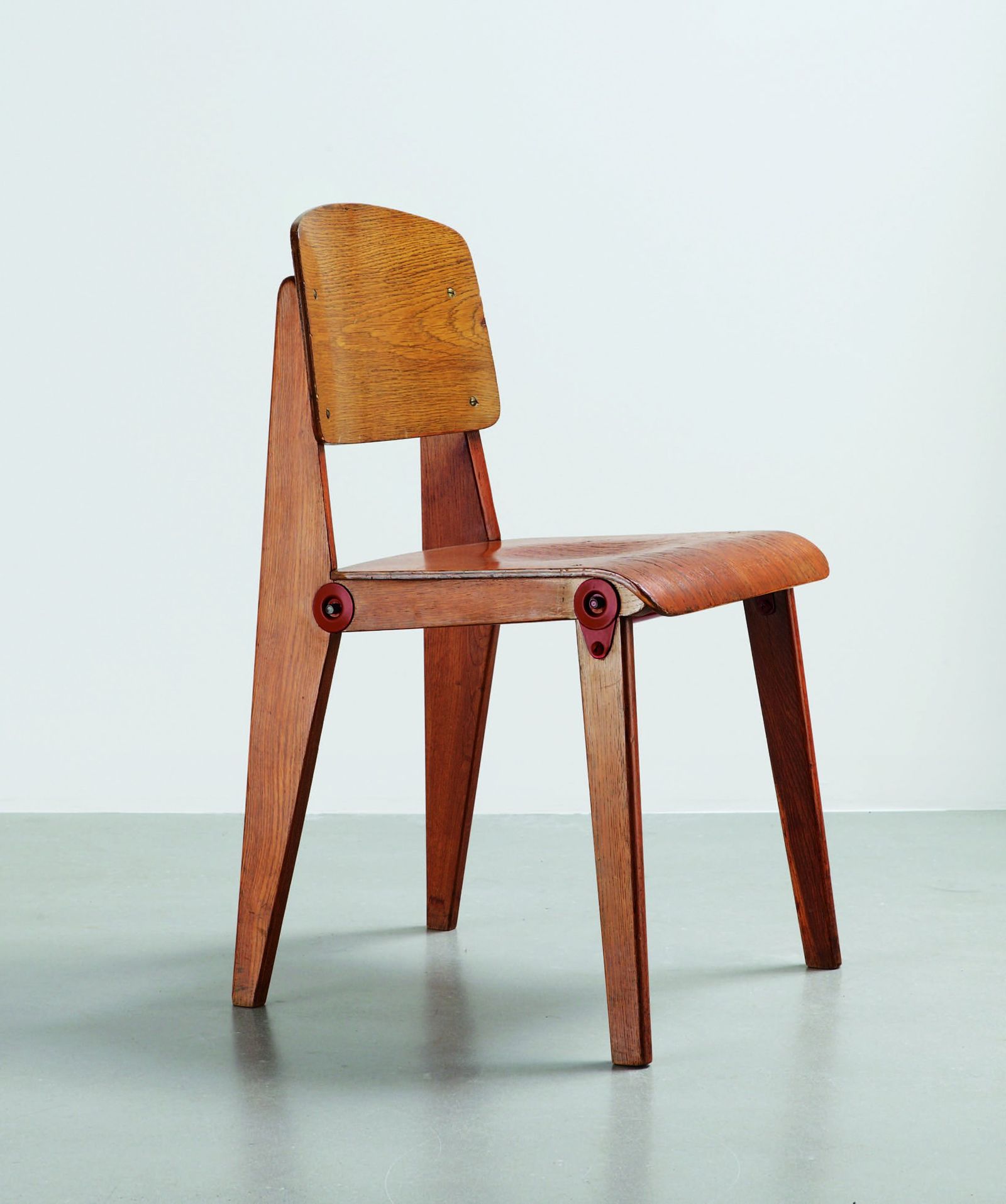
Chair No. 4, the foundation of the Standard chair, was designed as office furniture. It was the first to feature triangular legs made from folded sheet metal, and its thick solid-wood seat was shaped to soften the sitting surface. For the backrest and seat, the workshop collaborated with Lutherma, then a pioneer in plywood furniture, to improve both productivity and quality. At the time, Ateliers Jean Prouvé had about 20 skilled workers producing a wide range of objects in close coordination. When Jean Boutemain and Jean-Marie Glatigny joined, a separate design studio was established. The workshop also brought in specialists in tracing, pressing, extrusion, and welding to strengthen production. In particular, it recruited Emile Marchal, a former aircraft mechanic, to further build its technical expertise. It also acquired a 3 m press, shears, and extrusion tables to accelerate production. Using Chair No. 4 as a sample, Ateliers Jean Prouvé received tender requests from hospitals, government offices, and schools. A project with the Paris electricity company CPDE (Compagnie Parisienne de Distribution d’Electricité) proved especially significant. Chair No. 4 evolved during this project. Armrests were added to the original design, and the seat and back were padded and upholstered in synthetic leather. This design later went through further changes, giving rise to a variety of office chairs. The CPDE project became an important turning point that earned Ateliers Jean Prouvé recognition as both a designer and a manufacturer of mass-produced furniture.


Chaise Tout Bois, a chair made entirely of wood
The Chaise Tout Bois shows remarkable adaptability under extreme manufacturing conditions. During the war, when metal became difficult to obtain, the chair was made, as its name suggests, entirely of wood. Notably, production was entrusted to Vauconsant, a manufacturer near Nancy. A variety of wooden chairs were made at this time, each assembled with slightly different joinery. Because the design studio accounted for a large share of the workforce, many experiments were possible. After the war, a version that could be assembled and disassembled was introduced: the demountable wooden chair. It was made of wood but used metal fittings where the legs joined the seat supports. Through all these changes, the inverted triangular structure of the rear legs never wavered. It reflects Prouvé’s idea, and his insistence, that a chair’s sturdiness should come first in any circumstance. The Chaise Tout Bois also stands out as the only chair Ateliers Jean Prouvé aimed at the consumer market. In 1947, it won an award at the Furniture from France competition, organized by the French Ministry of Industry to create a furniture market that met the broader needs of society, including disadvantaged groups and refugees. Winning a competition with this purpose speaks to Prouvé’s vision of practicality and the public good.
Cafétéria No. 300, the beginning of mass production
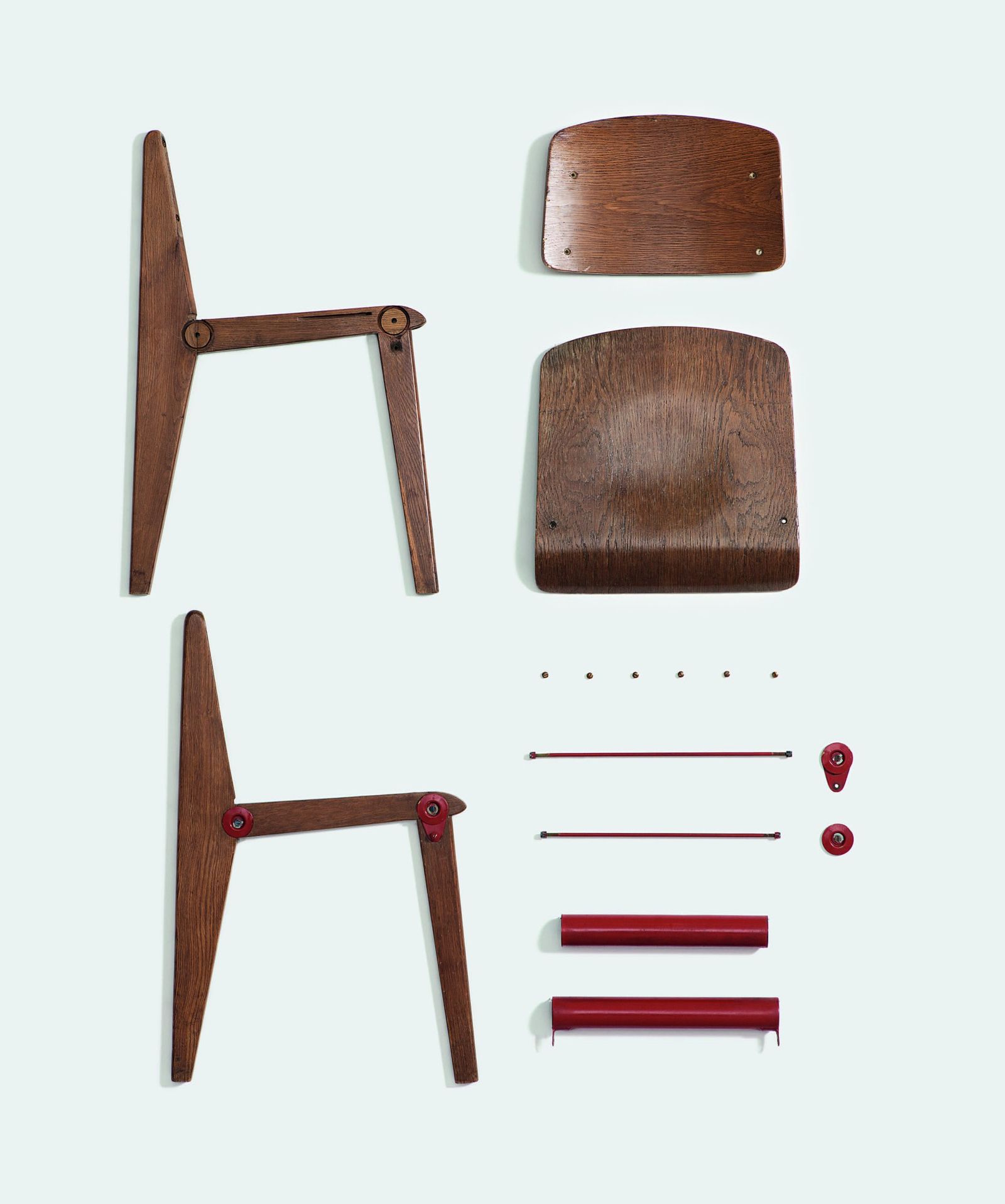
In the late 1940s, Prouvé moved his factory to Maxéville and faced many concerns about running the company. As an engineer, he considered it important to develop models that met the needs of households and public institutions and to secure enough output to maintain a steady inventory. He also saw it as essential to build a commercial distribution structure so that the company’s furniture division could become independent. It was at this point that Stéphane Simon joined, bringing the talent to ease Prouvé’s concerns. Simon, who ran a machinery company, also had an extensive network. He became the agent for Ateliers Jean Prouvé furniture. He produced brochures to promote the products to public institutions and colonial markets and suggested ways to improve them in terms of materials and convenience. The Cafétéria No. 300, introduced at this time, was a “demountable” metal version of the earlier wooden knockdown chair. Its front and rear legs were joined by welding steel tubes to triangular posts made of folded sheet metal. The parts consisted only of the seat, the back, two leg frames each joining a rear and a front leg, two rods connecting the leg frames and supporting the seat, and two screws. The method of joining the seat to the frame was also improved. On Chair No. 4, part of the triangular leg post was cut away to form a notch that held the seat. On the Cafétéria No. 300, the side profile runs smoothly without a single break. The point at the center where the screw enters was stamped (a process that presses metal with a die to pierce or reshape it), giving the chair’s triangular structure a more refined finish. The chair was mass-produced for the cafeteria of the University of Paris City, and it was also sent, under the name “Tropique,” to the Air France headquarters in Brazzaville, Congo. Under the influence of its parent company, Aluminium Français, the workshop also built prototypes using aluminum casting. High costs kept them from going into production, but a version with an aluminum seat and back was later released. This recalls Prouvé’s tenacity, as he never stopped researching and developing when it came to chairs.
The birth of the Standard: Métropole No. 305
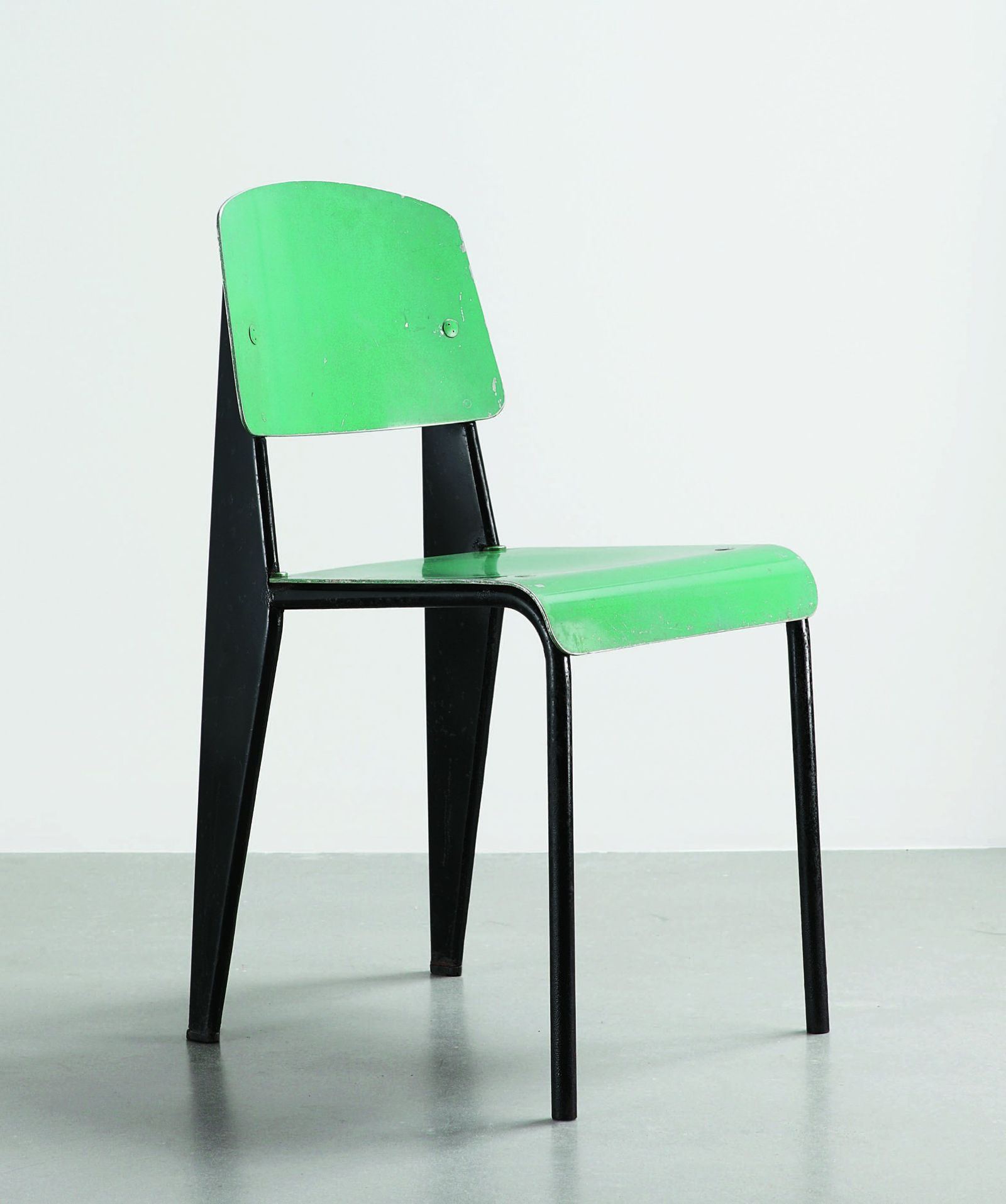
Before long, the Cafétéria No. 300 evolved once more into the Métropole No. 305. Its defining feature was a one-piece frame rather than an assembled one, which made the production process and costs far more efficient. Its construction also differed from earlier models. To join the front and rear legs, the center of the triangle was pierced, the front leg was inserted, and the two were welded inside the tube. A close look at this joint reveals how the chair is assembled, reflecting Prouvé’s preference for designs that openly show how they are made. Used in a wide range of settings, including the offices of the Fédération Forge Fonderie and the French Alternative Energies and Atomic Energy Commission, the Métropole No. 305 is also a version that showcases the colors of Prouvé’s palette. Prouvé named it the “Standard chair,” considering it the chair that best expressed his design. After the Maxéville factory stopped production in 1951, the chair was manufactured and distributed through Stéphane Simon until 1969. Simon worked closely with Prouvé, offering advice and discussing the direction of the business. Only one plan was not accepted: putting Prouvé’s name front and center for marketing. Prouvé believed that the more personal fame stood out, the more it would upset the balance between design and manufacturing and overshadow the achievements of his fellow workers. He simply wanted to stay true to his role, developing efficient production methods suited to each situation and making practical objects for public use through mass production. Perhaps that is why this chair, which he named the “Standard,” carries a quiet declaration that resembles the man himself.
Want to dive deeper?
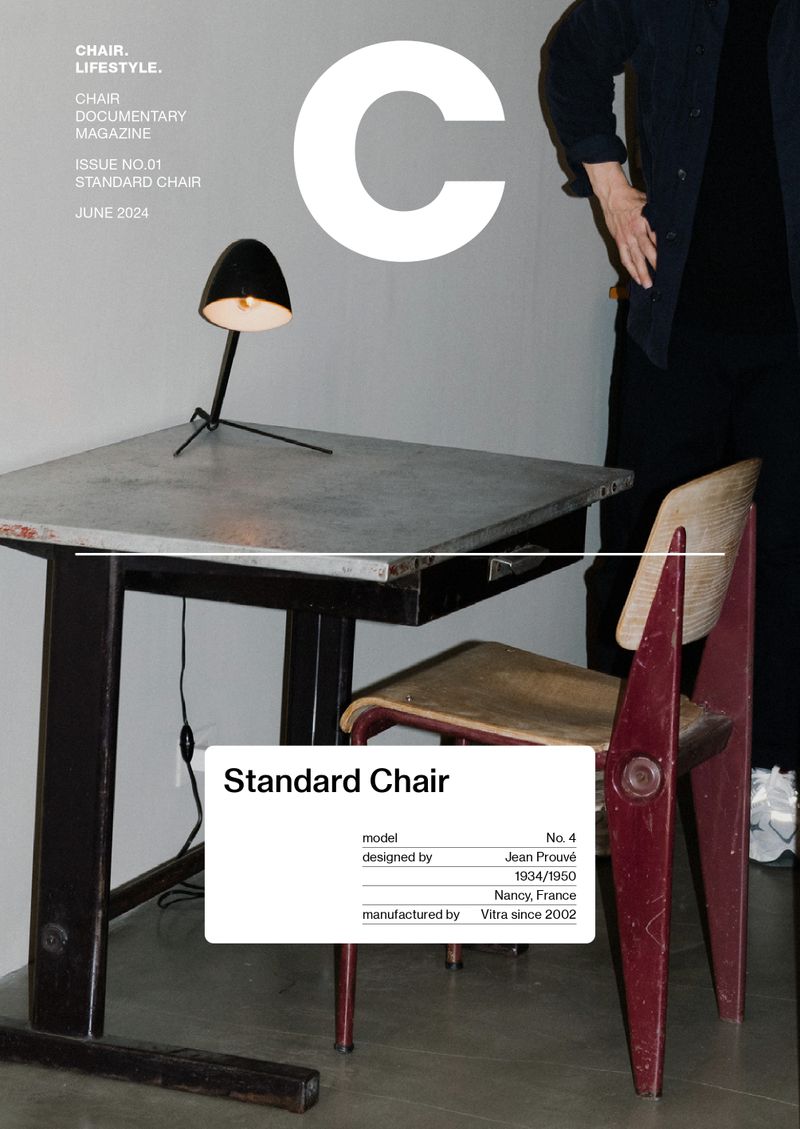
Issue.01 Standard Chair
The Standard Chair traces its origins to Chair No. 4, created in 1934 by French designer and architect Jean Prouvé. Over many years, Prouvé refined its materials and design, arriving in the 1950s at a 'standard' chair suited to mass production.