The Legacy of French Modern Designers, Gathered in Paris's 11th Arrondissement

Editor Dami Yoo (Paris) | Photographer Sunghoon Park (Paris)


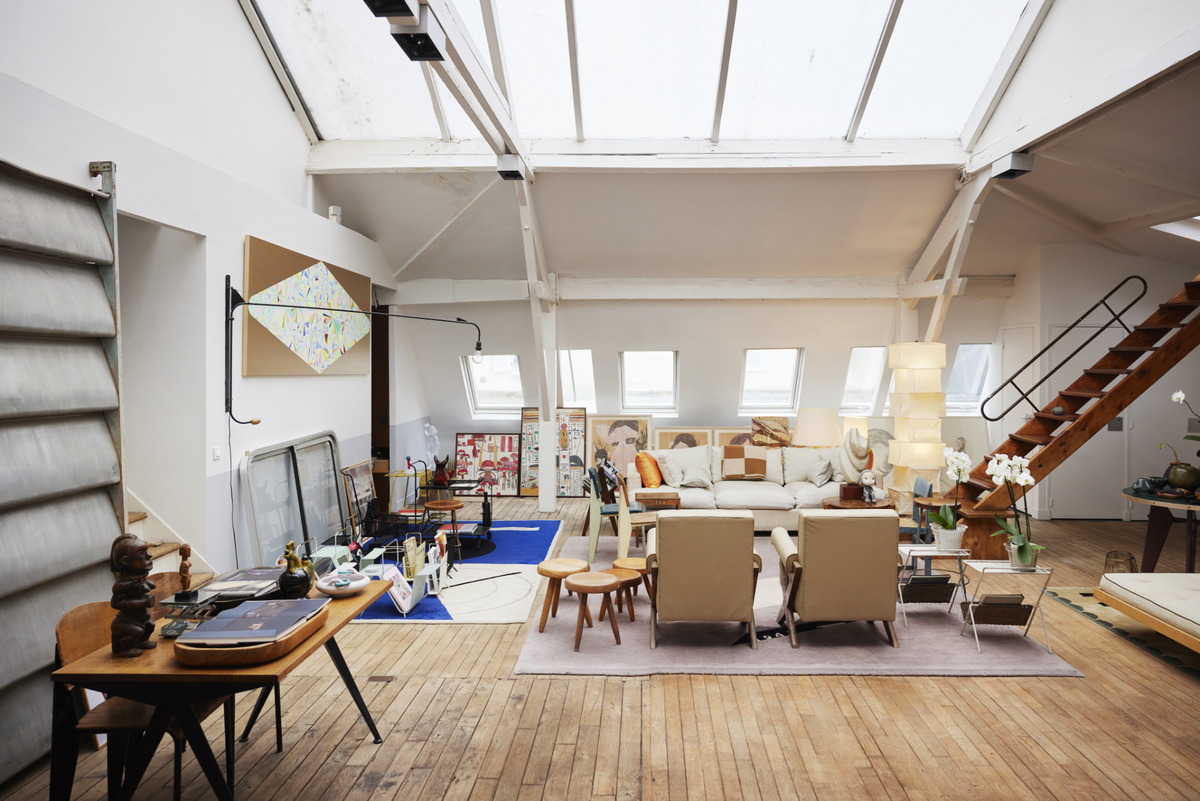
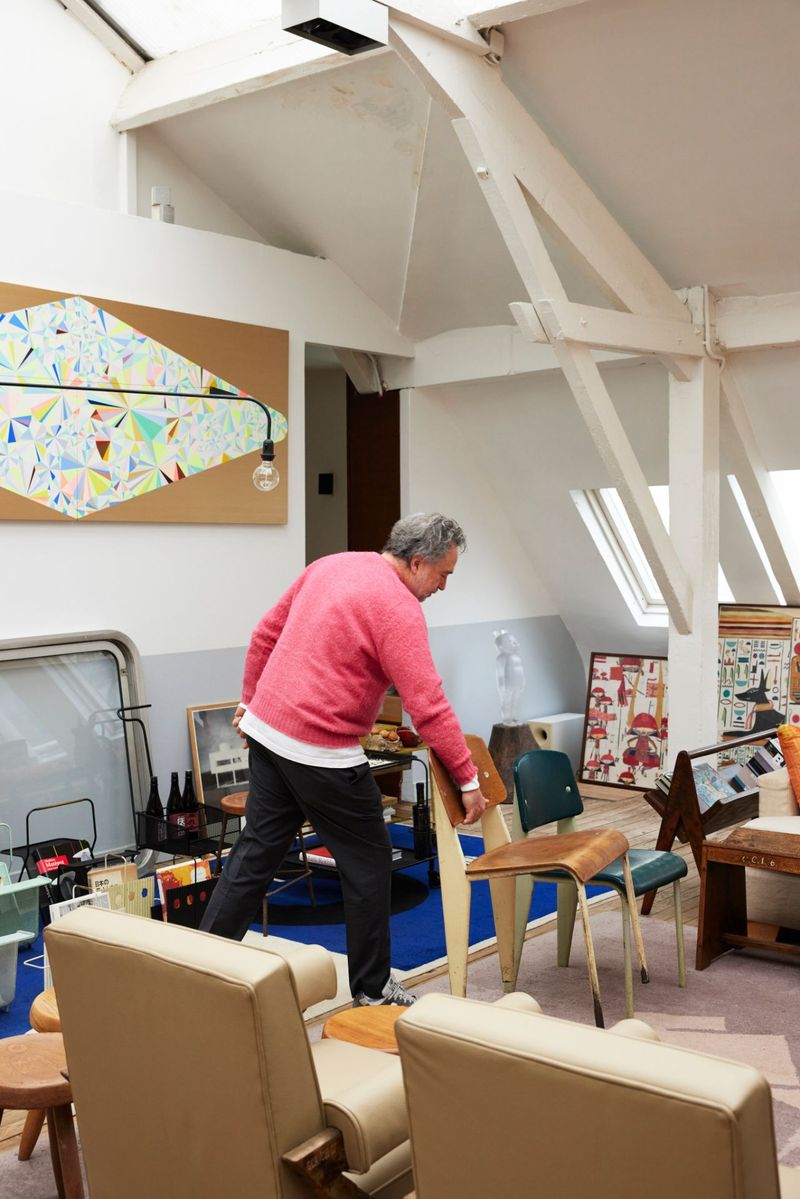
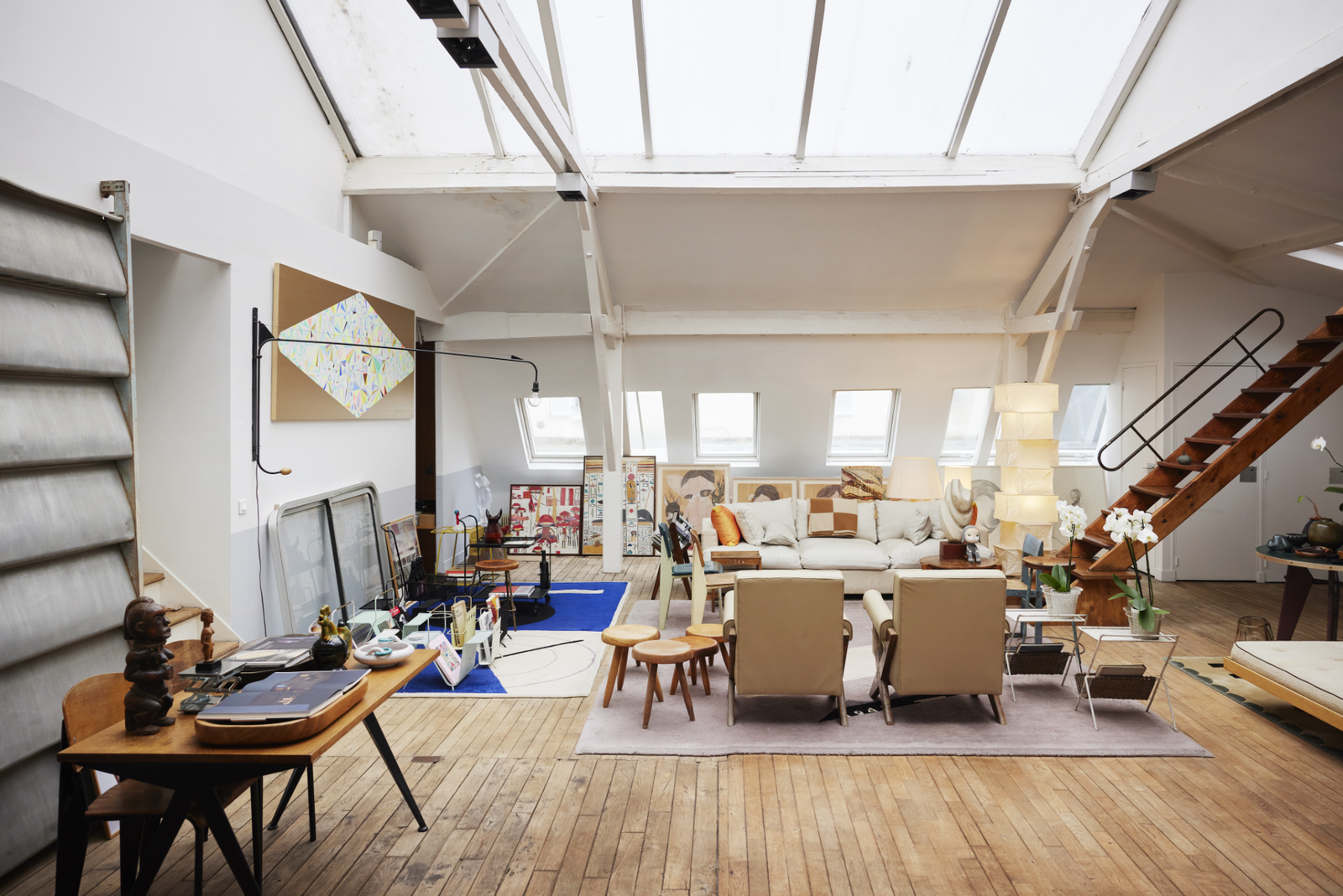
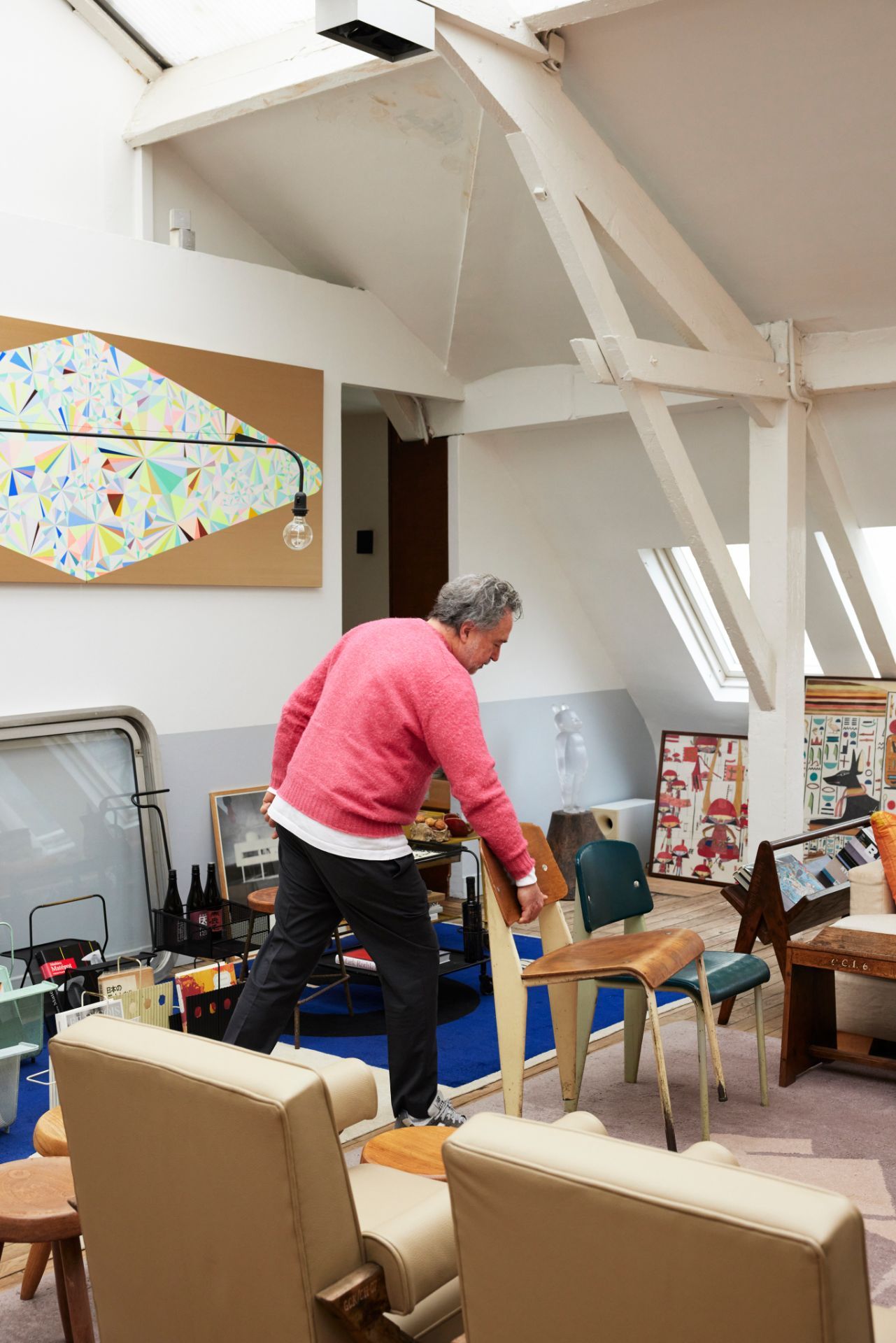
In Paris's lively 11th arrondissement, Thierry Lamoyan lives in a home he completed himself some forty years ago—raising walls and carving out rooms in an empty space that had neither water nor electricity. He began his life as a collector by filling it with furniture by the designers who captivated him: Jean Prouvé, Pierre Jeanneret, Le Corbusier, and Charlotte Perriand. Word spread, and as neighbors and friends came asking him to track down vintage pieces on their behalf, that devotion became the seed of Galerie One. His home, brimming with the legacy of French modern designers, now serves as gallery, office, and showroom all at once. Family, staff, clients, and guests come and go daily, work and life mingling under one roof—and when asked about the advantages and disadvantages of living this way, Thierry answered without hesitation: “There are only advantages, and not a single drawback.”

This interview was originally published in Issue 1.


Living in the same house for more than forty years is quite remarkable. You must have witnessed firsthand how the 11th arrondissement has changed over that time.
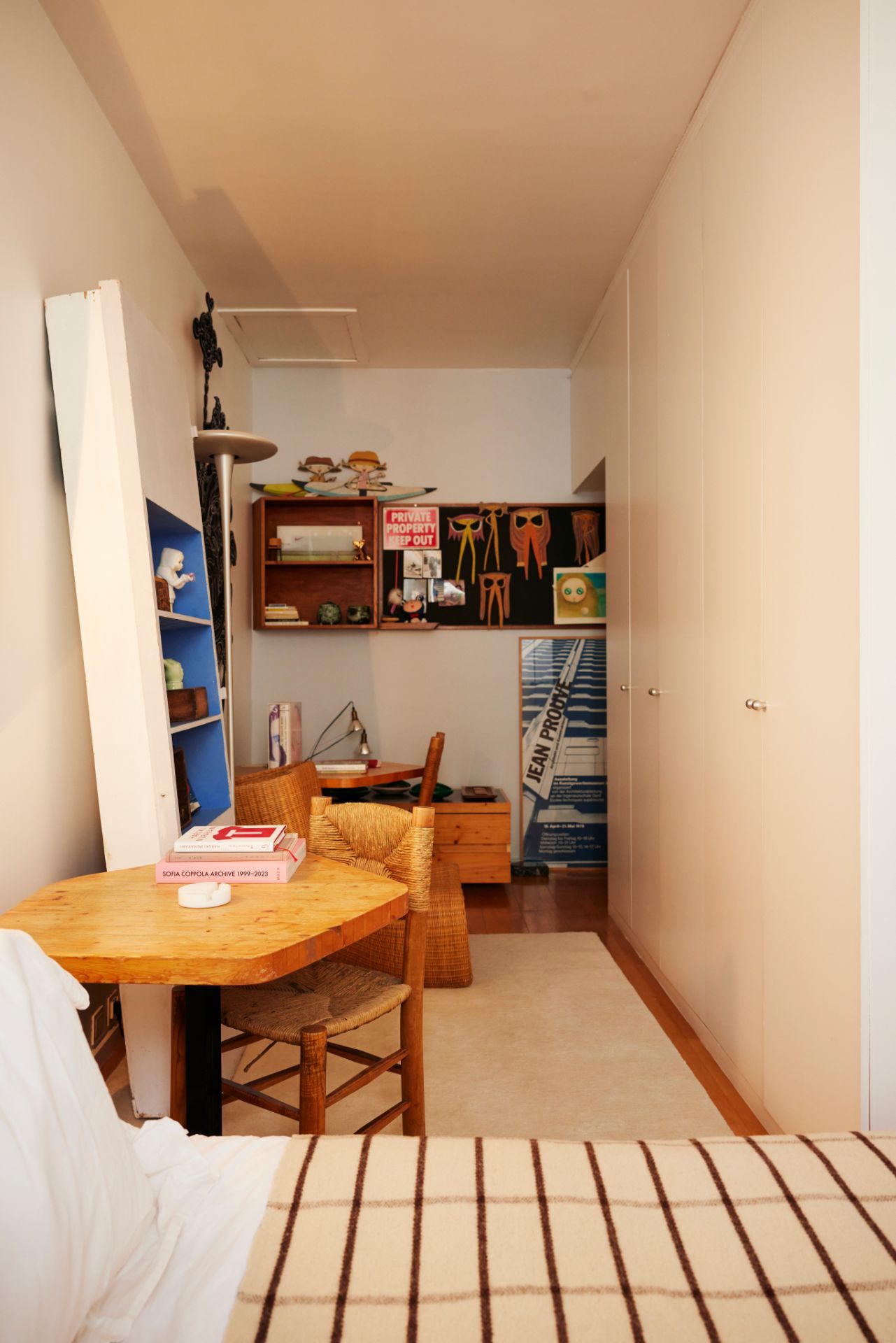
Back then, the 11th arrondissement was something of a “ghetto.” Today it is lined with charming bistros and shops worth browsing, but in those days it was such a desolate neighborhood that going out to eat meant crossing the Seine. This building had no heating—no electricity or running water, either. It was just an empty space with pigeons flying about. It took a very long time and many stages of work to make it the livable place it is now. Fortunately, we had a friend who could offer crucial advice on planning and designing our space: Jean-François Bodin, the architect behind the Musée Picasso in Paris, the Musée Matisse in Nice, and the Musée d'Art Moderne de Paris. With his help, we first raised walls to create a bedroom and a bathroom. Next we made two rooms for my sons, Lucca and Simon. And as we filled each room with good furniture, the space became both charming and well suited to our way of life.
Please keep image captions to two lines at most.


Perhaps that explains why every corner of the house feels at once like an artist's atelier, a gallery, and a storage vault. It's wonderful how naturally the vintage modern pieces sit here, the Standard Chair among them.
We like arranging design pieces worthy of a gallery or museum collection so they can be used in everyday life. Unlike works of art, furniture is meant to be actively used—that is how you come to understand the designer's ingenuity and discover an object's practicality.
When did you start collecting furniture?
Around 1980. That is when I began buying Jean Prouvé's Standard Chairs, too. In those days you could often come across Prouvé's work at the Paris flea markets on weekends and pick up a Standard Chair for about fifty euros. Galerie Patrick Seguin, now known worldwide as one of the most prestigious design galleries, was probably in its earliest days. Every week I made the rounds of Paris's galleries and antiques markets, immersing myself in objects from the 1950s. Meeting and talking with dealers this way broadened my interest in and knowledge of furniture, and from then until now, when it comes to furniture, I have collected only designs from around the 1950s, the postwar years.
Was there a particular reason you were so devoted to postwar design?
At the time, Art Deco furniture already held such lofty status that the prices were simply beyond my reach, and 1980s design was not to my taste. Postwar design of the 1950s and '60s, on the other hand, struck me as remarkably modern. The original Standard Chair dates to the 1930s, yet even now, in 2024, I think it remains refined and utterly contemporary.


When it comes to collecting design, would it be fair to call postwar design of the 1950s your “standard”?
When I buy furniture, I weigh two criteria: collecting and using. That is also why I follow 1950s design—postwar design is famous for being practical. Long ago at Galerie Patrick Seguin, I saw a SCAL bed, a wardrobe, and chairs arranged together, all in yellow, and I was so taken with them that I bought the ensemble as a set. My two sons slept in those Jean Prouvé beds from the day they were born. Recently I sold one of the two beds to a friend, and the other is still in use. They are sturdy enough to serve all those years without a single problem. A perfect example of both criteria fulfilled, wouldn't you say?
Between the time spent with your beloved family and the treasured pieces that fill it, this home must hold a special place in your heart.
When Lucca and Simon were little, I loved watching them play in this space. They would ride their tricycles around and between the furniture, set up two Standard Chairs as goalposts for soccer, and sometimes stretch a net across the big Charlotte Perriand table to play table tennis. Of course, that was only possible because these pieces are sturdy enough never to break or fall apart, no matter how boldly children handle them. Lucca and Simon were endlessly creative and enthusiastic about inventing fun with our furniture. Now the two boys have grown old enough to understand that they were living in a wonderful place furnished with remarkable, rare pieces—and at last they have moved out on their own.
Having grown up surrounded by such special furniture, Lucca and Simon must have been deeply shaped by your taste. Conversely, how do you and your wife find yourselves influenced by your sons?
Beyond the design furniture itself, I think taking the boys on a weekly circuit of the galleries in Paris shaped who they became. Simon, a film director, holds another vision of becoming a furniture designer, and Lucca, a fashion designer, has a strong creative streak. Perhaps because of that, he draws inspiration from the most varied fields and is passionate about so many things—contemporary art, music, film, and above all bread. He is such a fanatic that he finishes a whole baguette every day... (laughs) In any case, what Lucca gives me is the sight of someone who looks at so much of the world with constant curiosity and soaks it up like a sponge. Watching him, I learn that I, too, should keep trying to be an open person.
Seeing you both arrive in matching sweaters today, it is easy to guess just how much you influence each other.
A complete coincidence. (laughs) Though in truth, it happens quite often.
It is fascinating that the house where your children once played has become the place where you now work together.
Lucca runs his fashion brand, Verlan, while also handling the work of Galerie One, which deals in French postwar design furniture, alongside me. The same goes for me—my main occupation is introducing the crafts and brands of Japanese artisans to France, so I spend six months of the year in Japan. During that time Lucca takes charge of the gallery in Paris. Sharing a workspace with Lucca is one of the great joys of my life. Working side by side, we find moments to talk about the pieces that interest us, and through the time we spend together we influence each other a great deal. And whenever a piece arrives or leaves, we love discussing it together and delight in rearranging the furniture all over again.
When did you begin using your home as a gallery, showroom, and office?
Since 1988. That was when I left a twenty-eight-year career in advertising to start my own business distributing Japanese brands like Porter in France. I looked at many spaces to serve as both showroom and office, but it was hard to find one that met my conditions—nowhere else had light this good, an atmosphere this calm, ceilings this high. In the end I decided to change my way of living and use the house as a showroom and office. My team has been commuting to our home ever since. We invite the gallery's clients here as well, and the members of Lucca's brand work here with us, too.
The space where you have matched Pierre Jeanneret's dining table and Chandigarh project chairs with chairs by Jean Prouvé and Charlotte Perriand is striking.
That is where we work. My favorite, Jean Prouvé's Métropole 306, is “my chair”—I have used it every day for forty years. I bought it some forty years ago from the Parisian collector Didier Teisso, who still deals passionately in postwar design and studies Le Corbusier in great depth. At his small gallery in the Marais, I first discovered this blue Standard Chair upholstered in faux leather, fell in love instantly, and decided to buy it within three minutes. I still vividly remember paying on the spot, loading the chair into the trunk of my car, and driving home that day.
With works by France's defining designers of the 1950s in such harmony, the atmosphere here feels almost as if the designers themselves had gathered in one room.
For us, who enjoy moving furniture around and changing the layout of the space, the combination of designs by Jean Prouvé, Pierre Jeanneret, Charlotte Perriand, and Le Corbusier is exceptional. Perhaps because they influenced one another in their day, the pieces always go well together, even though they were made by different designers and used in different places before coming here. Mixed together, they never look cluttered or the least bit unnatural. The blue Pierre Jeanneret chair is Lucca's favorite. It sat in an administrative office in Chandigarh, India, where the person using it painted it simply because they liked blue. In the vintage world, stories like that make an object all the more special.
How do you see the stature and value of these designers today?
They occupy the list of the most famous designers. Prices are climbing like a rocket! In fact, through the 1980s and '90s, Jean Prouvé's designs were hardly known at all. Only a very small circle of design enthusiasts knew of them, and accurate information was hard to come by. Back then, the places you could see Prouvé's work were spaces specializing in 1950s design, like Galerie Patrick Seguin and Galerie Philippe Jousse, and a mere handful of others. As I remember it, Prouvé's designs began to gain recognition when opinion-leading galleries started publishing exhibition catalogues on him and collaborating or exhibiting with the likes of the Museum of Modern Art in New York, Art Basel, and FIAC, the international contemporary art fair held in Paris. They succeeded in catching the eye of contemporary art collectors, and soon major auction houses like Christie's and Sotheby's joined in, and the design market went fully global. The Standard Chair, in particular, has become territory that highly influential collectors covet.
What about the general public in France? Isn't Jean Prouvé counted among the designers who define the country?
To be honest, his popularity is still largely confined to people interested in design or collecting. What fascinates me is the response among fashion designers around the world. Yohji Yamamoto is famous for placing Jean Prouvé's exceedingly rare Trapèze tables in his Paris and Tokyo stores. The fashion designer Azzedine Alaïa installed one of Prouvé's gas stations in his home and made a bedroom inside it, and Marc Jacobs was an avid collector as well. Prouvé seems to hold a certain power to attract creative people. Many of our friends and collectors work in creative fields, too—musicians, fashion designers, film directors, art directors, advertising producers.


Want to dive deeper?

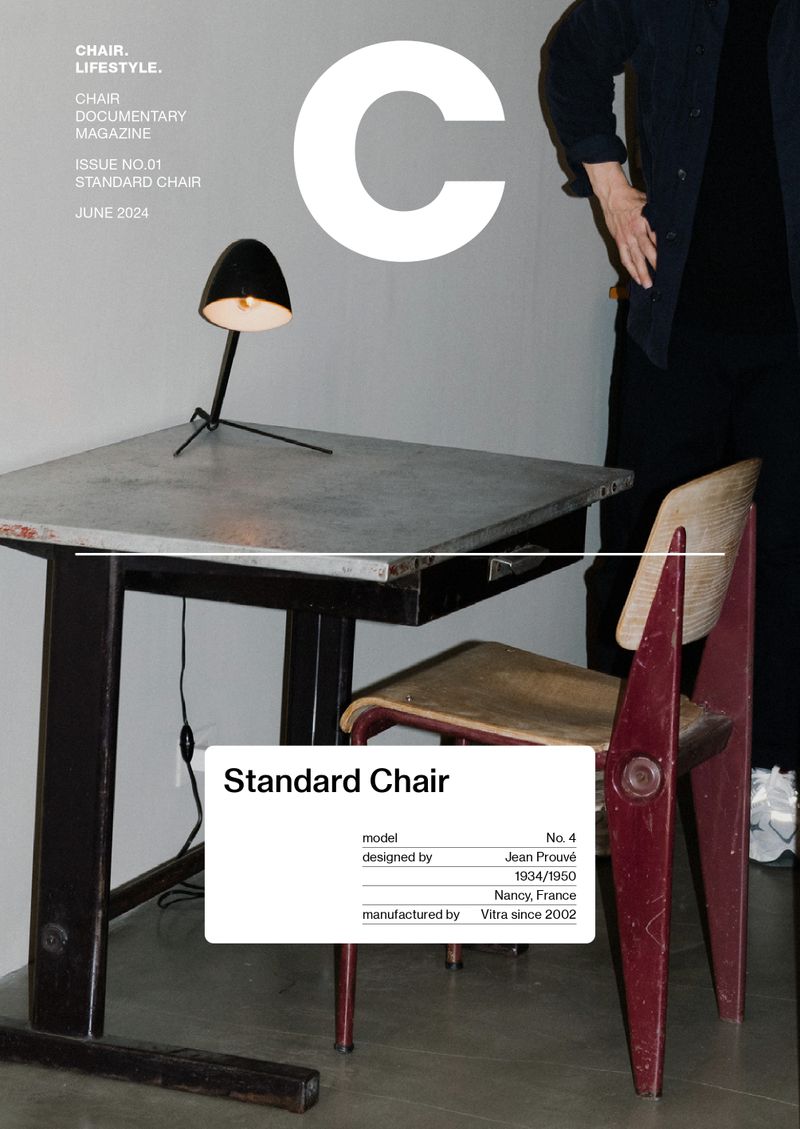
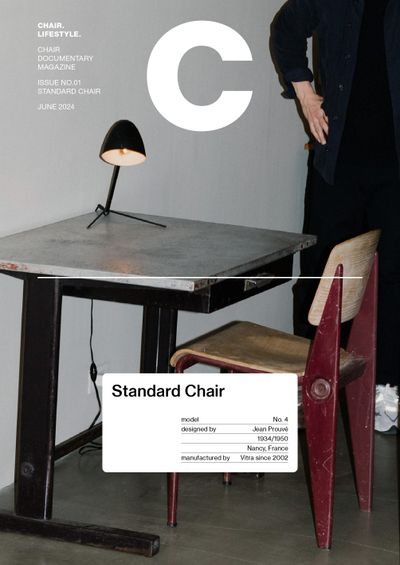
Magazine C STANDARD CHAIR cover

Issue.01 STANDARD CHAIR

The Standard Chair traces its origins to Chair No. 4, created in 1934 by French designer and architect Jean Prouvé. Over many years, Prouvé refined its materials and design, arriving in the 1950s at a 'standard' chair suited to mass production.

Related Stories