What Ronan Bouroullec Does at His Brittany Retreat

Editor Seungju Yoo | Photographer Miyeon Jeon

At Ronan Bouroullec's house, the scent of the sea greets you before anything else. Here, a garden left untamed—ivy, lavender, hydrangeas, berry bushes—meets an ocean view that follows you everywhere. Inside, furniture of his own design, drawings, and ceramic reliefs sit in easy company with nameless vintage pieces, traditional porcelain figurines, and cherished works of Finnish design.

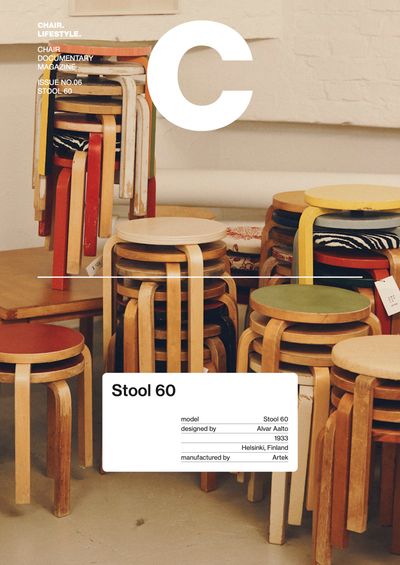
This interview was originally published in Issue No. 6, Stool 60.


©Miyeon Jeon
©Miyeon Jeon
You've been spending most of your time in Paris lately. What do you usually do during the train journey from Paris to Brittany, which takes more than three hours?
I enjoy drawing. Growing up in a remote corner of the countryside, drawing was my only friend and my means of communication, and the habit seems to have stayed with me naturally. It's nothing grand—a pen and paper are enough, and even a ticket or a napkin makes good material. For me, drawing is itself a journey of posing new questions and finding answers. If design is a collaborative endeavor that changes the world for the better, drawing is a private realm of my own where I can express my inner emotions—even the negative ones. And when I get hungry, I buy a croque monsieur from the snack bar. It's the best choice you can make in such a confined space.
©Miyeon Jeon
©Miyeon Jeon
You were born and raised in Brittany. What kind of place is it to you?
It's a fascinating place. In my parents' generation, Brittany had a culture so distinct that people spoke Breton, a Celtic language, and had to learn French. Traditionally, the mindsets of farmers and fishermen sit side by side here. I'm interested in both, but I feel closer to the sea. I've surfed since I was fifteen, and I swim all year round. In the water, I feel as if I've become part of nature itself.
I still vividly remember arriving in Paris for the first time at eighteen, after leaving home. In those days the buildings were a darker gray than they are now, and the cars were endless and fast. I lived in Saint-Denis for a while, but my heart always remained in Brittany. I can't quite explain why. In this house, where even the internet barely works, all I do is sit still and watch the scenery change from moment to moment. It's truly moving—and yet, paradoxically, taking it all in is tiring. Just look, even now: the light and the wind, the sky and the sea are all in motion.
As a creator, gathering endless information so ceaselessly and sensitively must consume an enormous amount of energy.
Of course, I'm not always observing. Time with family and friends is precious too. In summer, everyone gathers here and enjoys the lively atmosphere. But in winter, this place is endlessly quiet—you could say there's almost no one around. Even when a fierce storm drives waves high enough to engulf the lighthouse, I enjoy a warm peace by the fireplace with my cat. Sometimes my neighbor, an elderly man who loves fishing, knocks on the door to ask me to share a meal. His bushy beard reminds me of Hemingway. Just today he handed me fresh fish he had caught himself.
©Miyeon Jeon
©Miyeon Jeon
How did you discover this secluded place, so at one with nature? What drew you to such a singular space and led you to settle here?
I was around thirty. Within my means at the time, I bought a small farmhouse about a hundred kilometers from here—an isolated spot without a single neighbor. From then on, I browsed real-estate websites every day, looking at houses; it felt like traveling. Then one day I came across this place. It doesn't float on the water, but it borders the sea so closely that it felt like a boathouse. On the lowest level, the natural bedrock even extends into the interior, forming the building's foundation and part of its walls. The way it merged organically with its surroundings caught my eye at once. As it happened, I had a reason to visit the area, so I came to see it right away.
Curiously, I've heard the building once served as lodgings and later as a sardine cannery.
If you go far back, it was once a house the mayor of this area built for himself. It then became an inn with a restaurant—an auberge. In the nineteenth and twentieth centuries it was run by a proprietress, and countless artists—painters, writers—came through. Among those who stayed for months at a time to pursue their work was the Post-Impressionist painter Émile Jourdan. (Bringing out a painting by Émile Jourdan from behind the living-room curtain) Look how he accentuated the pronounced jawline of the woman working in the kitchen. I won this piece at auction thanks to an art historian who directs the museum of fine arts in Quimper. After that, the building was one of three sardine factories in the area. Then, during the First World War, it was occupied by soldiers, and a German is said to have lived here. (He brought out a series of photographs—more than a hundred, taken by the real-estate agent—showing the house as it was in the German resident's day.) The German furniture, tiled floors, and decorative stove in those photos—that colorful interior was far from my style. Other people lived here afterward, and I bought it ten years ago.
©Miyeon Jeon
©Miyeon Jeon
From Vitra's Slow Chair to Mattiazzi's MC15 Quindici lounge chair, the chairs of your own design placed by each window also catch the eye—like audience seats facing a stage. Is there a view that particularly draws you in?
The house faces east, so it gets good light in the morning, and the shifting colors created by light and shadow are fascinating. The sky from December through February is especially beautiful. In the early morning and at dusk it turns pink, and the sea naturally flushes red with it. In winter, the green plants across the water turn orange, and when the sunlight catches them they look remarkably warm despite the cold season. The American ivy growing thick like a hedge along the edge of the terrace here also turns red as the weather cools. I saw the same plant growing at Alvar Aalto's house in Finland. It was a coincidence, but a truly welcome one.
In the harsh environment of the seaside, light must play a vital role as well. I see Flos's Céramique Side, Inga Sempé's Matin, and the Lampyre/w163 lamp, whose name means “firefly” in French. There seem to be more than five lights in the dining room alone.
Natural light is best, but through the winter I layer indirect lighting, paying attention to color temperature. I light candles often too, using candleholders by BD Barcelona and Kaj Franck.


©Miyeon Jeon
©Miyeon Jeon
©Miyeon Jeon
©Miyeon Jeon
How does this beautiful environment, unfolding like a panorama, inspire your artistic life?
The landscape surrounding the house seeps into me like a quiet mist, beyond the boundary of consciousness. It's not a simple idea like “I should adopt the colors of that sea and those trees in my work.” There is one question I never fail to ask myself: “Would this design be harmonious if I placed it on the terrace?” In other words, I imagine whether it accords with the pure essence of its surroundings.
The Palissade chaise longue by Hay on the terrace resembles the sea's gentle ripples—even its shadow seems to undulate. It harmonizes with the works throughout the house that you've completed with global brands. Could spending your days in a space filled with objects of your own design become a process, and a method, for exploring the essence of creation?
This is actually the first time I've kept furniture I made at home and used it myself. Even with a finished piece, encountering it in daily life would surface details that bothered me, and that often became a source of stress. But now, with plenty of room indoors, I can simply put anything I don't like somewhere out of sight, which makes things much easier. I still ask myself, with a critical eye, how I might design things better. I often post photos on Instagram taken from my own angles at home; they show, without embellishment, the relationships between the environment, the objects, and myself. I pursue the coexistence of different times—an old, weathered building and contemporary design. In that sense, this house also functions as a kind of test bed.
Beyond your own furniture, pieces by Alvar Aalto—whom you've named as the designer you most admire—also stand out, from Stool 60 to his tables and Screen 100. Why Alvar Aalto among so many names, and how has his design influenced you?
Around 2010 I was invited to an Alvar Aalto seminar, and touring his architecture in Finland left a deep impression on me. I was captivated by details that considered everything—door handles, the texture of the walls, the size of the windows, even the placement of plants. I'm not an architect, but I learned a great deal about relationships, and my respect for him grew even deeper. He was also an outstanding painter. His freedom in crossing boundaries became a model for me. When I decided to become a designer, in France you could only specialize in a single field, so my drawings were regarded not as “art” but as “designer's drawings.” And Finland's democratic approach to design—the way Alvar Aalto's stools or Iittala's glassware are enjoyed by everyone rather than a particular class—was deeply impressive to me.
©Miyeon Jeon
©Miyeon Jeon
©Miyeon Jeon
©Miyeon Jeon
You use his furniture not only here but also at your studio and home in Paris. As both a designer and a user, what do you think is the appeal of Stool 60?
First of all, it's light and comfortable. It needs no special care, and you can stack several of them. The Stool 60 I own is one I found ten years ago at the Artek 2nd Cycle shop in Helsinki. Personally, I feel an attachment to objects that carry the marks of time. My first piece of Alvar Aalto furniture was the black-topped table in the middle of the dining room. I bought it well over fifteen years ago at Twentytwentyone in London. It had been used in a café in Helsinki, and under the tabletop there are still traces of chewing gum that students playfully stuck there.
So 2015 was the year you first purchased Stool 60, and also the year you began your collaboration with Artek.
At one time I thought Artek was already remarkable for its twentieth-century designs alone, and saw no need to create something new for the twenty-first. But my perspective changed with our first project together, the Kaari collection. Kaari, which means “arch” in Finnish, draws on a practical architectural structure: a piece of wood bears the vertical load of the tabletop or shelf, while an arched steel band lends supplementary support. I was deeply inspired by Alvar Aalto's bent plywood—the L-shaped leg—and it is closely connected to my own design. In practice, applying the same approach to furniture with different uses—consoles, shelves—was no easy challenge. I judged that the system wasn't suited to a chair, so I left chair designs out of the collection. Instead, we placed Stool 60 in the campaign images for the Kaari collection.


 ©Miyeon Jeon
©Miyeon Jeon


You and Alvar Aalto share the values of simplicity, clarity, functionalism, and human-centered design. In that context, tell us what you believe makes a truly “good chair.”
Comfort in sitting is fundamental—but in a word, I'd call it “a chair like a tea bag.” Just as a tea bag dropped into hot water transforms its taste and aroma as if by magic, a good chair has the power to change the atmosphere of an empty space the moment it's placed there. It should also add value as time passes, without showing itself off. It's rewarding to see chairs I conceived twenty or thirty years ago still in production today. When I design, I always picture the future in my mind.
Finally, a question we ask everyone: what is your favorite chair?
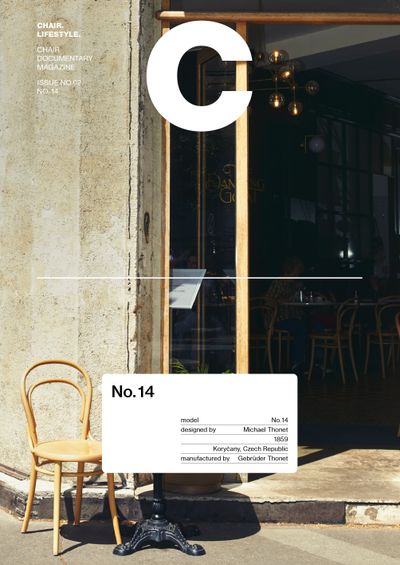
Michael Thonet's Chair No. 14. Its delicate curves carry a sense of craft, yet it is optimized for mass production—a product of great industrial efficiency. It's a chair that strikes a fine balance between beauty and function.


Want to dive deeper?

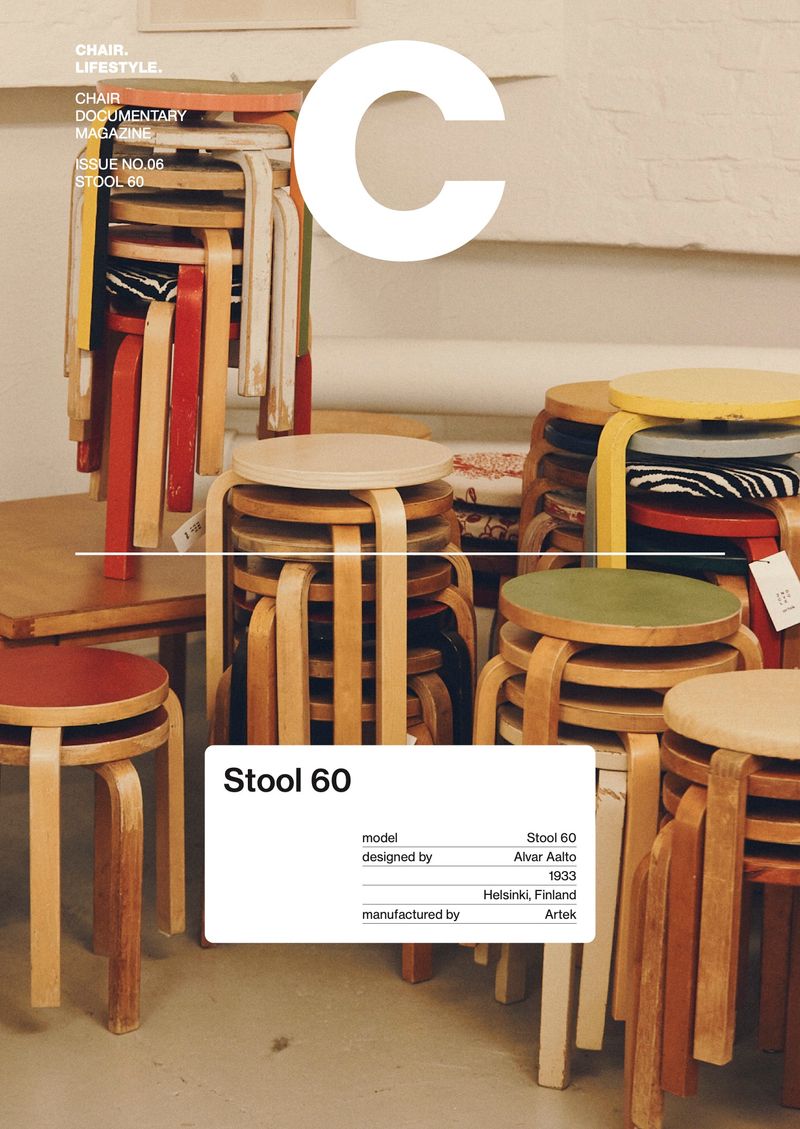
Magazine C Stool 60 cover

Issue.06 Stool 60

Designed in 1933 by architect Alvar Aalto, Stool 60 has long been part of everyday life in Finland. At home in kindergartens, schools, libraries, and city halls, it symbolizes the 'democratic value of design' in the way its function and use can be freely adapted to each user's needs. Aalto used dense, hard Finnish birch for durability and maximized production efficiency with L-shaped legs made of bent laminated wood. The result was a chair of broad versatility and true mass-production potential. Stool 60 may well be called the most human chair ever offered by an architect who pursued human-centered architecture.

Related Stories