Why a Designer of Singular Taste Loves to Cook

Editor Sunjin Kim | Photographer Martin Brusewitz

Fredrik Paulsen is a designer with an uncommon passion for chairs. For him, home is both a cherished space for life with his family and a setting for experimentation, where eras and styles mingle freely. Objects found by chance—at flea markets, at auctions, through family and friends—become wellsprings of new ideas for his work. From the skateboarding that filled his childhood to the furniture design that absorbs him completely and the cooking he savors as a hobby, his way of life brims with sources of joy and inspiration.

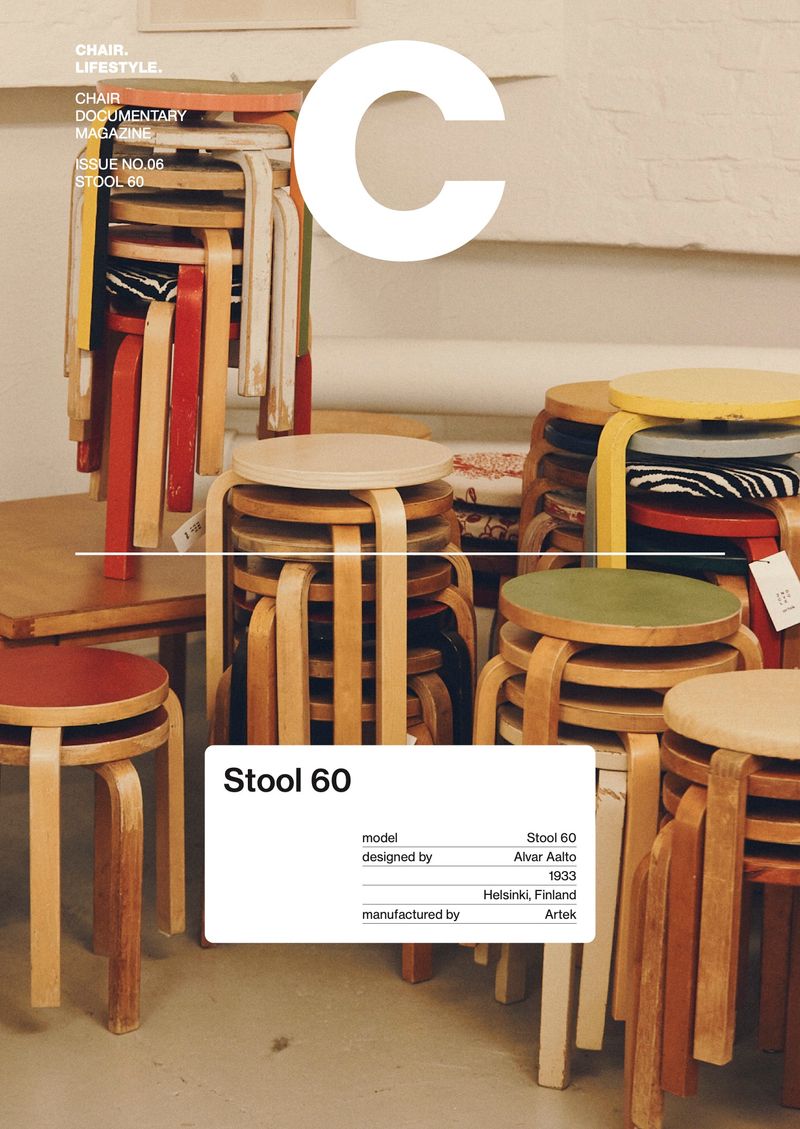
This interview is featured in Magazine C Issue 6, 'Stool 60.'

©Martin Brusewitz
©Martin Brusewitz
It was a real pleasure to meet you for the first time at 3daysofdesign in Copenhagen this year, where you were presenting pieces from your brand, Joy Objects. What led you to create the brand?
Joy Objects began with the idea that you have to create your own spaces of joy. I enjoy everyday experiences that feel like small journeys, and I pursue the things that bring me delight. The Joy Objects pieces are steel furniture—simple structures brightened with vivid color—fun to look at, with a groovy feel. Everything is made in Sweden and shipped flat-packed around the world.
You studied at the Royal College of Art in London, where you were taught by Ron Arad.
My time at the RCA was about finding my own identity—less about pouring things out than about figuring out what I could combine, and how. I really began working in earnest in 2010, after graduation. The school had a strongly academic atmosphere where everything had to be thoroughly explained and justified, and back then I found it hard to articulate why I wanted to make the work I did. After graduating I was completely free—I could immerse myself in the work itself without having to explain it to anyone.
©Martin Brusewitz
©Martin Brusewitz
Unlike Joy Objects, with its functional steel furniture, your home is filled mostly with wooden chairs, many of them antiques. That comes as a surprise.
That contrast is actually part of the pleasure for me. My studio is a creative space filled with my own work, but at home I can look at pieces by designers I admire, find new ideas, or step away from work for a while. Add in the personal things—a pebble picked up on the beach, a small sculpture my daughter made when she was three, artworks and antiques bought at auction—and it finally became my own home, safe and comfortable.
Distinctive chairs catch the eye in every corner—it is clear you really are a chair fanatic. Could you briefly introduce them one by one?
The chair I use most in the living room is Charlotte Perriand's Meribel Chair. I love it—such a humble yet iconic form. In the small dining room off the kitchen, I have three of my own Joy Objects Chair One together with an Orchestra Chair by Sven Markelius, a design by the 1930s Swedish architect that I happened upon at a flea market. My daughter adores it—she refuses to sit in any other chair. (laughs) I am also lucky enough to own Gaetano Pesce's Greene Street Chair, one of only seventy-five produced by Vitra in 1984, along with a vintage Driade chair that shows the sculptural forms of the postmodern era, Charles & Ray Eames's Molded Plywood Lounge Chair LCW, and Alvar Aalto's Stool 60. Finally, there is a vintage chair whose name I do not know. The seat is low and the backrest very tall, as if it were made for some particular purpose—perhaps for prayer in a church. I cannot say for certain what it is, but its mysterious presence is part of its charm.
How did you choose such a varied collection of chairs?
Most were won at auction or discovered by chance at flea markets. I am very particular about design, chairs especially—my rule is that if I do not truly love a piece, I would rather do without. When I moved here, the house stayed nearly empty for quite a while. Rather than following a concept or a plan, I brought things in only when I found something I genuinely loved. As elements from different eras and styles gather, they create new experiences—and unexpected relationships emerge. Sven Markelius's Orchestra Chair and Alvar Aalto's Stool 60, for instance, evoke a conversation between two designers who worked in the same period and knew each other's work well.
©Martin Brusewitz
©Martin Brusewitz
You own quite a few Stool 60s. Are they vintage as well?
The Stool 60 is the chair I have collected the longest—since well before I moved into this house. When I first started, they were everywhere; I would find them thrown out on the street or being pulled from containers and bring them home. Most of them cost me almost nothing—a few pennies at a flea market. In those days, when money was tight, that was part of the appeal. One of the reasons I came to love the Stool 60 was precisely its ubiquity: it was an ordinary tool, common in libraries and workshops, never made to be a precious design object.
Perhaps that is why they carry such deep traces of time. Do you also like the way the seats are chipped and scratched?
I also love the work of Danish modernists like Arne Jacobsen and Hans Wegner, but their designs are so precisely proportioned that even a small flaw can spoil them. The Stool 60, by contrast—even if someone used it in a garage and got oil on it, that mark becomes a clue to the chair's history. Thanks to its simple form and structure, it only grows more beautiful with age. I like designs that feel like hardware, the way Aalto's do—practical, intuitive things you might find on the shelf of a DIY store.
Swedish and Finnish design share many affinities, so I imagine the Stool 60 struck a chord with you as well.
If you draw a line from Finland through Sweden to Denmark, it reads like a single spectrum. Finland has many designs like the Stool 60—honest, functional, and a little rough—while Denmark leans toward sensuous, artistic designs in exotic woods. Sweden sits somewhere in between, at the point where the very raw gradually fades out into the ornate and refined. Personally, when I look at Aalto's work, I feel it is closer to the Finnish approach.
Was there something in Alvar Aalto's work that particularly resonated with you?
I experience a kind of tactile sense in Aalto's work. His furniture feels like an extension of architecture, and my own interest in design began with a similar experience. As a child I was always hunting for places to skateboard, and that led me to interesting spaces. Skating inside abandoned buildings, playing in garages—I learned architecture naturally, without meaning to. Exploring derelict workshops and coming across the chairs and lamps inside, I could feel that these objects had not been made to be fancy; they existed for the space. Objects that feel like relics of a society and its architecture have always been a great inspiration to me, and the Stool 60 carries that feeling especially strongly.
©Martin Brusewitz
©Martin Brusewitz
Your life is filled with design, from your work to every corner of your home. Is there anything besides design that brings you joy? (laughs)
I really love to cook. When I cook, I feel at one with the ingredients, and that moment makes me so happy. I forget everything else and focus only on what is in front of me—peeling an onion, preparing the ingredients. For me, cooking is almost a form of meditation. And at the same time, I want to make a proper meal for myself and my family.
That is delightful. Do you have a favorite dish or food?
I enjoy working with whatever happens to be in the pantry—in the kitchen, I suppose I cook the way I design. My strength is looking at the ingredients on hand and coming up with something the family will love. Cooking holds everything I love, from the tools and ingredients to the act of cooking itself and the pleasure of eating. I enjoy picking out fresh produce at the market and examining every package, and I love collecting cookbooks, knives, pots, pans, and tableware. Even the chores you cannot avoid, like washing dishes, put me in a good mood. When I dragged a dish rack home in my suitcase after finding it at a hardware store in Tokyo, I briefly felt foolish—but looking back, I could not be happier with it. Surrounded by objects you are attached to, whether a chair or a pot, everything in daily life becomes more enjoyable.


Want to dive deeper?

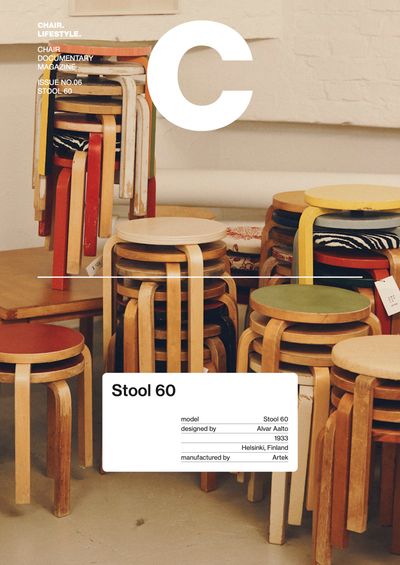
Magazine C Stool 60 cover

Issue.06 Stool 60

Designed in 1933 by architect Alvar Aalto, Stool 60 has long been part of everyday life in Finland. At home in kindergartens, schools, libraries, and city halls, it symbolizes the 'democratic value of design' in the way its function and use can be freely adapted to each user's needs. Aalto used dense, hard Finnish birch for durability and maximized production efficiency with L-shaped legs made of bent laminated wood. The result was a chair of broad versatility and true mass-production potential. Stool 60 may well be called the most human chair ever offered by an architect who pursued human-centered architecture.

Related Stories