A Minimalist Architect's Chair Collection

Editor Sunjin Kim | Photographer Miyeon Jeon

Just ten minutes from the Lissoni & Partners office in Milan, Piero Lissoni's apartment is a space that fully embodies the comfort he pursues. Inside a building designed by disciples of Le Corbusier, a white Grand Confort stands at the center of his home, where a collection amassed over decades comes together to delicately reveal his design philosophy.

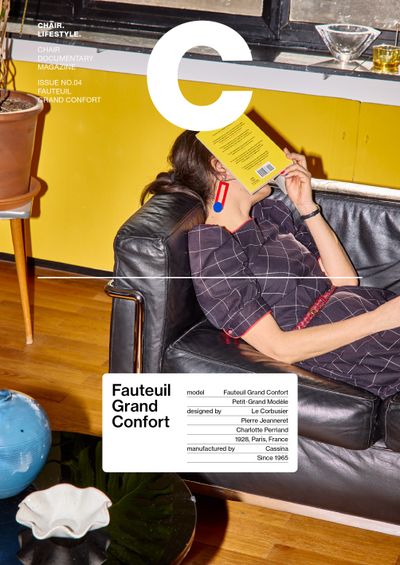
This interview appears in Magazine C Issue 4, "Fauteuil Grand Confort."


©Miyeon Jeon
©Miyeon Jeon
You are known for constantly crisscrossing the globe. How have you been lately?
I just arrived from a long flight from New York to Milan. It's four in the morning New York time, so I'm quite tired. (laughs) As always, I'm preparing countless new products to present at Milan Design Week while running architecture projects all over the world at once — Guangzhou, Tokyo, Miami, Mexico City, Saudi Arabia, São Paulo, the United Arab Emirates, Israel. More than I can even list.
That's remarkable. How often do you have to fly to keep up with that schedule?
I'd say I spend half the year in Milan and the other half all over the world. Jet lag never gets easier, though. (laughs)
©Miyeon Jeon
©Miyeon Jeon
This place feels very calm and serene. How long have you lived here?
About four years. This apartment is in the first building constructed by two architects who had worked in France in the 1950s as disciples of Le Corbusier before moving to Milan, and I redesigned the entire interior myself. I remodeled it so that every room has generous windows, and the light is truly beautiful. The rooms are always so full of light that we mostly live without turning the lights on, just like now. It's in the heart of Milan, close to the Duomo and Montenapoleone, yet surrounded by parks, and it comes with a private garden, so it's a lovely place to spend quiet time with family. In summer, everything is lush and green.
I'm curious about the renovation process. Was there anything you focused on in particular?
The most defining feature is that I removed almost all the walls and doors. Instead, I divided the space with glass cabinets and opaque sliding doors. Another key move was extending the terrace-side windows all the way down to the floor, connecting the garden and the interior at a natural height. When I design a space this way, connectivity matters most to me — it's a process of erasing architectural noise. The same goes for designing sofas and chairs. Designs with tall backs or too much height seem to create visual noise inside a home. The ideal design is simple and unobtrusive.
©Miyeon Jeon
©Miyeon Jeon
Minimalism may be the keyword that defines you, but you have also presented many colorful, experimental product designs. Yet your walls are completely white — that's unexpected.
I'm an ardent fan of color, but I don't think I'm particularly skilled at controlling it. White is where I return when my experiments with all sorts of colors and new patterns fail. I come back to a few different kinds of white, or to dark gray. The walls of my office are all white, too.
Throughout the house, I notice furniture of many nationalities and styles — Poul Kjærholm, Donald Judd, Hans Wegner. Do you also enjoy collecting?
My wife, Veronica, and I have each been collecting for decades. Italian design, Scandinavian design, designs from the 1950s, even the first chair I bought as a university student — every piece has had a formative influence on my design. They have followed me for a very long time, from house to house. I also collect artworks, books, glass bottles, and craft objects. Sometimes I lose things or forget where something is, but they are practically part of my life, so I never throw them away carelessly. The old glasses from my great-grandmother that fill the kitchen shelves, a Japanese painting my father gave me, things gathered on travels to Venice, Paris, New York. It's like making a mille-feuille — you layer one story on top of another, and you keep on repeating it.
Perhaps that's why it feels like a collection built with great care. Is there a secret to combining and arranging the pieces?
The sofas, chairs, tables, kitchen, bed, and bookshelves were each chosen separately, yet they come together well. Products from many brands are mixed in — Cassina, B&B Italia, Porro, Boffi, Kartell — but in terms of design alone, they are suspiciously harmonious. It's usually not easy for such varied pieces to blend naturally, but because every design is excellent, the sense of freedom that comes from combining different elements carries through. I feel true comfort only in timeless design — not the comfort of sitting down. (laughs) I also like to buy chairs in pairs and place them side by side. Frank Gehry's Cross Check Armchair and Charles and Ray Eames's La Chaise are exceptions, though.
©Miyeon Jeon
©Miyeon Jeon
Let's talk about the Fauteuil Grand Confort. When and how did you acquire the one in your living room?
I bought it around 1992 at the Cassina store in Milan. It still amazes me that the design is now about a hundred years old. If you look at photographs of the Pavillon de l'Esprit Nouveau, which Le Corbusier designed for the International Exhibition of Modern Decorative and Industrial Arts in Paris, the original Fauteuil Grand Confort was white — so naturally, I chose white as well. I have long admired the work of Le Corbusier, Pierre Jeanneret, and Charlotte Perriand, and among their pieces, I think the Fauteuil Grand Confort is an iconic design that explains the very concept of the armchair. It's extremely beautiful yet also quite uncomfortable, and that is exactly why I fell for it. I have four at my house in Tuscany, too.
The name Fauteuil Grand Confort literally means "great comfort," so it's amusing that you think of it as a beautiful but uncomfortable design.
Functionality matters in design, but it doesn't have to be perfect. (laughs) I choose chairs the way I would choose a companion, and the Fauteuil Grand Confort is a partner that lifts my mood just by looking at it. The Grande model, with its wide seat, is especially beautiful — bigger, flatter, lower. Perfect proportions.
©Miyeon Jeon
©Miyeon Jeon
Is the beauty you see in the Fauteuil Grand Confort related to its architectural character?
Exactly. The spaces architects create, and the furniture within them, are special. I have designed products for many brands, but I never know where my products will end up or how they will look there — from that point on, it's out of my hands. In that sense, industrial design is somewhat disconnected, whereas furniture designed by architects clearly carries a consistent code. I think that makes it far superior, and the Fauteuil Grand Confort is no different. I always try to bring that sensibility into my own work.
What exactly does it mean to sense that architectural quality and reflect it in your work?
People bring up keywords like the golden ratio, but I believe a sense of beautiful proportion lives naturally in my eye and in my soul. Of course, I sometimes complete houses and furniture through rigorous calculation, but what matters more is connecting the interplay among space, people, and environment. When I design a building, I consider its points of contact with the surroundings; with furniture, I consider the many human activities the space mediates. Furniture allows a more dynamic approach than architecture, which must resolve all sorts of structural constraints, but both fields take the human scale as their standard. That process becomes the way an architect expresses their way of thinking — just as modernist architects like Le Corbusier and Mies van der Rohe built vast, empty structures and then became creators of new forms to place within them. In that process, I believe furniture, too, becomes part of each architect's language — an architectural alphabet.
©Miyeon Jeon
©Miyeon Jeon
Born in Milan, you studied at the Politecnico di Milano and have collaborated steadily with Italy's storied design companies. How have these experiences shaped you?
Italy — Milan in particular — has a well-established production system capable of realizing craftsmanship and high quality, because countless artists and technicians have long formed an ecosystem for creating great design. As a university student, I learned from and worked alongside design studios, factories, and artisans, and my professors always encouraged us to get out of the school. Italian design brands are like individuals, each with a distinct personality. They may look similar, but each carries its own techniques, processes, attitudes, spirit, and taste. Thanks to this diversity, Milan still functions as a center for everything — materials, research, design, fashion, photography, graphics, even food. And I'm not saying this because I'm a nationalist or a chauvinist!
If you had to name the Italian architects and designers you consider most important, who would they be?
There are countless — from Piero Portaluppi and Giuseppe Terragni to Marco Zanuso, Achille, Livio, and Pier Giacomo Castiglioni, Vico Magistretti, and Anna Castelli Ferrieri, on through Ettore Sottsass, Aldo Rossi, and Renzo Piano.
©Miyeon Jeon
©Miyeon Jeon
After taking a professorship at the Royal College of Art in London, the Italian designer Vico Magistretti actively borrowed elements of British culture into his design world. Do you also bring the influences of your global projects into your work?
Of course. I prefer things slightly contaminated to things entirely pure. My designs travel into China, Japan, Africa, India, Milan, New York — so many places — and come back out gradually tinted by each culture. In fact, if you are European, you experience cultural exchange from birth. Even now, more than 60 percent of the staff working with me in the Milan office were not born in Italy.
Which cities do you visit to work, to rest, and to find inspiration?
As you may have sensed from our conversation, I'm quite a workaholic — I work flexibly anywhere in the world. Still, even on business trips, I try to make time to visit museums and experience the local culture. Right now, though, I have projects underway in four different cities in China, so whenever I travel there, I do nothing but work. (laughs) Where I go to rest changes every time. Near Milan, I might be in the Santa Maria Mountains, or by the sea at Forte dei Marmi. But if I had to choose just one city, I love Venice. I think the city made entirely of water in Italo Calvino's Invisible Cities is exactly like Venice. It's fantastically beautiful, close enough to Milan to be convenient for work, and a wonderful city for walking. Venice's rhythm of life suits me, so I naturally spend a lot of time there.


Want to dive deeper?

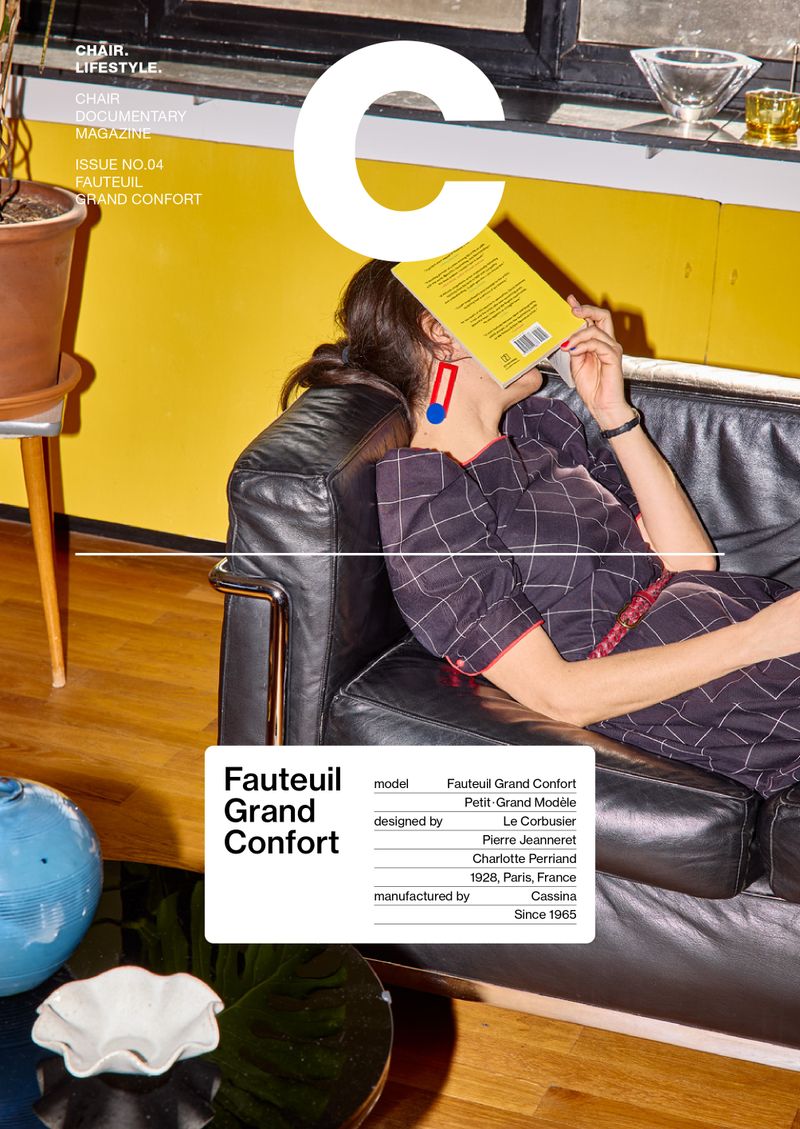
Magazine C FAUTEUIL GRAND CONFORT cover

Issue.04 FAUTEUIL GRAND CONFORT

The greatness of the Fauteuil Grand Confort, designed in 1928 by Le Corbusier, Pierre Jeanneret, and Charlotte Perriand, does not lie simply in comfort. It became an icon of modernity through the then-novel concept of the chair as a 'machine for sitting' and the innovative use of tubular steel, the most advanced material of its time. Its form borrows the vertical and horizontal elements, modular concepts, and piloti structures familiar from Le Corbusier's architecture, recalling his assertion that a chair is architecture. In the Fauteuil Grand Confort, machine-pure form, the discipline and order born of a simple structural system, and the interplay between them come together in rich beauty—a truly great chair.

Related Stories