World-Renowned Architect Mario Botta on Le Corbusier

Editor Dami Yoo | Photographer Miyeon Jeon


Having learned architectural thinking and the wisdom of reading cities from Le Corbusier, Mario Botta sees the chair not as mere furniture but as a cultural symbol that captures its era. He defines it as part of architecture — a “functional object that helps us use the spaces we inhabit more effectively.” In the 1980s, collaborating with Alias, he presented a series of chairs reflecting his architectural tectonics, emphasizing the essence of the object and revealing an architectural language.

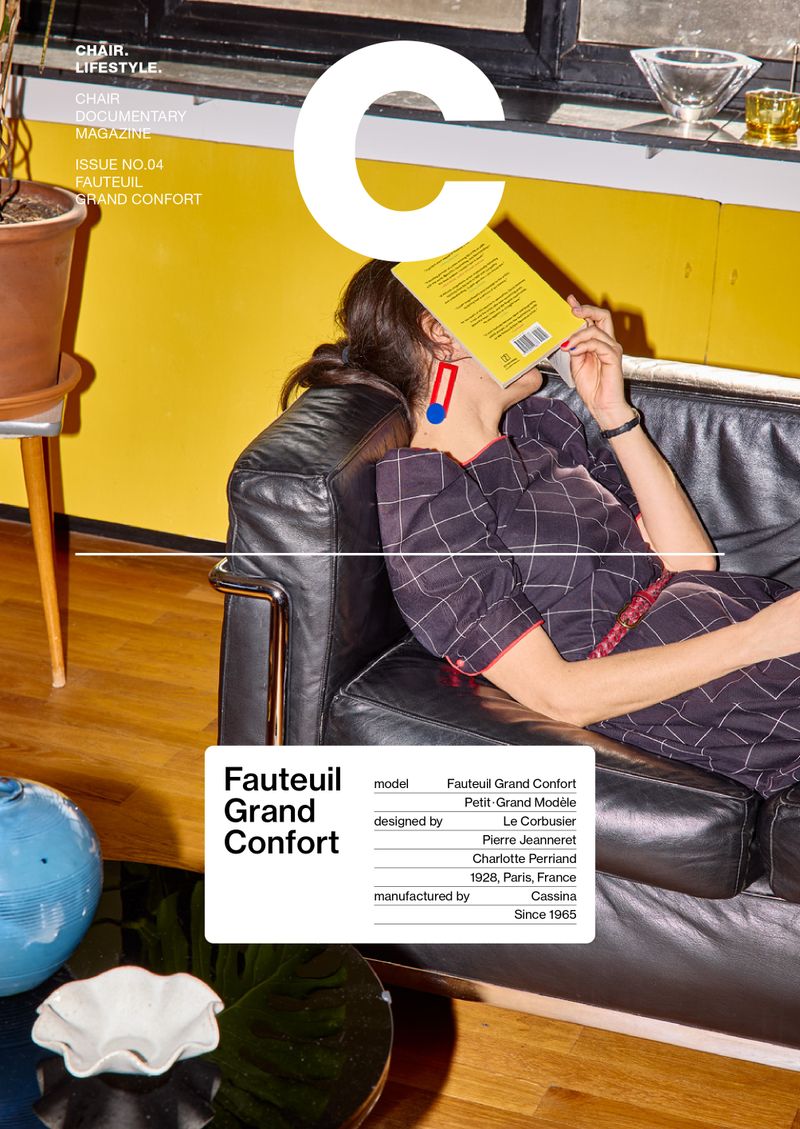
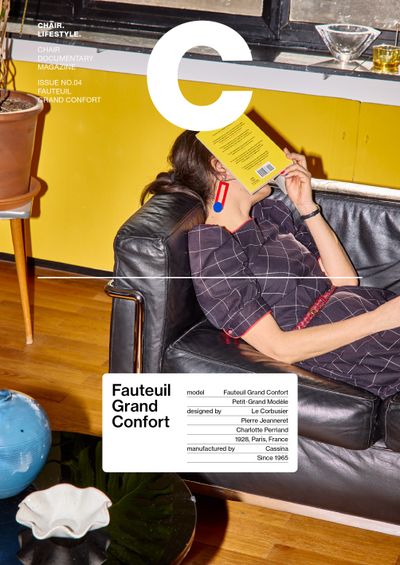
This interview appears in Magazine C Issue 4, “Fauteuil Grand Confort.”

At Mario Botta's studio in Mendrisio, southern Switzerland ©Miyeon Jeon
Early in your career, you worked alongside Le Corbusier and are known to have been deeply influenced by him. It was quite a long time ago, but could you look back on your experience working at his studio?
It was 1965. I was a first-year student at the architecture university in Venice. Le Corbusier had come to the city for a new hospital project — he arrived with his collaborators to present the model and explain its meaning. At the time, I felt my hours in school were meaningless. I thought I would be better off following Le Corbusier and gaining hands-on experience, so I applied to his studio.
1965 was the year he passed away. What kind of work did you do at his studio?
That's right. The hospital was one of Le Corbusier's final projects. I mainly worked on sketches. In a way, it felt like a calling — as if I had been entrusted with a special mission. And because the city of Venice itself played such a crucial role in the project, it remains the most intense and fascinating work I have ever experienced.
How did that experience influence your work as an architect?
The hospital project was never realized in the end, despite a long design process, but along the way I gained a great deal of wisdom from Le Corbusier. It was nearly sixty years ago, yet I still believe there is much to learn from that project. It influenced me deeply, especially in conceptual and philosophical terms — which is perhaps why, among all of Le Corbusier's works, I feel a particular attachment to this one. He addressed the fundamental questions of life — social issues, urban strategy, mass construction — in strikingly new and innovative ways.
Could you explain in more detail?
Le Corbusier had his own singular way of solving problems, and he showed how powerful that approach could be when carried through to a built result. A hospital, for instance, is architecturally like an immensely complex machine, and he cautioned: “Architects, be careful. The problems of illness and of patients cannot be solved by functional or technical approaches alone. The answer already lies within the city itself.” In other words, Venice — its intricate weave of canals and alleyways — held the key to the problem. He taught me how to read and understand a city, and that is the greatest wisdom I received from him.
What was Le Corbusier like as a person?
He was famous for being strict. He spoke very bluntly and gave no one an opening. He was an uncompromising, thoroughly stubborn figure. I never managed a long conversation with him myself.


©Miyeon Jeon
©Miyeon Jeon
This issue explores the Fauteuil Grand Confort by Le Corbusier, Jeanneret, and Perriand, examining the relationship between chairs and architecture. Do you consider the Fauteuil Grand Confort an architectural chair?
Le Corbusier said that a chair is a small piece of architecture. It stays close to the human body and profoundly shapes how we move through daily life. In that sense, the Fauteuil Grand Confort is itself a finely crafted work of architecture — completed almost as a symbol, with materials and a design that were extraordinary for the time. Designed for rest and comfort, it is certainly no ordinary chair; its form embraces the body naturally, distributing weight in balance. At times it is comfortable enough even to sleep in. That range of uses is precisely what makes the Fauteuil Grand Confort special. I believe this design redefined the very concept of sitting — it created a chair that endures as the culture of its era.
Do you agree with the expression “a chair is a small piece of architecture”?
Every chair exists in relation to a space — a table, a kitchen, a living room. A chair is an object made so that a person can sit and enjoy a space; helping us make the most of that space is its essential function. In that sense, a chair can be seen as part of architecture. And like architecture, it is a product of its time.
Shall we turn to your own chairs? Since 1982 you have presented a series of chairs with Alias. Their concise lines and geometric structures are a signature style that appears in your architecture as well, revealing your design philosophy.
Prima and Seconda began with a very simple idea. I set out to design an iconic chair that held nothing but the essence of a chair. Imagining a design that supports the body with minimal structure, I focused solely on the seat and the backrest — everything else, I felt, was meaningless territory. The result was a geometric form made by bending thin steel tube. The geometric elements of my chairs are born in the sketching process. I always work by sketching in pencil: it begins with a point, which becomes a line, and the line becomes a supporting structure.
From Prima and Seconda to Quarta, Quinta, and Latonda, your chair designs unfold like a series. Quarta in particular feels like architecture itself, with a commanding, monumental presence — it even calls to mind the San Francisco Museum of Modern Art, one of your signature projects.
In a way, yes. If Prima and Seconda concentrated on the essence of the chair, Quarta took the opposite approach. Unlike Prima, which pursued minimal structure through concise lines, Quarta was completed by building surfaces from repeated lines. Made from roughly 200 meters of bent pipe, it boasts a complex structure, considerable weight, and generous volume. It was a kind of counteraction to the “minimization” I had pursued so intently with Prima and Seconda. If Prima and Seconda are chairs stripped to the bone, Quarta is a chair fully dressed. Personally, it is my favorite — sometimes we are drawn to the very opposite of what we have insisted upon. (laughs)
The Seconda and Quarta chairs, designed by Mario Botta in 1982 ©Miyeon Jeon
In the 1980s, the Memphis Group led the design scene. Their direction seems to run counter to the image you pursued.
That's right. Memphis was in a constant state of excitement. I was, so to speak, “Anti-Memphis.” (laughs) Of course, I was friends with the Memphis members and close to Ettore Sottsass, but unlike them I focused on the archetype of the object and on poetic simplicity. While Memphis pursued colorful, exuberant design, I concentrated on the act of sitting itself, preferring the geometric form of a structure that supports the body and the simplest colors of all: black and white.
The Namyang Sanctuary project in Korea is another deeply meaningful work of architecture, and the benches and chairs you designed specifically for the space were striking. True to your emphasis on context, the space and its chairs seem to form a single continuum. Could you explain which elements connect them?
The Namyang Sanctuary was a project of more than ten years, and one of deep personal significance. Chairs for religious architecture differ greatly from the ones we use at work or at home. They must evoke a sense of the sacred, of course, while holding both the chapel's long history and its contemporary meaning. People sit in a chapel briefly, offer their prayers, and leave — but I believe the chairs there are not merely objects to sit on. They are part of a space that holds memory and contemplation.


Want to dive deeper?

Magazine C FAUTEUIL GRAND CONFORT cover

Issue.04 FAUTEUIL GRAND CONFORT

The greatness of the Fauteuil Grand Confort, designed in 1928 by Le Corbusier, Pierre Jeanneret, and Charlotte Perriand, does not lie simply in comfort. It became an icon of modernity through the then-novel concept of the chair as a 'machine for sitting' and the innovative use of tubular steel, the most advanced material of its time. Its form borrows the vertical and horizontal elements, modular concepts, and piloti structures familiar from Le Corbusier's architecture, recalling his assertion that a chair is architecture. In the Fauteuil Grand Confort, machine-pure form, the discipline and order born of a simple structural system, and the interplay between them come together in rich beauty—a truly great chair.

Related Stories