The Chair That Changed the Life of Cafe mk2's Owner

Editor Eunkyung Jeon | Photographer Soonae Park

In Seochon, near Gyeongbokgung Palace, cafe mk2 has kept the same spot for seventeen years. In a cafe scene that reinvents itself almost daily, it enjoys a steady affection that spans generations. For Jongmyung Lee — photographer, collector, and owner of both a vintage furniture shop and cafe mk2 — furniture is not merely something for storage but an object of pure contemplation and delight. Beginning with Mart Stam's tubular steel chair, the piece that first drew him into his obsession, he has spent more than thirty years inviting one piece of furniture after another into his life — and those pieces have become a style that is unmistakably mk2's own.

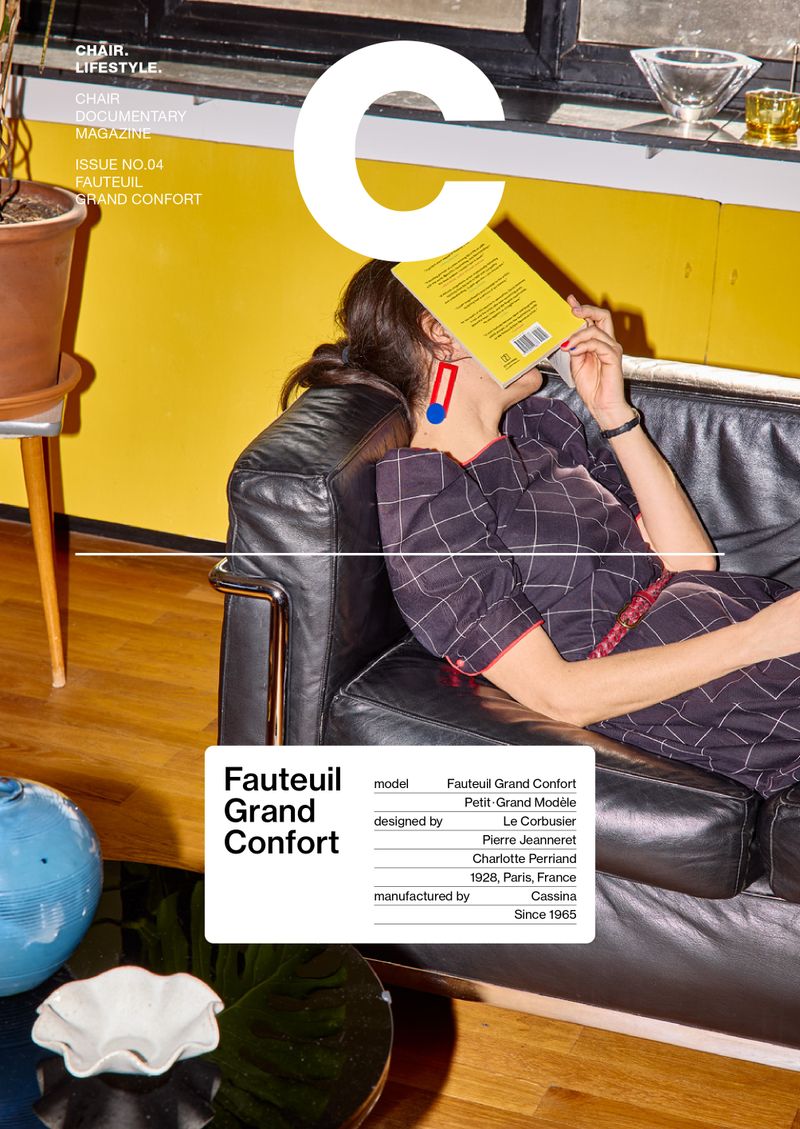
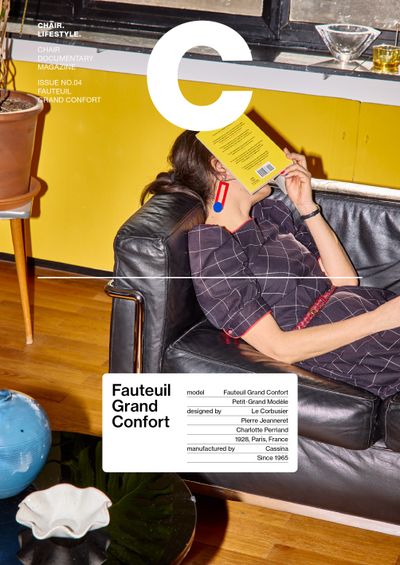
This interview appears in Magazine C Issue 4, Fauteuil Grand Confort.


A model produced by Cassina in the 1970s — a version combining a black frame with velvet upholstery. ©Soonae Park
Every time we meet, I think back fondly on the tour we took together seventeen years ago — Stuttgart, Frankfurt, Weimar, Dessau, and Berlin — for the Bauhaus exhibition at Kumho Museum of Art. You have said your interest in furniture began during your student years in Germany.
It started when I went to study at the Kunstakademie Düsseldorf. I began collecting furniture around 1995. Germans may dress modestly, but they keep their homes beautifully. When the living room lights are on, you catch glimpses of the interior, don't you? In the evenings I would go for walks or ride my bicycle around, peering into homes through the windows, and little by little I grew interested in furniture. That is when my obsession with objects began. (laughs)
At Jongmyung Lee's home in Yangpyeong ©Soonae Park
You went to Germany to study photography, but it sounds as if you ended up studying furniture even more.
Photography, I think, is a medium that feeds one's interest in and obsession with objects. The process of hunting for a particular motif with a camera has something in common with hunting for furniture. While studying photography I sought out all kinds of places around the city, and furniture always caught my eye. Vintage wasn't as popular then as it is now, so with a good eye you could still find things. Eventually I would go out walking at night just for the thrill of scoring finds among discarded furniture. Whenever I acquired a chair, I went to the library the next day and looked it up. There was no internet, no eBay — information was scarce, but the pleasure of researching and comparing was tremendous. That is how I trained my eye for furniture.
Some people ask whether I have stopped taking photographs, but I feel I am still photographing. I haven't abandoned it; it's just that the furniture around me satisfies me aesthetically, so my hand doesn't reach for the camera. I am still chasing all kinds of beauty with my eyes. As an aside, I went to Germany hoping to study under Gerhard Richter, but he retired in the meantime, so I studied under Magdalena Jetelová, the Czech-born land artist.
So you admit you are a person who loves objects? (laughs) What was the first piece of furniture you bought?
What initiated me into furniture was Mart Stam's tubular steel chair. I was captivated by its cantilevered form. As one of the chairs that defines the Bauhaus, its distinctive simplicity appealed to me, but above all it gave me a great sense of freedom. Just as mastering the fundamentals sets you free, entering through a Bauhaus chair meant I could go in any direction from there. That chair led my life, and my very profession, toward furniture — truly a case of one piece calling forth another. Even now I embrace all kinds of furniture, so long as they stay within the bounds of what Mart Stam taught me.
©Soonae Park
©Soonae Park
What kind of furniture do you prefer, and do you have particular criteria when choosing a piece?
I prefer work from the Bauhaus era, but anything before the 1930s feels too old, so I love German, Swiss, and Austrian furniture from the 1950s. It also sits well with the pieces I already own, including the 3 Fauteuil Grand Confort. Düsseldorf, where I lived, was a small town open to many cultures — close to Cologne and Frankfurt, and to the Netherlands and France. Free-spirited, yet with a style of its own. Rather than casting a wide net, I dig deep into furniture that comes only from that region. Even the same chair differs slightly from town to town. Because I know the area well and have seen so much of it, I am confident I can choose the better piece — and it keeps intact the style I have built up over the years. The style that is mk2's own is the accumulation of that effort.
These days information about furniture is easy to find, and more people have encountered good furniture at cafes and select shops.
Customers' tastes and knowledge have risen so much that instead of asking which furniture is famous, they now point precisely to the piece they are looking for. The difference is that ordinary customers want to know whether we have a particular product, while designers and professionals want to know what is new. People who run cafes or select shops often look for pieces never seen anywhere else. Some ask me for recommendations on the strength of mk2's eye. Standing between collectors and sellers, I also play a role in broadening people's taste and eye for vintage by introducing a wide range of furniture. On the other hand, having done this work for thirty years, everyone wants to know what I am bringing in — so when I go back to buy again, the prices have gone up. (laughs)
What does furniture mean to you as a collector and dealer?
What makes being a furniture dealer fun is that I can change my furniture every day. Even if I cannot afford to keep a piece, if I love it I can buy it and sell it later, so I can purchase with an easy heart. There is a saying that furniture calls forth the next piece of furniture, and it holds true for me. When you choose a piece, you must be prepared for it to summon others, and since you will be living together, it demands a sense of responsibility. You must also know how to send it off to someone else with goodwill. It is a kind of inheritance. Furniture was never something to use carelessly and throw away; it was something to cherish and use well for a long time, then pass down to children and grandchildren. That is why so much furniture survives in good condition today.
©Soonae Park
©Soonae Park
Why do you think the Fauteuil Grand Confort remains so enduringly popular, and what is its appeal?
The Fauteuil Grand Confort is a chair that sits weightily in the mind of anyone who loves furniture. In its proportions and formal beauty it acts as a kind of anchor, showing what an armchair ought to be. Frankly, to my eye there is no armchair quite like it. Proportions and cushioning like these are more than enough to keep us comfortable. And the design — a frame built as an architect would build it, with cushions set on top — offers a pleasure different from any other designer's furniture. Though I do mention in advance that it can be a little uncomfortable without a backrest to lean on. (laughs)
The 3 Fauteuil Grand Confort has been sat in by famous figures like Steve Jobs, and through the media it has become one of the most widely known chairs.
Behind its popularity is partly the rise in income levels, and partly the fact that people have realized their aesthetic desires can be satisfied economically, making them willing to invest in furniture. Considering the high price of apartments in Korea, spending a small percentage of a home's value on furniture has become conceivable. Along with the awareness that it is a famous chair came the desire to own it.
In truth, the Fauteuil Grand Confort was once a difficult piece to bring into the home. With the cold materiality of its components and its masculine, businesslike air, there was a time when it was hard to place in a domestic setting. But as living environments changed, it now suits the home as well. Another representative piece that arrived alongside it is USM — both were fixtures of big-company lobbies and offices. The vintage examples that survive today were mostly used in offices rather than homes, which is why their condition tends to be good.
How did you come to own the 3 Fauteuil Grand Confort in this house? I am curious about the story behind the chair.
It was left behind by my friend, the artist Seokho Kang. It is a 1970s Cassina production — a version upholstered in velvet and filled with polyurethane foam. Painting the cold metal black made it a design easier to place in a home. Today we consider a metal frame stylish, but in an era when wood dominated interiors, metal felt somewhat excessive. After more than fifty years the foam has crumbled away, and the chair has hardened into the very shape of a seated person — which lends it something almost animal. Come to think of it, part of my style today came from that friend, and my style rubbed off on him; we influenced each other. During our student days in Germany, when information about furniture was scarce, we talked endlessly and traded what we knew, and a comradeship grew between us. Beyond any design value or significance, every time I sit here I remember and honor that friend.
How do we know which chair is right for us? What advice would you give on choosing the chair of one's life?
I believe the chair that shapes your attitude and gestures is the chair for you. I sometimes tell people not to buy a camera by test-shooting it but by hanging it around their neck — the question being whether the sight of me holding that camera suits me. If it does, you reach for it more and shoot more often. The truth is, every chair is comfortable. Stand up, then sit down — they are all comfortable. So do not make comfort your only aim; ask a friend instead. How do I look sitting in this chair? Does it suit me? If you look splendid in it, you will come to love and enjoy that chair all the more. A chair is like clothing. Some chairs make you recline; others have you perching here and there. I recommend choosing a chair with that balance in mind.
©Soonae Park
©Soonae Park
Rolf Fehlbaum, chairman emeritus of Vitra, said something similar: there are chairs that make you look a little better when you sit in them, and that chair is your own. Hearing you speak, it strikes me that furniture offers not only comfort but visual pleasure as well.
If I had approached furniture only in functional terms, I could never have loved and enjoyed it this much. Take the bookshelf standing in the middle of our living room. In most homes, placing such a large bookshelf in the center would feel like an inconvenience. But I put it there because I wanted to savor its beauty and examine it more closely. Rather than planning around the flow of daily life, I enjoy arranging furniture for the pleasure of contemplating it.
You use a remarkable variety of furniture and chairs at home. Are there pieces you feel a special attachment to, or would like to introduce?
The furniture I love, it turns out, other people don't. Perhaps because its modest, unassuming look crosses the line into something that reads as below middle-class? (laughs) The sofa I am using now is a design by Egon Eiermann, and the rattan piece right in front of it is also Eiermann's work. They may not look like the work of the same designer, but I regard them fondly as rare pieces.
In fact, I am one of the people who introduced Egon Eiermann's chairs to Korea. And the Le Corbusier shelf I use as a shoe cabinet by the entrance — please understand it not as careless use but as a way of enjoying it every day. (laughs) Another feature of this house is that there is no built-in furniture. Built-in closets have their conveniences, but I want to be able to swap furniture or change the layout at any time. I am especially fond of kitchen furniture and keep trying new ones; what I use now is a mobile bulthaup unit.
But the piece that stands out most in this house — like a UFO — is the work by artist Mikyung Lee. It was shown a few years ago at the exhibition Life, A User's Manual at Culture Station Seoul 284, and now it is in your home.
The concept of the exhibition was to create a space and furniture of one's own. It is a piece surrounded by bookshelves, a desk, and countless shelves — like a small house with walls and a ceiling — and when you sit in the chair and reach out, everything you need is within arm's length. Perhaps that is why, sitting inside it, I feel snug and find it easy to concentrate.
Do the two of you ever disagree about the furniture that comes into your shared space?
Our tastes are complete opposites. Our palates differ too — we eat breakfast together, but often go our separate ways for lunch and dinner. We have lived together for more than thirty years, and I still discover differences: ah, we differ on this too! Because we each develop our thinking in different ways, rather than blending into each other we run in parallel, like train tracks. And that is more fun. In that sense, I believe there is no compromise in furniture. I make the decisions entirely — but that does not mean I do as I please. I persuade Mikyung Lee and ask her blessing. Furniture, after all, is something the whole family uses together.
Furniture designed by artist Mikyung Lee ©Soonae Park
In 2020 you moved both your home and showroom to Yangpyeong. The first and second floors, with their striking columns and staircase, serve as the showroom, and the third floor as your home. Tell us about this space, designed by architect Byoungsoo Cho.
Whenever I was in Zurich, I would visit the Le Corbusier Pavilion with Seokho Kang. It is Le Corbusier's last building. Though it was not intentional, I sense in this house — its tilted angles, its roof, the form of its columns — the feelings I experienced at the Pavilion. After buying this land I said to Byoungsoo Cho, whom I knew well, "I've bought a piece of land — would you take a look?" He stopped by on his way between his Earth House and his courtyard house in Yangpyeong, looked around, and said, "You want something like a warehouse — nothing much showing from outside, but when you step deep inside, the furniture appears. Right?" Our minds met exactly.
I told him that was exactly what I had in mind, and he drew me a single sketch. (laughs) Knowing me well, he figured that rather than planning the space in detail, he need only frame it loosely and I would fill it in my own way. He built the house with only its basic form, so the space could always be used differently. Looking at it empty, I expected the architecture to overpower everything, but once the furniture came in, they merged in no time. I felt the hand of a master.
What advice would you give for living wisely with furniture?
If you start by devouring the masterpieces of greats like Jean Prouvé or Le Corbusier, your standards are set high from the very beginning. I do not mean that furniture has ranks; it is just a shame to skip the pleasure of encountering and enjoying all kinds of furniture as your experience deepens. It is like entering the world of bags with Chanel or Hermès — suddenly it becomes hard to pick up all the distinctive, playful products out there. So I would say: climb carefully. Do not rush ahead down the paths that others have already laid out.
A shoe cabinet from a Le Corbusier apartment ©Soonae Park
Come to think of it, there does not seem to be a single new object in this house.
Even as a child, when my mother bought me new sneakers, I had a habit of kicking coal-briquette ash or dirtying them on purpose, to hide the fact that I was using something new. Not that I prefer patina — I like old things in good condition. (laughs)
A question Magazine C asks every interviewee: what is your favorite chair?
Ferdinand Kramer's Kramer Chair. It is modest, but to my eye it is beautiful. I bought it for about twenty euros, yet to me this chair is the equal of Jean Prouvé's Standard Chair. (laughs) Kramer designed it for Goethe University Frankfurt, and it has the elemental form that comes to mind when you think of a chair. The chair holds a simple secret: from the outside no screws are visible — they are concealed within. Such delicate technique, in a chair mass-produced in the 1950s. My favorite chair could change at any moment, so please take this as the aesthetic I love right now. Since my work is dealing in furniture, I think my favorite chair can keep changing — call it the freedom to change the chair you love. I feel none of the burden of having to use something for life once I have bought it. And so the chair I am using now is the one I am attached to.


Want to dive deeper?

Magazine C FAUTEUIL GRAND CONFORT cover

Issue.04 FAUTEUIL GRAND CONFORT

The greatness of the Fauteuil Grand Confort, designed in 1928 by Le Corbusier, Pierre Jeanneret, and Charlotte Perriand, does not lie simply in comfort. It became an icon of modernity through the then-novel concept of the chair as a 'machine for sitting' and the innovative use of tubular steel, the most advanced material of its time. Its form borrows the vertical and horizontal elements, modular concepts, and piloti structures familiar from Le Corbusier's architecture, recalling his assertion that a chair is architecture. In the Fauteuil Grand Confort, machine-pure form, the discipline and order born of a simple structural system, and the interplay between them come together in rich beauty—a truly great chair.

Related Stories