Located in Bukchon, LAYR Hanok Atelier hosted the exhibition ‘매일 곁의 조각들’ from Wednesday, June 17, to Saturday, June 27. The show presented objects by three artist teams, from rings to planters and chairs, all meant to be kept close and used in daily life. As its name suggests, LAYR Hanok Atelier aims to layer a contemporary sensibility over the time held within the hanok.
Three teams took part. Be Formative makes furniture and products that combine function and form. Artist Jang Mun Jung used 3D printing to create Hohyeongjudeung, a lamp inspired by traditional Korean lighting, as well as soban tables. 1LSTUDIO makes silver jewelry with gemstones that carry the passage of natural time. The three share a common approach in reinterpreting old things with a contemporary sensibility.
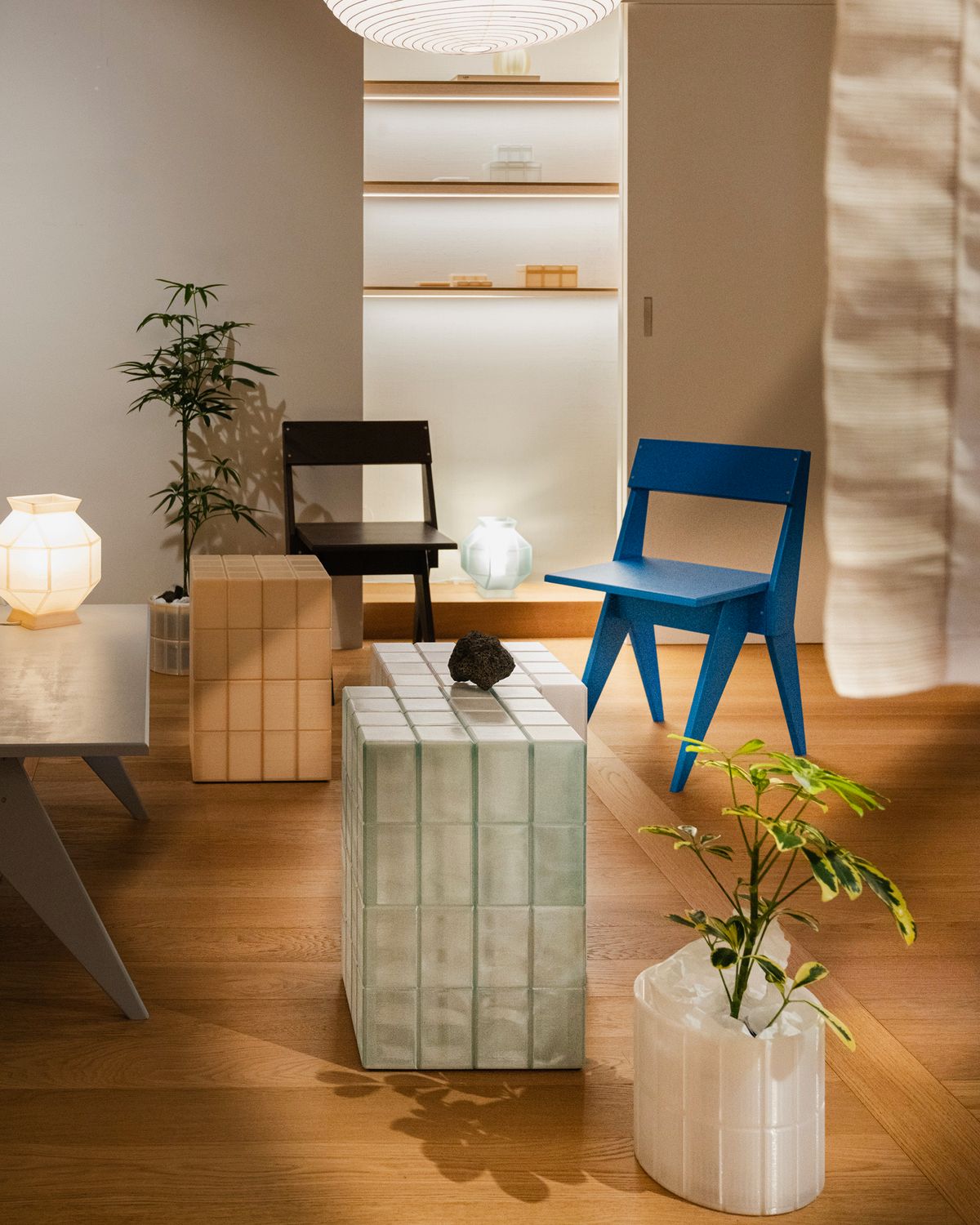
Upon entering through the hanok’s door, visitors are greeted by a vivid blue chair. Made by Be Formative, the Semonan chair is defined by its triangular legs, true to its name. Be Formative is a Seoul-based design studio formed by Yejin Kim and Kiyong Lee. The pair previously explored materials and form through Craft Combine, focusing on craftsmanship and experimentation. Since 2020, they have worked under the name Be Formative on product, lighting, furniture, and spatial design, seeking a balance between craftsmanship and user experience.
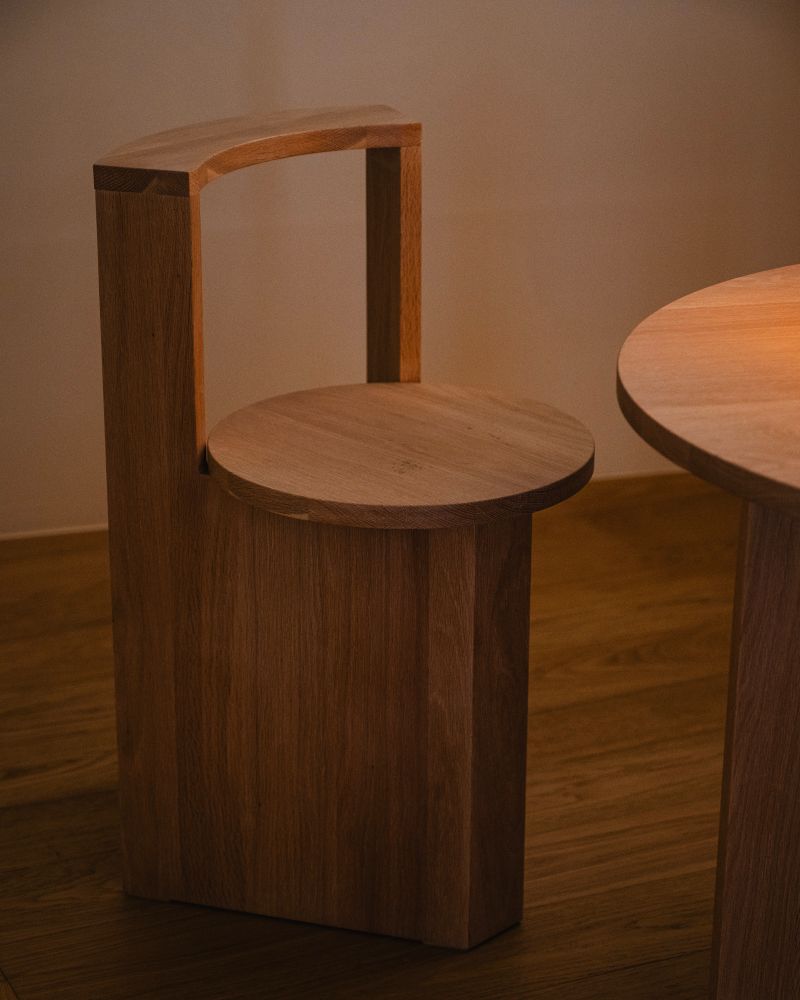
Be Formative’s signature Nemonan, Semonan, and Donggeuran chair series weaves basic geometric shapes into furniture, creating a clean impression that brings calm to a space. The exhibition featured the Semonan chair, the Donggeuran chair, and a new gray two-seater bench made for the show.
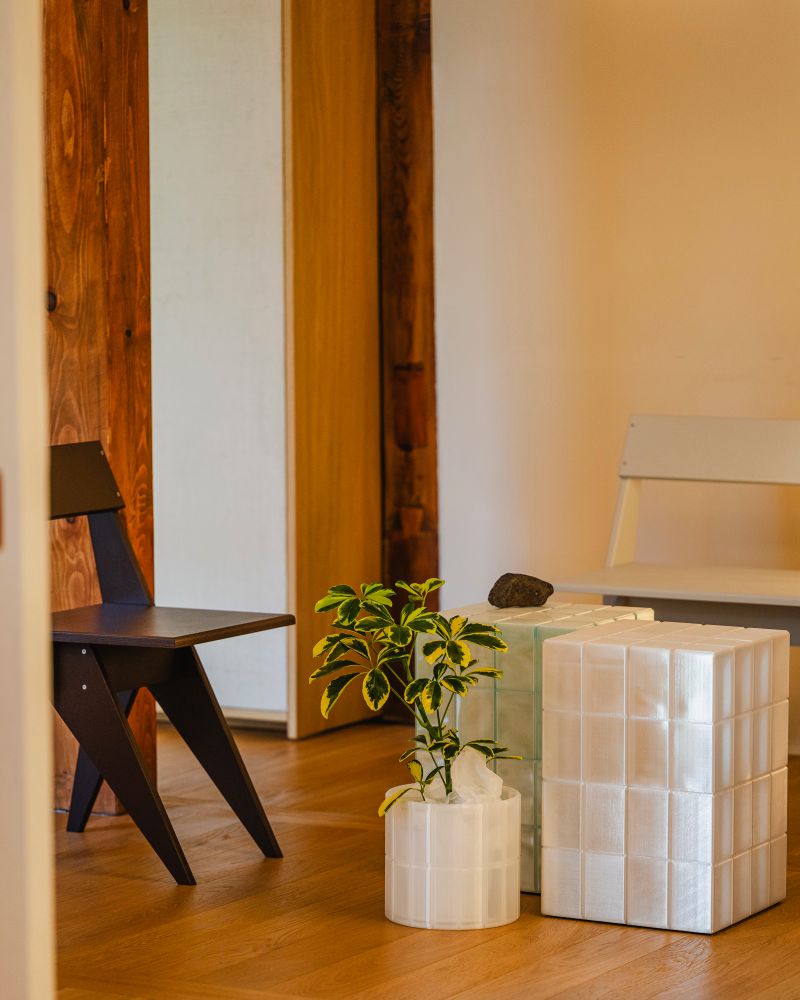
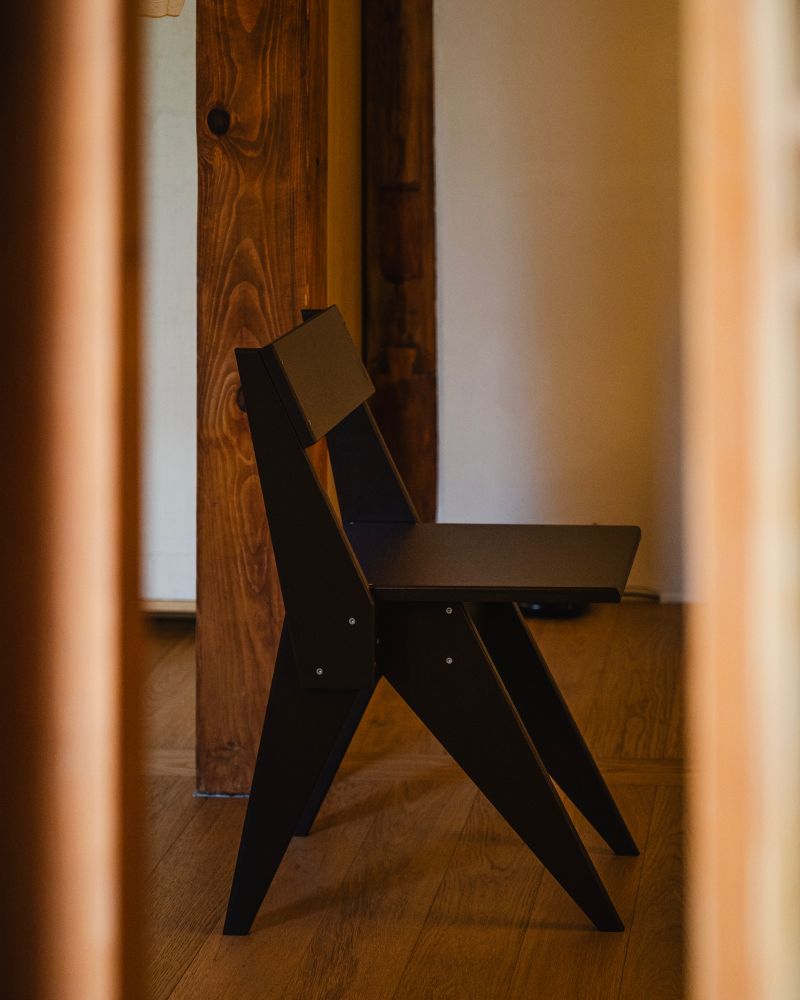
The Semonan chair’s triangular legs connect to form a distinctive structure. Its seat height lets both feet rest on the ground, and together with the backrest angle, it offers a comfortable sit. The birch plywood is hand-painted so the wood grain shows through, and the parts are joined with screws for easy maintenance. Be Formative told Magazine C that they want “to create designs that are natural and long-lasting.” That attitude, which weighs a craft sensibility alongside practicality, runs throughout the chair’s structure and finish.
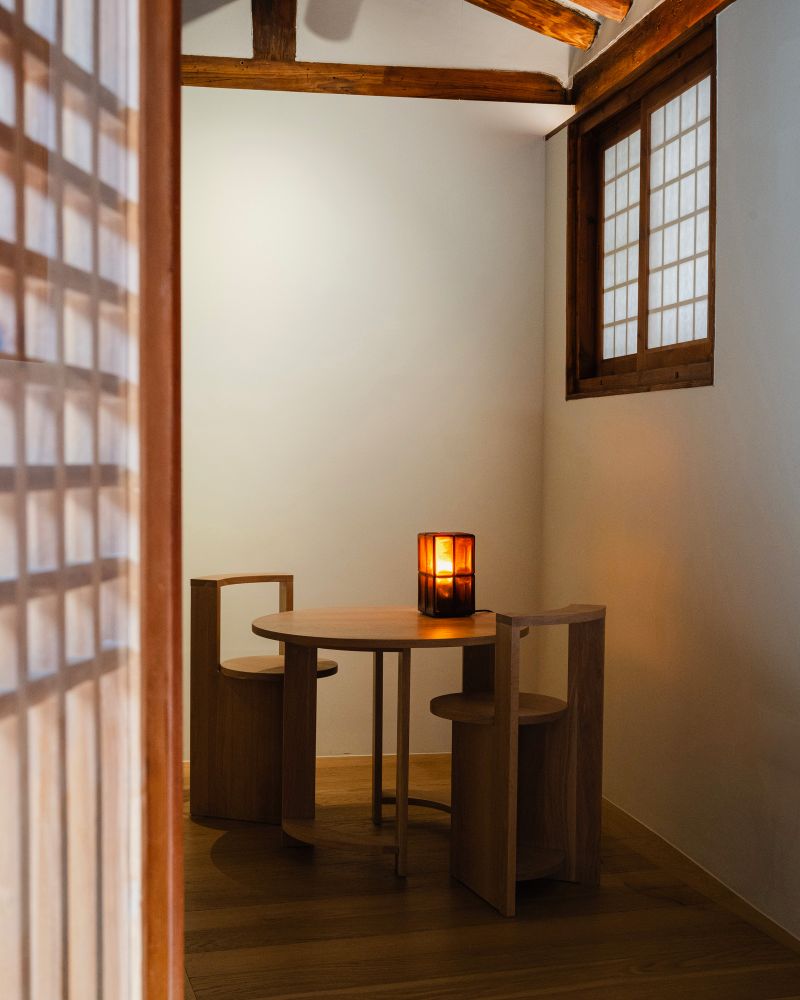
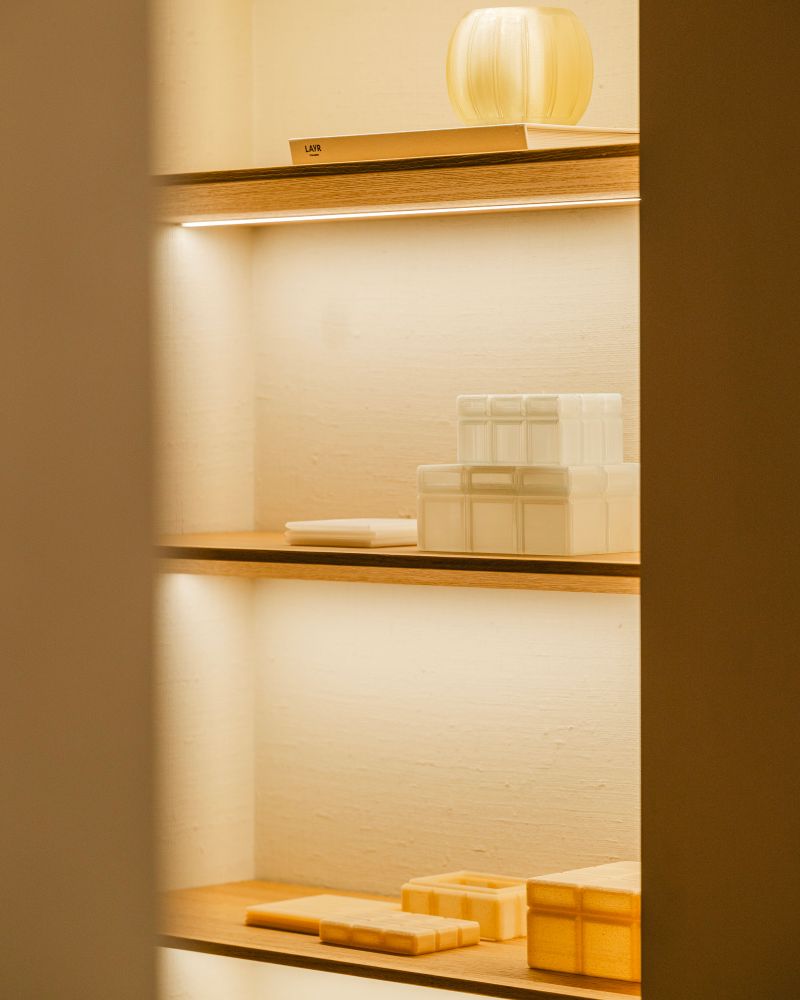
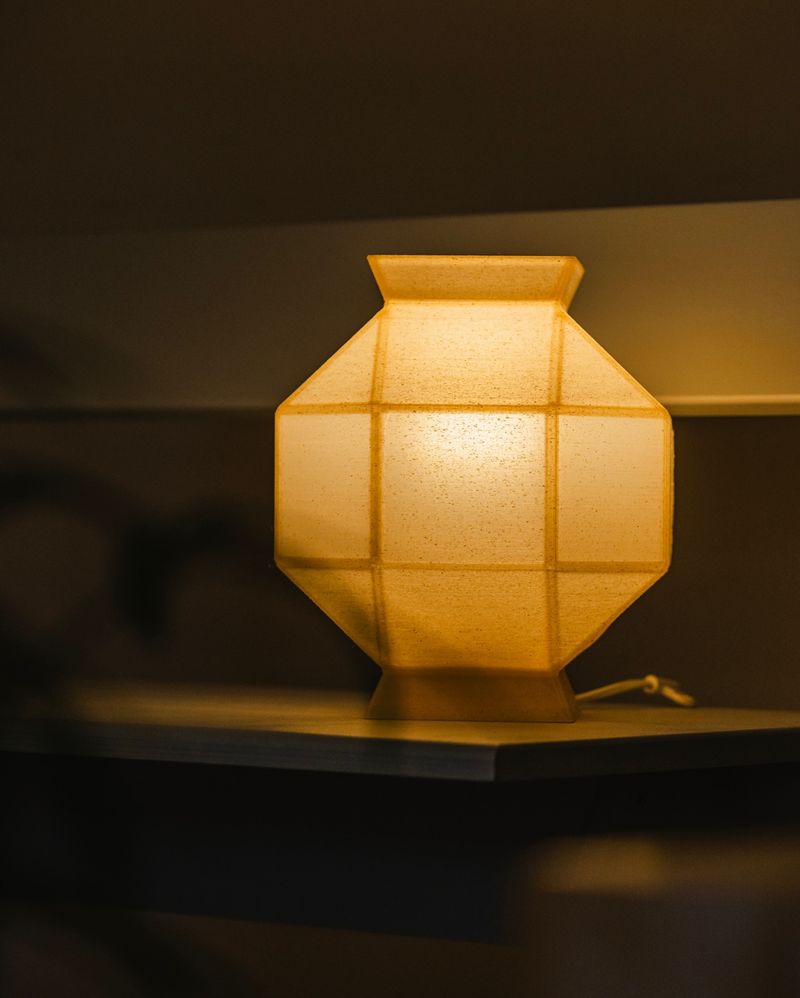
The lighting that softly illuminates the space is the work of Jang Mun Jung. The artist explores various craft techniques, such as heat-baking and dyeing 3D-printed works, and focuses on the value of time-intensive craft in a fast-moving modern society. For this exhibition, Jang Mun Jung created Hohyeongjudeung, a lamp made of eco-friendly material with a visible granular texture, designed to harmonize with the hanok. Also on view were a translucent 3D-printed stool and a translucent box made with corn filament.
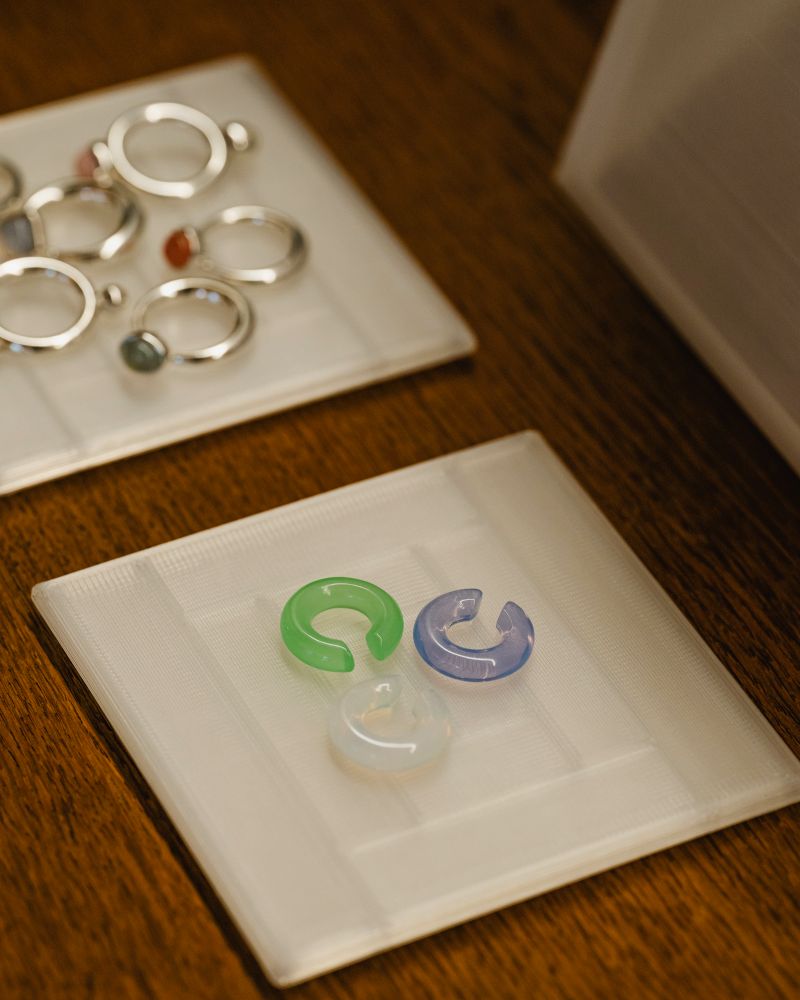

1LSTUDIO is a jewelry brand that began in Milan through an exploration of metal. Its pieces are known for distinctive forms, such as rings with gemstones and silver balls that twist into place, and for gemstones in a range of colors, including chalcedony, white agate, and opal.
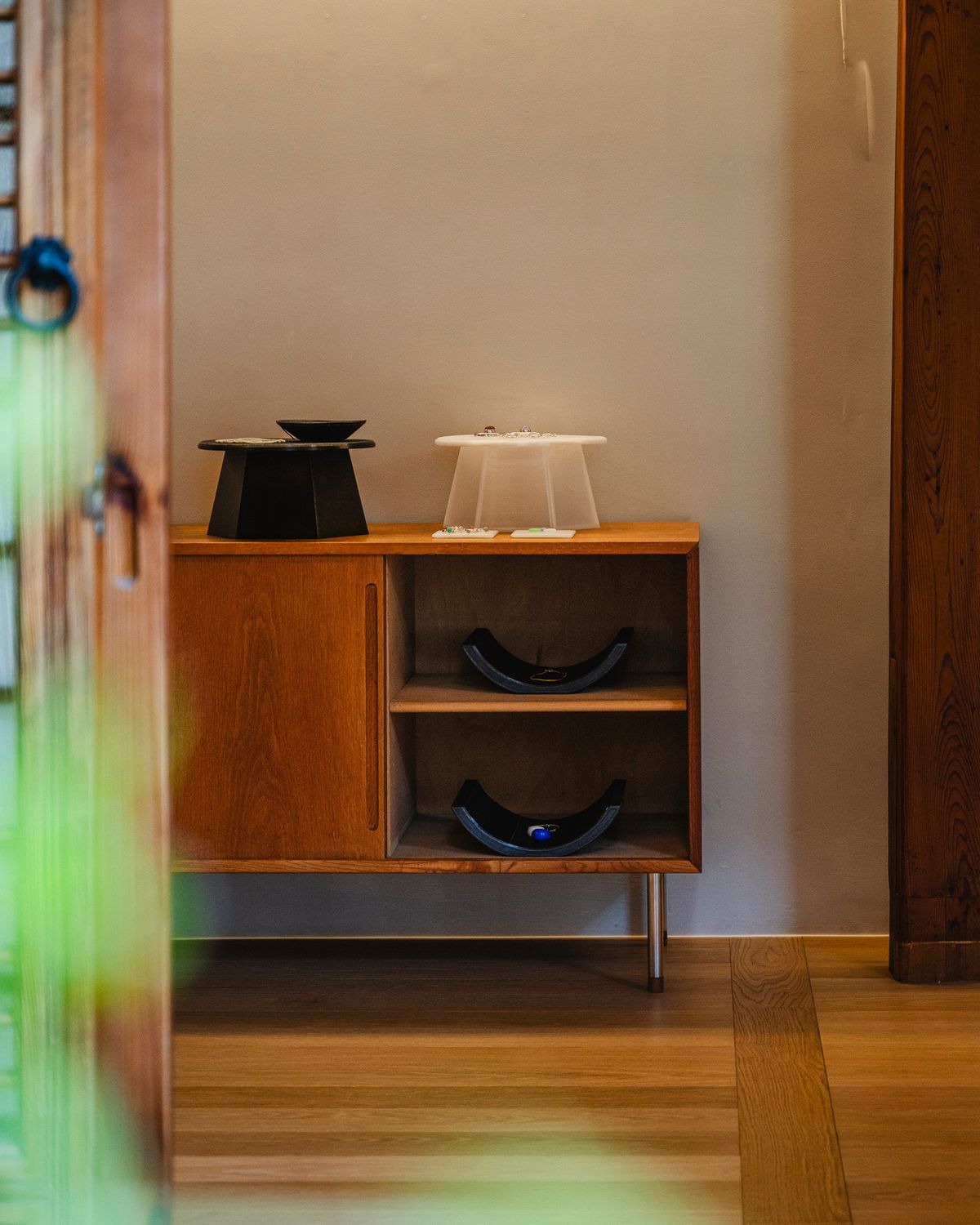
The meeting of an old hanok and contemporary artists evokes a sense of both the unfamiliar and the familiar. Yet these two sensations do not sit apart from each other. Rather, the long history of the hanok gains new life through today’s objects, and familiar everyday objects reveal their forms more clearly in an unfamiliar space.
The objects by the three teams also hold both unfamiliarity and familiarity. Consider 1LSTUDIO’s ring, which looks ordinary at first glance but allows its gemstone to be swapped. The same is true of Be Formative’s chairs, which turn basic shapes such as triangles and circles into furniture, and of Jang Mun Jung’s Hohyeongjudeung, which brings a present-day technique, 3D printing, to traditional lighting.
In this exhibition, unfamiliarity and familiarity emerge in two ways. One is the scene of the exhibition itself, where the hanok meets contemporary craft. The other lies in each object made by the three teams. Visitors sense this the moment they enter the space, and again as they encounter each work. In this way, ‘매일 곁의 조각들’ shows that past and present, the unfamiliar and the familiar, reflect rather than compete with each other, proving that old and new can coexist naturally.