Michael Thonet and the Invention of the No. 14 Chair
Editor | Lee Sol
Michael Thonet’s story began in the small town of Boppard. It traces how he moved beyond the role of a traditional furniture craftsman to become a designer, engineer, inventor, manufacturer, logistics expert, and entrepreneur. It is also a story of growth shaped by chance and fate, perseverance and effort, set in 19th-century Europe, where capital and industrial development had become critically important. His passion for bentwood technology, his patents, his participation in exhibitions to reach global markets, and the innovative factory facilities that made large-scale production possible all played an important role. Together, they explain why Michael Thonet today represents the values that modern chairs aspire to: efficiency, functionality, simplicity, accessibility, and technological innovation.
This interview is featured in Issue 2 ‘No. 14’.
Technique 1796–1836
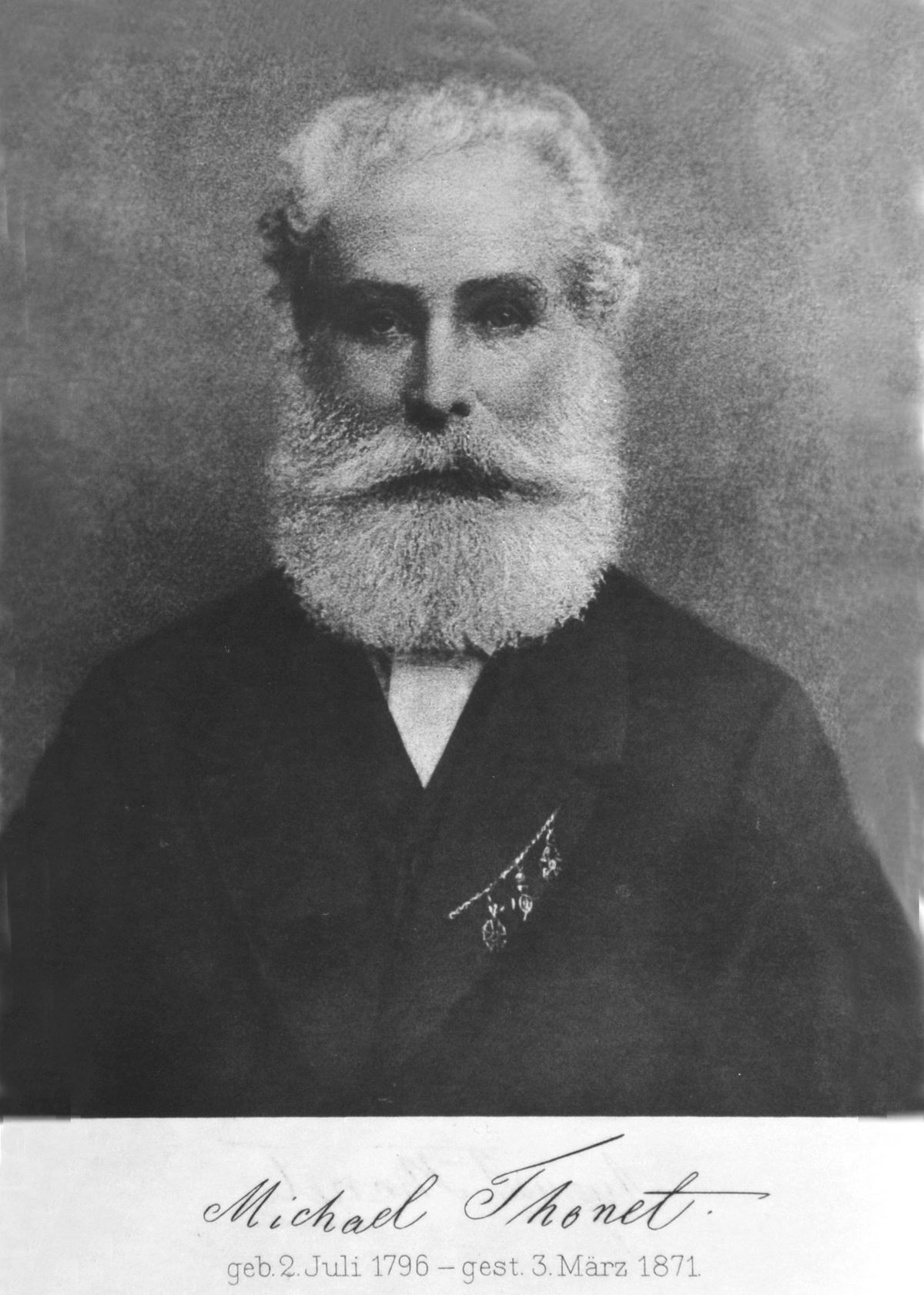
Michael Thonet was born in 1796 in Boppard, Germany. His father, Franz Thonet, was a master leather dyer and carpenter. Having watched his father work from an early age, Thonet naturally followed the path of a furniture maker. In 1819, at the age of 23, he took over his father’s workshop, and the following year he married Anna Grahs, a butcher’s daughter. It was in this workshop, which his sons later joined, that one of Thonet’s early designs, the Boppard chair, was born.
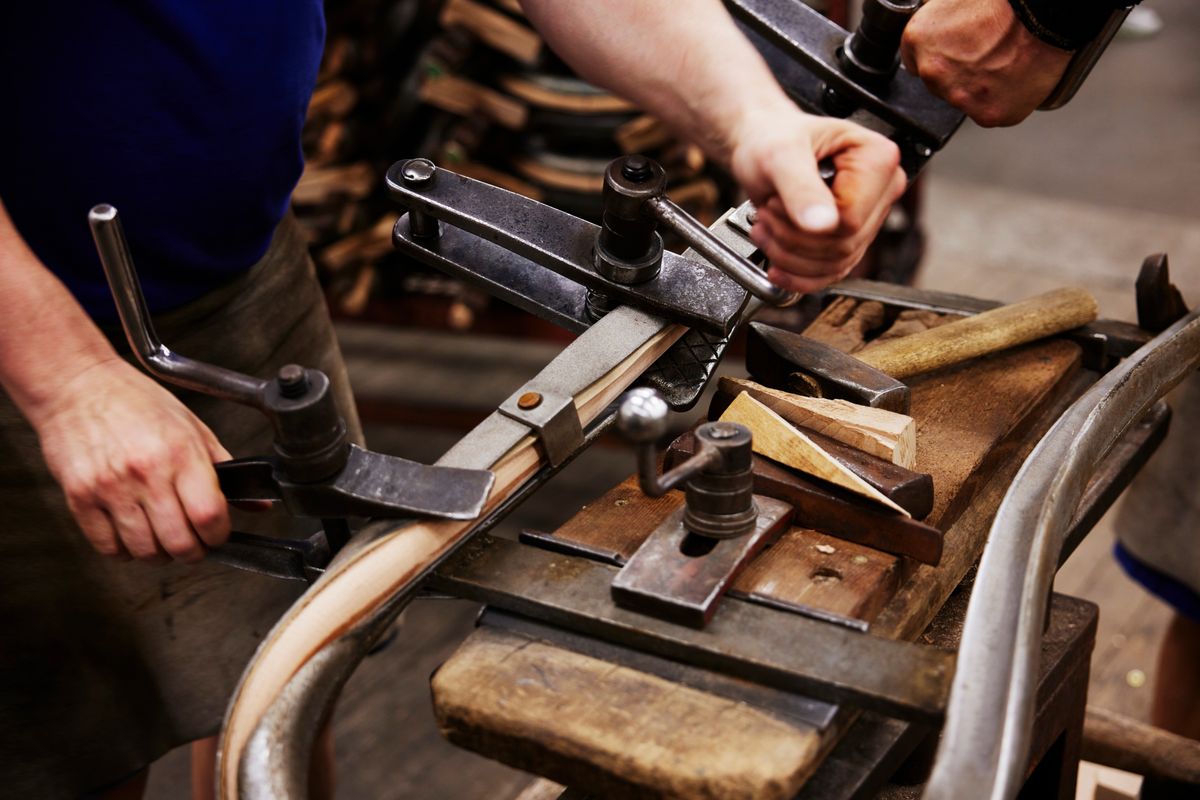
Produced from 1836 to 1840, the Boppard chair was the first result of Thonet’s work on bentwood techniques. It used plywood, which had emerged as a new material at the time. Made by layering thin sheets of rotary-cut veneer, plywood was light yet strong and easy to shape into curves. Thonet began experimenting with plywood furniture in 1830. He boiled long strips of plywood in glue, then placed them in metal molds before they cooled and bent them under pressure. He first used this technique to make the horizontal and vertical rails of chair backs, and soon applied it to other parts such as side panels, armchair arms, and leg braces. He was also careful in his choice of materials, using fine woods such as walnut or cherry on the outside and less expensive wood inside. The technique reduced material waste and made furniture production more efficient.
In 19th-century Europe, a simple, lightly ornamented Neoclassical style became popular among the urban middle class. In Austria and Germany in particular, it spread as the Biedermeier style. The Boppard chair followed this style, with a simple structure, unadorned surfaces, and orderly contours. What set it apart from other Biedermeier furniture was its use of bending techniques. Mechanized production had made plywood easier and cheaper to use, so applying bending to it can be seen as an attempt to develop a process that would more fully express the material’s potential. Thonet’s inventive interest in materials research and technical development was pointing woodworking in a new direction for furniture production.
Patents 1836–1842
In 19th-century Europe, chairmakers typically created curved forms by turning solid logs on a lathe. Applying heat and moisture to plywood to create curves was rare, and Thonet was not the first to do it. In Belgium, Jean-Joseph Chapuis made chairs with this technique in 1805, and farther away in the US, Samuel Gragg used it to make his Elastic chair in 1808. Even so, in hindsight it was clearly Thonet who earned the most from bentwood technology, and the secret lay in patents. From the mid-19th to the early 20th century, as industrialization and technological innovation accelerated, patents on new materials and on methods of making goods from them increased dramatically. Securing a patent first not only gave a business an edge in its field but also allowed it to profit by selling usage rights.
At the time, Thonet’s workshop was running smoothly, selling ordinary furniture alongside the Boppard chair. According to records, it was at one point the largest taxpayer in Boppard. But Thonet wanted a breakthrough that would take his company to the next level. To that end, he decided to patent the bending method he had used to make the Boppard chair. As mentioned earlier, however, furniture made with similar techniques already existed, so obtaining a patent was not easy. When the Prussian monarchy rejected his application for “a method of giving shape to wooden furniture using pressure” for lack of novelty, Thonet was undeterred. He persistently filed patents for the technique in France, Britain, and Russia. For an individual inventor at the time, however, investing aggressively in patents was a risky approach that bordered on gambling. Patents had to be filed separately in each country, and the application, registration, and maintenance fees were more than one person could easily bear. In the end, Thonet’s fixation on patents nearly ruined his company.
Then, almost as if by fate, Klemens von Metternich entered Thonet’s life. The Austrian chancellor was working tirelessly to attract new industry and commerce to Austria. In 1841, Thonet entered several chairs in an exhibition in Koblenz, not far from his hometown of Boppard, and they caught Metternich’s eye. In 1842, Metternich granted Thonet a patent for his method of making bentwood chairs and invited him to move to Vienna. Thonet had little choice but to accept. His company was already deep in debt from his excessive patent applications, and creditors were seizing even his family’s property. So in 1842, Thonet moved to Vienna, Austria, with his wife and five sons. He was 46 years old.
Although Thonet had moved to the great city of Vienna with the recognition of the Austrian royal court, rebuilding his business in his new home was far from easy. In Austria, he held the exclusive right “to bend all types of wood into any desired shape and curve by chemical and mechanical means,” but he lacked capital. The Viennese woodworkers’ guild also prevented him from working independently under his own name. As a result, he had no choice but to work for Clemens List and Carl Leistler, who ran successful woodworking workshops in Vienna at the time. Although he had to start over under employers much younger than himself, Thonet drew on his experience in their workshops to keep developing the Boppard chair.
Design 1842–1850
Thonet’s early chairs in Vienna were not very different from the Boppard chair. The main change was that the legs were now carved from solid wood, whereas before almost every part of the chair had been made of bent plywood. This seems to have been due to a shortage of apprentices in Vienna who were familiar with bending techniques. Over time, Thonet’s chairs gradually absorbed the refined tastes of the big city. In Vienna at the time, the revival of Rococo style, which returned to the splendor and display of the late 18th century, coexisted with more restrained and modest design. Thonet’s chairs, once defined by exaggerated, soaring curves that seemed to show off his bentwood skills, settled into simpler and more elegant lines.
The Liechtenstein chair (1844) shows how Thonet’s chairs evolved during this period. On Clemens List’s recommendation, Thonet and his sons created intricate parquet floors for the renovation of the Liechtenstein City Palace. They also made portable chairs (lafsessel) that could easily be moved and used as needed. This time, instead of layering veneers, they bundled thin wooden strips 2 to 3 mm thick and bent them. The Liechtenstein chair is far simpler and more intuitive than Thonet’s earlier chairs. Some suggest that its design was strongly influenced by Peter Hubert Desvignes, the English architect who oversaw the project. If so, it is reasonable to assume that No. 1 and No. 3, which developed from the Liechtenstein chair, also reflect his influence. No. 3 (1850) looks similar to the Liechtenstein chair but differs in structure. Unlike the Liechtenstein chair, whose seat (upper part) and legs (lower part) are separate, No. 3 has a backrest and rear legs made as a single piece. This can be read as part of an effort to simplify the chair’s components through bending. A similar model, No. 1 (1850), was based on chairs supplied to Schwarzenberg Palace. The difference is that the rear legs, backrest, and motif no longer form a single line, and a separate loop motif is inserted into the backrest. Despite some structural differences, these chairs show how work that began with royal commissions grew into Thonet’s line of commercial chairs. The royal project also marks the historic meeting of Thonet and Desvignes. Thonet’s techniques allowed Desvignes to realize light, easily movable chairs, while Thonet discovered the appeal of simple, elegant chair design. Their collaboration had a great influence on Thonet’s early commercial chairs. The two later became close friends, and Desvignes, acting as a patron, bought chairs Thonet showed at exhibitions and added them to his own collection.
Export 1850–1856
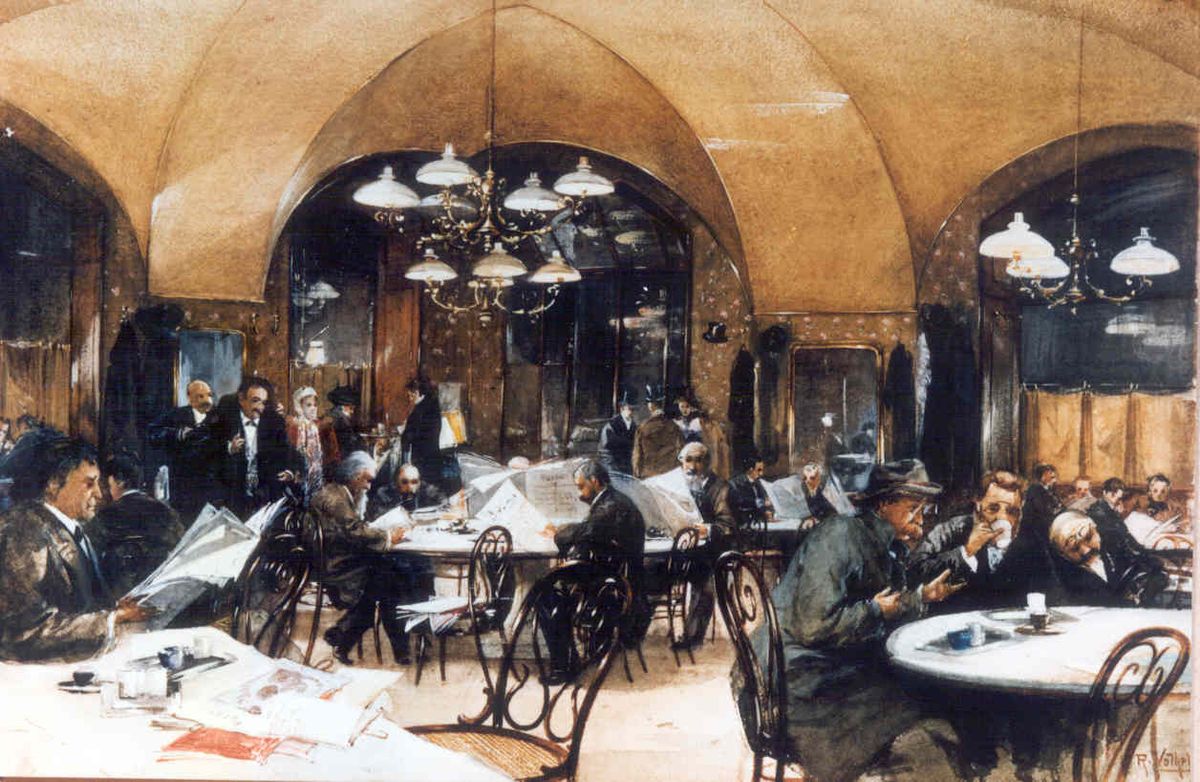
From around 1849, Thonet and his sons began working independently, opening a workshop in Gumpendorf on the outskirts of Vienna. Around this time, they showed their furniture at several exhibitions. Beginning with the Great Exhibition in London in 1851, industrial exhibitions flourished in major European cities. These 19th-century fairs were a world of wonders, where visitors could see new inventions such as electricity, telephones, automobiles, sewing machines, and washing machines, along with the latest technologies that would radically change how Europeans experienced time and space. Taking part in these exhibitions likely gave Thonet strong motivation to develop his own furniture-making machinery and industrialize his production. The fairs also offered a chance to connect directly with new furniture buyers. As industrialization and urbanization spread rapidly, a growing middle class was gathering in large cities, which had become social, economic, and cultural centers, and public spaces for them were opening one after another. During this period, Thonet presented the No. 4 chair (1850) to the Austrian trade association, where it attracted great interest. Anna Daum, owner of Café Daum on Kohlmarkt, one of Vienna’s busiest streets, saw it and ordered furniture for her café. Café Daum is often described as the first public space to use Thonet chairs. In fact, however, Thonet had received a large order for the No. 4 chair from a hotel in Pest (now Budapest, Hungary) a few months earlier. This can be seen as evidence that he had built a customer base across Europe through various exhibitions and fairs.
Thonet won a bronze medal at the 1851 Great Exhibition in London and a silver medal in Paris in 1855. These successes allowed him to expand exports beyond Europe to South America. The pieces he exhibited were later developed into models such as No. 9 and No. 5. One story from the 1889 Paris International Exposition concerns Thonet chairs used in a restaurant in the newly built Eiffel Tower. One chair reportedly fell 57 m and survived intact. This was thanks to the structural elasticity of the bentwood chair, and it made for a timely advertisement in front of a global audience. Having drawn so much attention at the fairs, these light, sturdy chairs spread to hotels, restaurants, cafés, and bars around the world. In particular, Vienna’s cafés, known as “coffeehouses,” were the finest showrooms for Thonet chairs. In a Vienna that was becoming a capital of civic democracy, the coffeehouse was a symbolic space where writers, artists, politicians, and others of every class met and debated freely. Among the regulars were Austrian architects such as Adolf Loos, Josef Hoffmann, and Otto Wagner. Influenced by Thonet’s café chairs, they carried the bentwood furniture tradition into the 1900s. A leading example of bentwood furniture by an architect is the chair Adolf Loos designed for Café Museum (1899). Loos once remarked, “When I went to America, I realized that the Thonet chair was the most modern chair.” Café Museum, which he designed with inspiration from Thonet chairs, earned the nickname “Café Nihilism” for its revolutionary, almost unornamented interior.
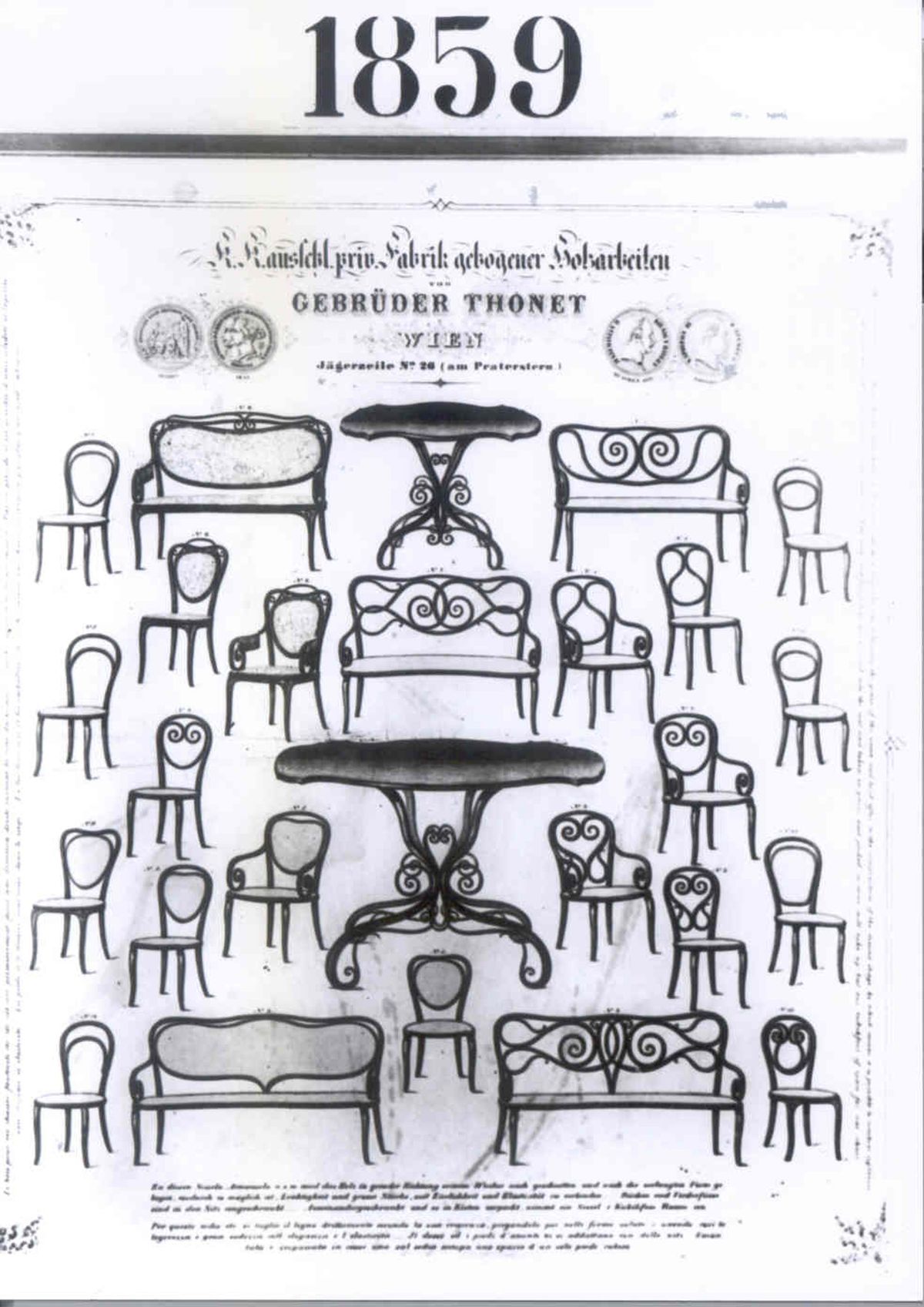
Thonet fully understood that his stage was the capitalist market, which creates consumer needs and then satisfies them. For example, he advertised his furniture through catalogs (the 1911 catalog featured as many as 980 models), and until the late 1860s he sold the No. 14 chair wholesale only to bulk buyers. The 1904 catalog even introduced the No. 14 chair as “the first consumer chair.” By promoting his products through fairs and cafés and by adopting innovative catalogs and efficient shipping methods, Thonet was able to spread his chairs around the world.
Production 1856–1871
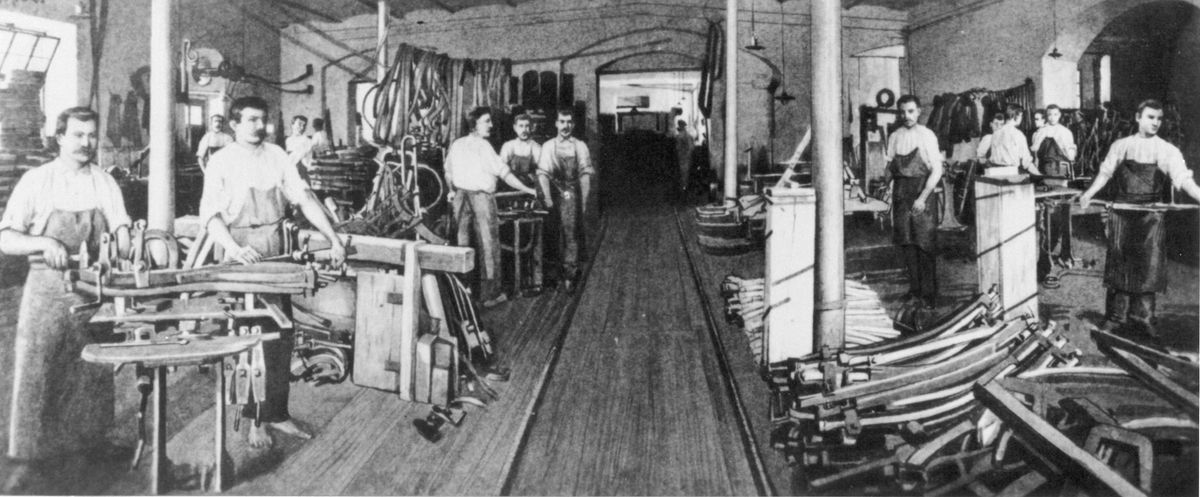
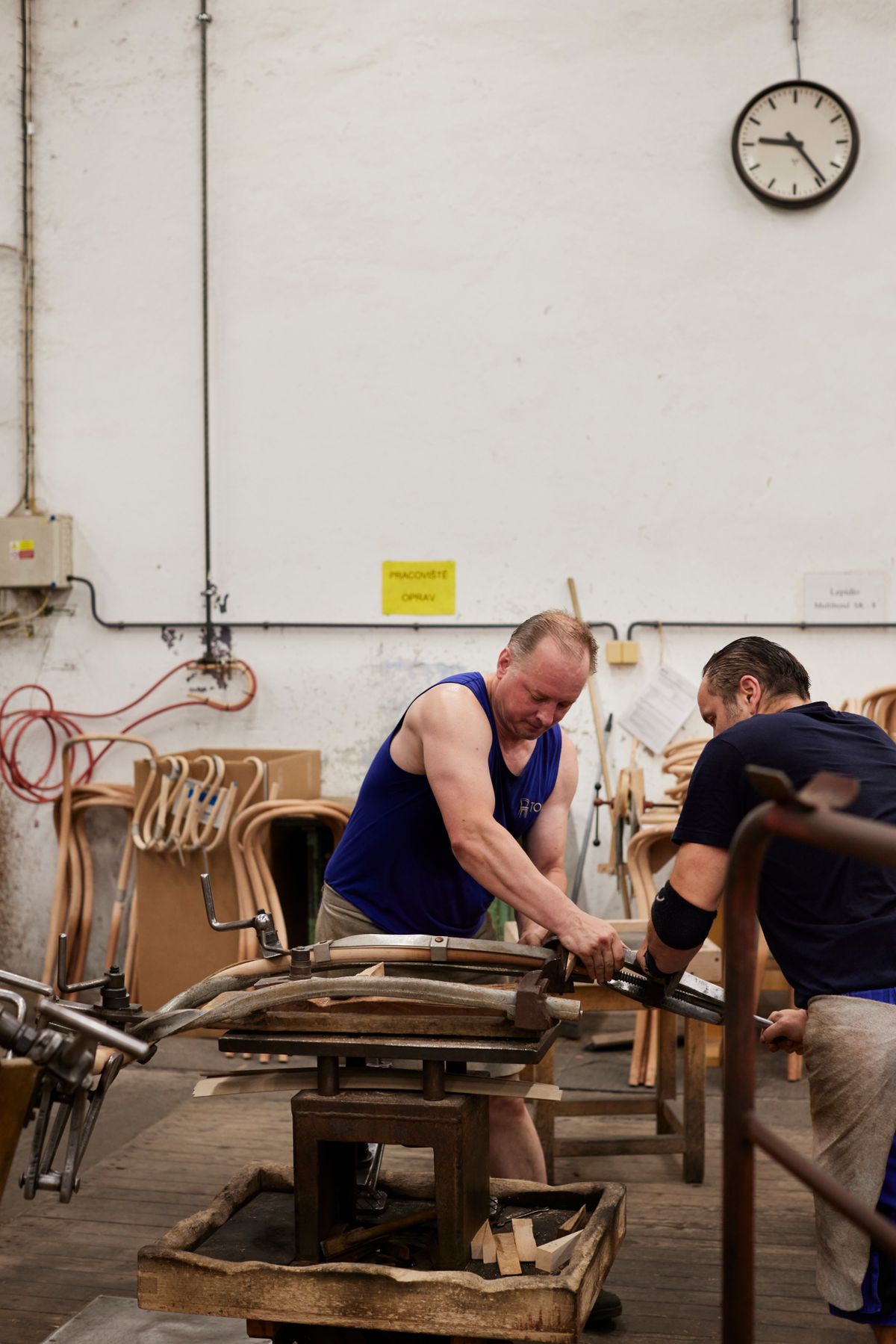
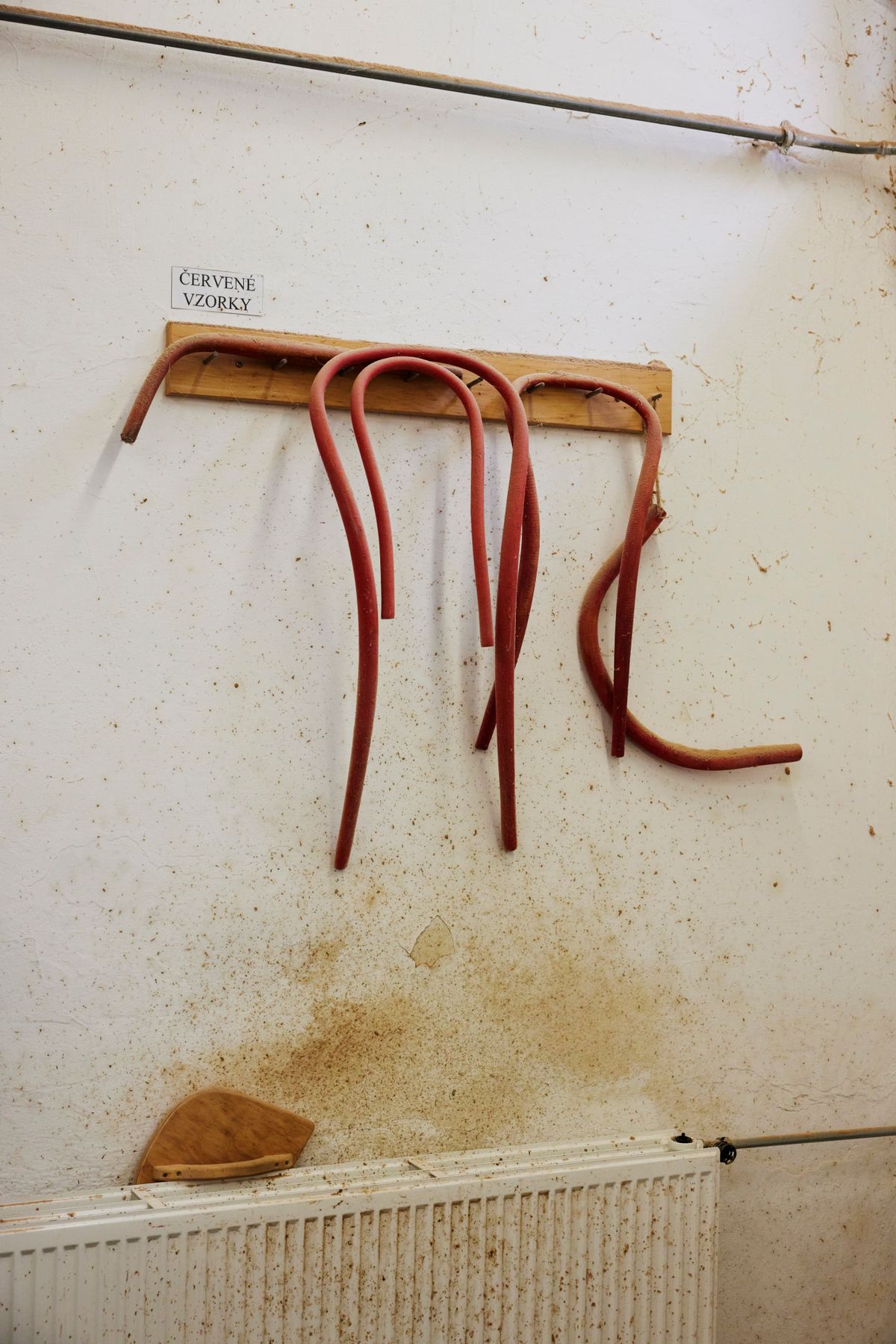
Thonet opened his first showroom in Vienna in 1852. The following year, he formally established his company and began expanding the business in earnest. Having worked with his sons since the days of the small workshop in Boppard, he named the company Gebrüder Thonet, meaning “Thonet Brothers,” and transferred the business to his sons’ names. However, he kept overall management and power of attorney for his youngest son, Jakob, and remained in charge of major business decisions. In 1853, the workshop moved to Mollardmühle, where 42 people worked. The staff consisted of nine carpenters, one turner, eight veneer cutters, two gluers, eight filers, two wood stainers, 10 polishers, and two workers who assembled parts. As orders surged, however, the Mollardmühle facility soon reached capacity. In 1856, the company built its first large-scale factory in Koryčany, Moravia, in what is now the Czech Republic. Koryčany was chosen for its abundant beech and its rail connections for shipping throughout Europe. It also offered inexpensive labor, including factory workers and home workers who wove cane seats. There, Thonet focused on building his own machinery to simplify manufacturing, standardizing parts, and making the joints between chair components more stable. All of these were essential conditions for mass-producing furniture. The Koryčany factory also stopped using plywood and bundles of wooden strips and instead steam-bent solid wood. The earlier methods still required a great deal of time and labor and were vulnerable to moisture, which made them unsuitable for export. After long experimentation, Thonet perfected a technique for bending solid wood without splitting it, and he secured a patent for this as well. Long wooden rods were steamed in an oven for several hours until they became flexible enough to bend in any direction. To prevent cracking, each rod was wrapped in a tin strip and then shaped in an iron mold.
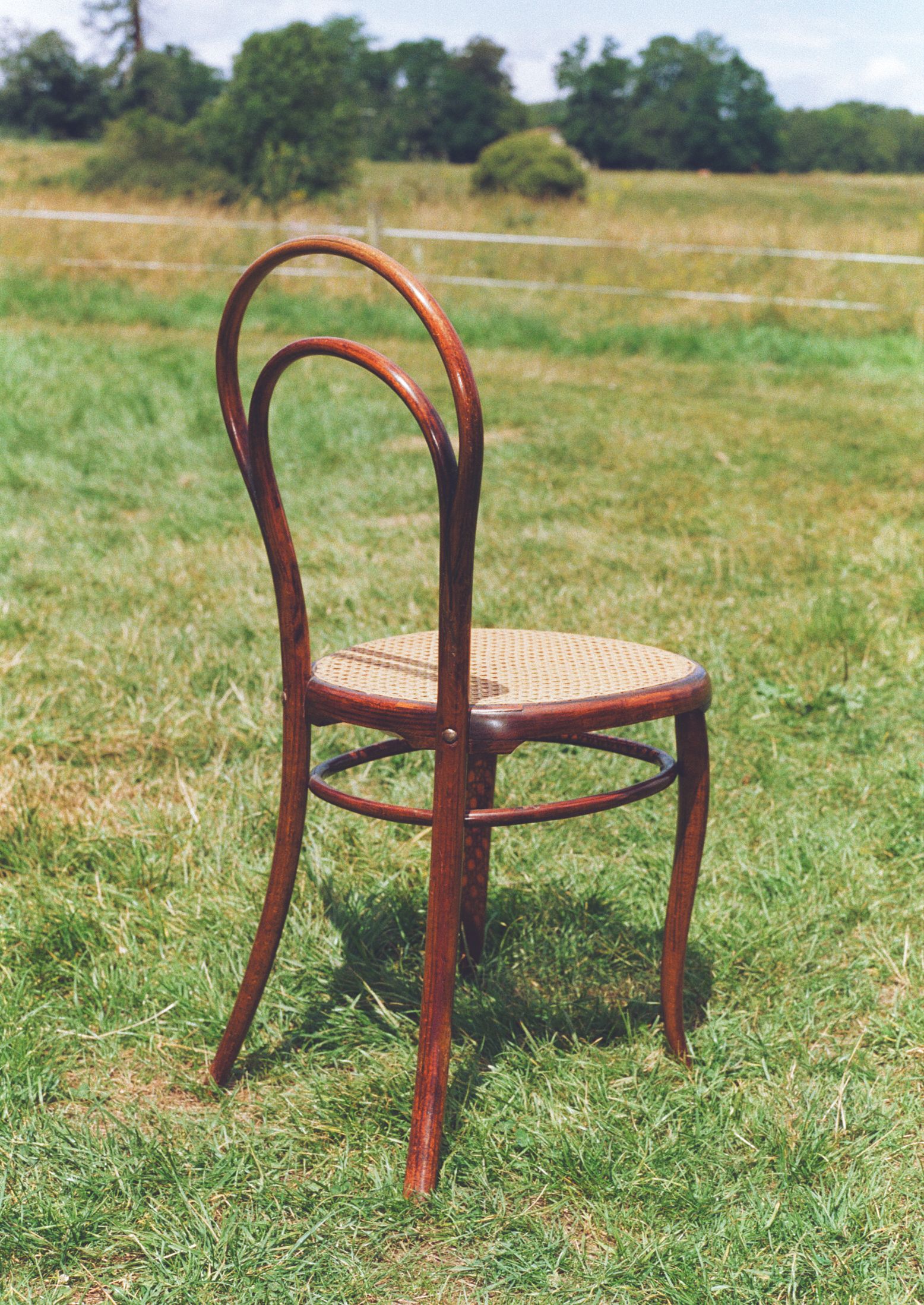
The No. 14 chair, with its hoop-shaped backrest, was made the same way (1859). By reducing the chair to its most basic elements, the No. 14 dramatically cut the materials and labor needed to produce it. Every part of the frame and the cane seat was essential, with nothing added and nothing missing. Stylistically, it can be seen as a Biedermeier form stripped of superficial ornament. The key point, however, is that it was one of the first industrial pieces of furniture in which function and form came together ideally, as manufacturing techniques were refined for mass production. Bending eliminated the need to join the legs or the rails and stiles of the backrest, which meant a dramatic reduction in the number of components. The No. 14 chair consisted of just six parts, 10 screws, and two washers. Thonet introduced an organized process into his factory design, running from the sawmill through a series of bending stations to assembly and packing. Except for very simple parts such as leg rings and table legs, every bending step was done by hand. Because the division of labor allowed even unskilled workers to take part without much difficulty, furniture could be made cheaper, faster, and in greater quantities. The Koryčany factory produced 10,000 pieces of furniture in its first year. As the No. 14 chair became a global success, output rose to more than 47,000 pieces in 1860. Almost overnight, the local beech supply in Koryčany fell short and a second factory became necessary. In May 1860, construction began on a new factory in Bystřice pod Hostýnem. More factories followed in Veľké Uherce in Hungary (now Slovakia) in 1865 and in Halenkov (1867) and Vsetín (1871) in Moravia.
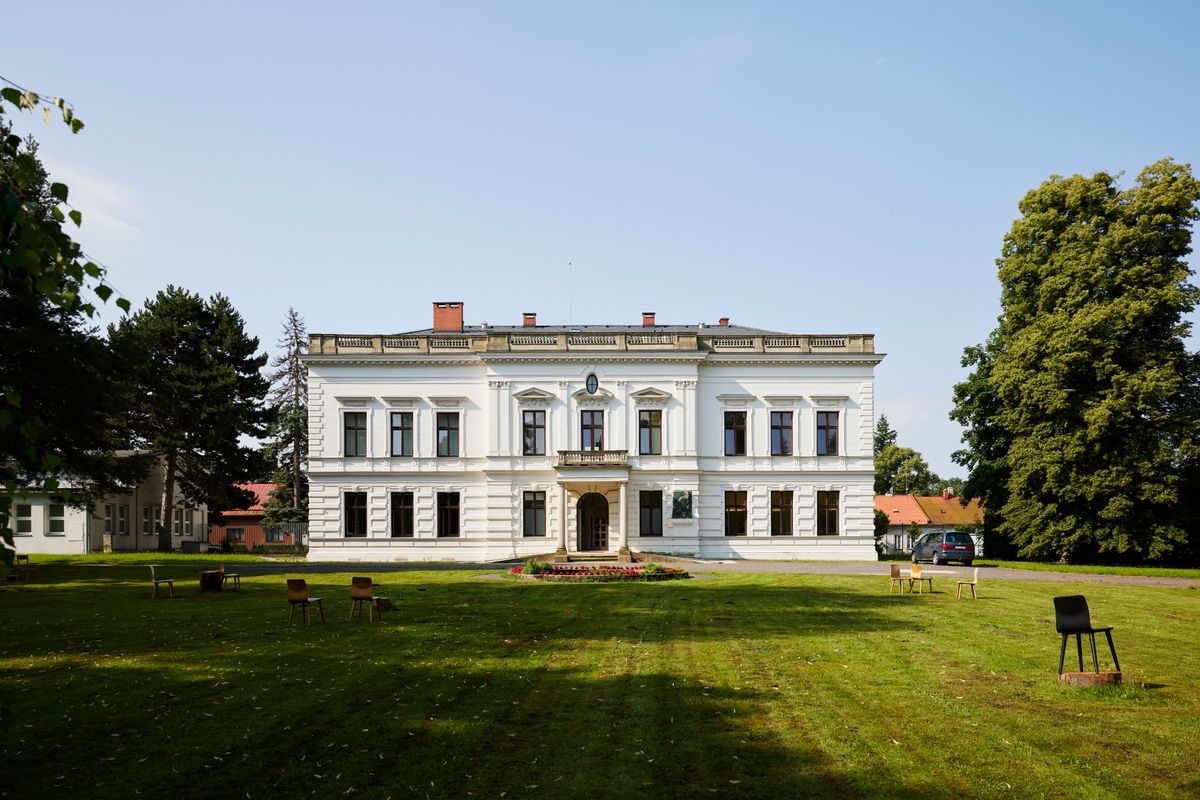
The factories also had a considerable impact on the towns where Thonet built them. He built housing and schools for his workers and brought railway lines into the villages. Generations of villagers worked at Thonet factories, so it is no exaggeration to say that entire villages revolved around them. As production expanded, the company also opened sales offices around the world. By the early 1870s, it already had offices in New York and Chicago in the US, as well as in the Netherlands, Germany, Austria, Belgium, Hungary, Switzerland, and elsewhere.

Legacy 1871–
In 1869, exactly 10 years after the No. 14 chair was introduced, Thonet gave up the patent that had brought him success late in life. Jacob & Josef Kohn, the second-largest player in the bentwood furniture market, had filed a suit against Gebrüder Thonet to invalidate the patent and end Thonet’s dominance. The grounds were “lack of novelty.” In fact, even when Thonet bent plywood 30 years earlier, he had been recognized for applying the technique so skillfully to furniture making, not because the technique itself was new. His later development of metal molds with clamps that bent wood without splitting it was a breakthrough. Still, the plan to monopolize the production of all bentwood furniture had been unrealistic from the start. Thonet voluntarily gave up the patent before it could be invalidated. With his company already thriving, he saw no need to invest more time and money in a patent that would expire anyway. Jacob & Josef Kohn was not the only latecomer to challenge Thonet’s success. Several others tried, but until the outbreak of World War I, no company posed a real threat to Gebrüder Thonet.
Thonet died in Vienna in 1871 at the age of 75. His five sons, who had worked alongside him, and his grandsons ran the company successfully until the end of World War I. Along with new stores, they established new factories in Radomsko, Poland, and Frankenberg, Germany (the German factory is still in operation today). After the war, however, Europe’s political and economic landscape had changed dramatically, and bentwood furniture was no longer as popular as before. Mundus, which had acquired Jacob & Josef Kohn in 1917, went on to acquire the financially troubled Gebrüder Thonet in 1924. Mundus was a joint-stock company formed in 1907 by Austrian entrepreneur Leopold Pilzer through the merger of 16 small bentwood furniture companies. Leopold, who was Jewish, fled persecution by the Nazis and emigrated to the US in 1938, where he founded Thonet Industries. After World War II, Thonet factories were rebuilt in Germany and Austria, but the factories in Moravia were cut off from Gebrüder Thonet as a result of the Cold War. In the 1970s, the German and Austrian companies also went their separate ways. Today, the Italy-based GTV (Gebrüder Thonet Vienna GmbH), Thonet GmbH in Frankenberg, Germany, and Ton, which grew out of the Bystřice pod Hostýnem factory in the Czech Republic, carry on the Thonet legacy.
Considering Thonet’s influence on design, production, and culture as a whole, it is easy to agree that he did far more than bend wood. Although Thonet was not the first to make bentwood furniture, it is never easy to see its potential for a mass-produced chair and pursue that vision to the end. The legend of the No. 14 chair, built on pioneering investment in patents, promotion through fairs and catalogs, and the division of labor in the factory, deserves to be remembered as the signal that announced the birth of the modern chair.
Want to dive deeper?
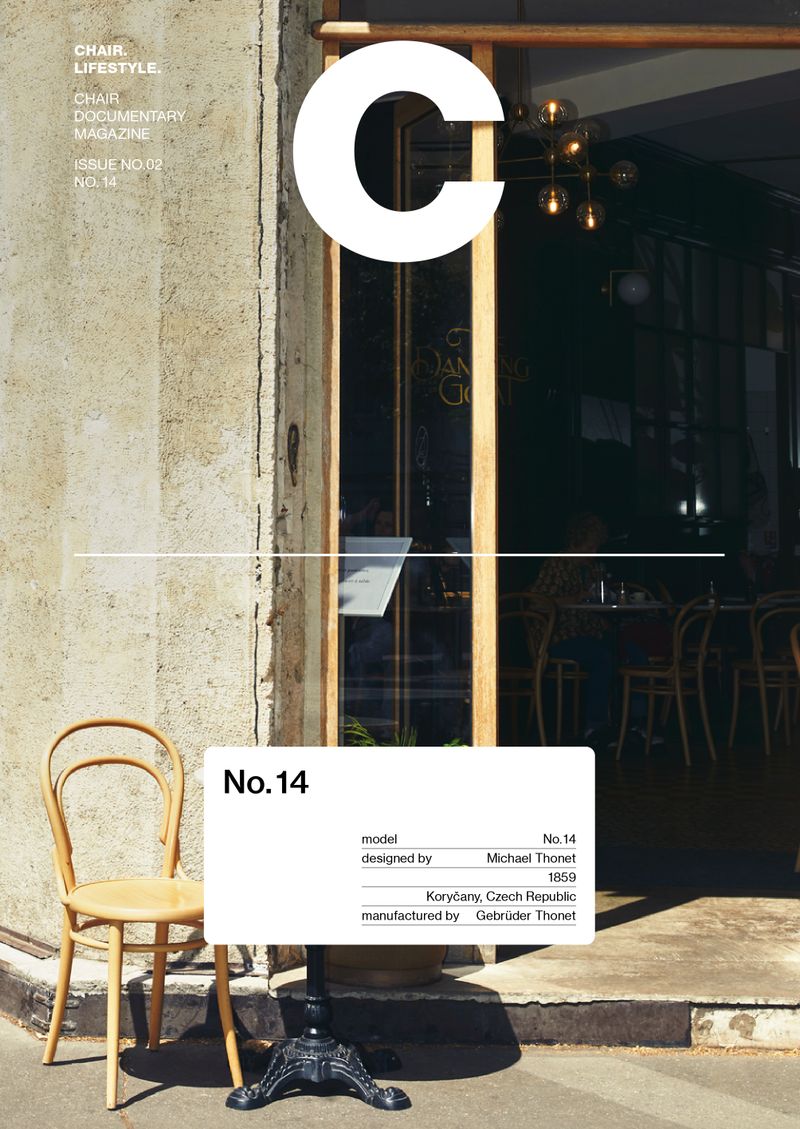
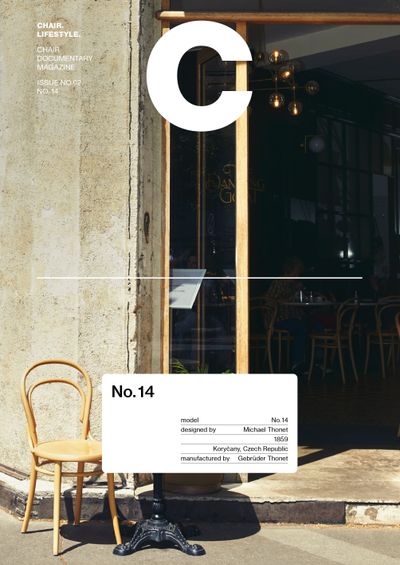
Issue.02 No.14
Introduced by Michael Thonet in 1859, Chair No. 14 is widely known as the 'café chair.' From the nineteenth century to the present day, it has been found wherever people gather—cafés, restaurants, and bars—across eras and borders. Thonet devised bentwood and assembly techniques suited to factory mass production, realized international distribution through flat-pack packaging, and promoted the chair through catalogs, bringing technical innovation, efficiency, and accessibility together in a single design. At the starting point of the 'modern chair'—one anyone could purchase and use at a reasonable price with consistent quality—stands Chair No. 14, with its classic design and elegant beauty.