©Bobby Mandrup

What Happens When You Spend Five Years Designing a Single Chair

Editor Sunjin Kim | Bobby Mandrup


Since founding his studio in 2010, Jonas Trampedach has collaborated not only with Copenhagen-based contemporary brands such as Hay and Frama but also with manufacturers around the world, including Fredericia Furniture, Arco, and Karakter. His work weds traditional craftsmanship with a contemporary design sensibility to achieve precise detail, and material experimentation and hands-on making stand at the center of his practice. All the while, he continues to explore new materials and methods of production, seeking a balance between structure, form, and the honesty of materials.

This interview is featured in Magazine C Issue 7, ‘PK22.’

©Bobby Mandrup
©Bobby Mandrup
What does my identity as a Danish designer mean?
It is a powerful compass and a solid foundation. The Danish design heritage I grew up with naturally shaped the mindset a designer ought to have. After finishing my studies in Copenhagen, I moved to London, thinking it was time to go out and experiment, to explore every possibility. But working at the RCA, I eventually realized that a design language or a mode of experimentation does not have to be pushed to extremes. What matters most to me are works with lasting potential—projects whose outcomes keep generating something new even after they are complete.
What has influenced my design and work the most?
The experience I gained at my mother’s antique shop. From the age of twelve, I helped sell antiques, and I think of it as my most elemental design education—training my eye, understanding the balance of proportions, and learning materials, surfaces, and the styles of each era by seeing and touching them. It was only long after I began designing furniture in earnest that I realized how much knowledge and sensibility I had already absorbed through that experience.
What is my most memorable project?
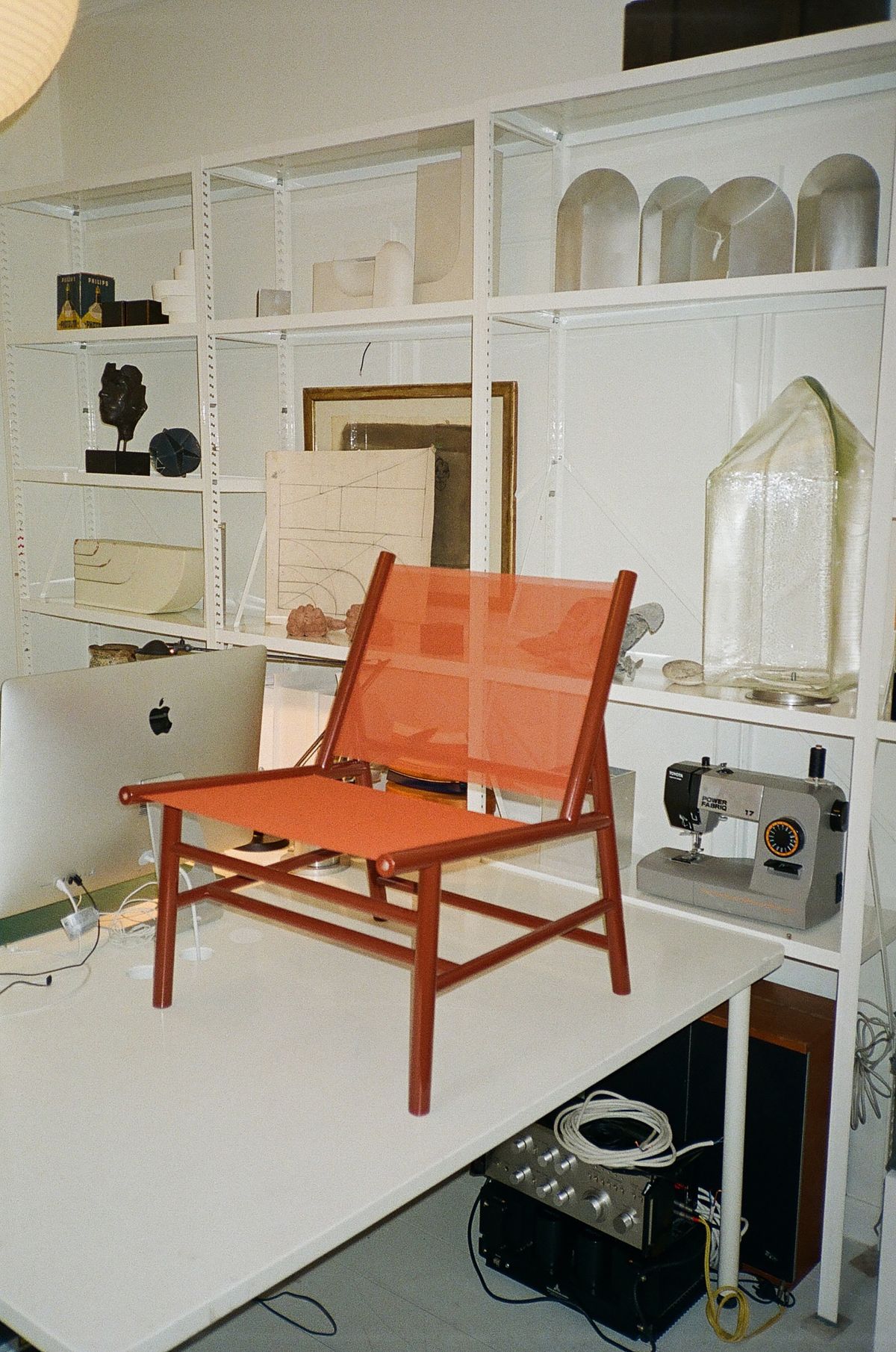
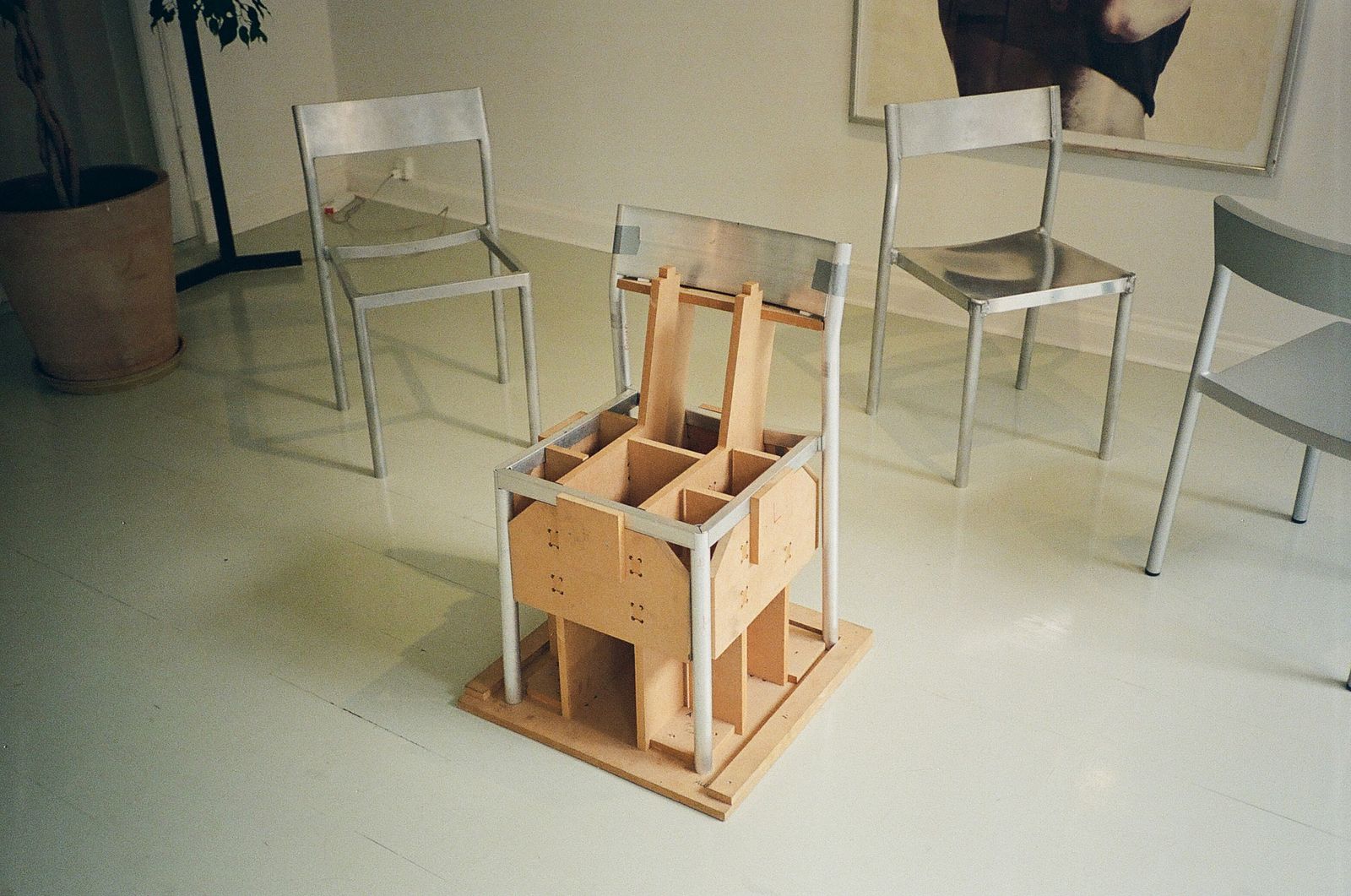
The Type Chair, produced by Hay since 2024. Over a design process that stretched across five years, what began as a sketch for a wooden chair passed through a steel version before finally being completed in aluminum. The details I first envisioned proved difficult to realize, so I redesigned it several times, shaping the design by experimenting on actual builds with my assistant, without drawings. But I did not want to compromise or drift too far from the structural idea I had started with. In the end, I chose aluminum to realize a backrest that is low yet visually striking, and it became the first aluminum chair Hay ever released. This project is especially dear to me because it reflects, in so many ways, the way I aspire to work as a designer—a process and a result centered on structure and material.
What does it mean to design a chair?
It happens within the reassurance of clear rules and conditions. The structure—seat, backrest, legs—and the function of sitting are already given, which is precisely what makes it possible to try new materials and forms within them. Whenever I design a chair, I begin with the same sketch and develop the idea from there; when a particular detail, material, or production method comes to mind, the work naturally unfolds around it.
©Bobby Mandrup
©Bobby Mandrup
How did the Shim Coffee Table come about?
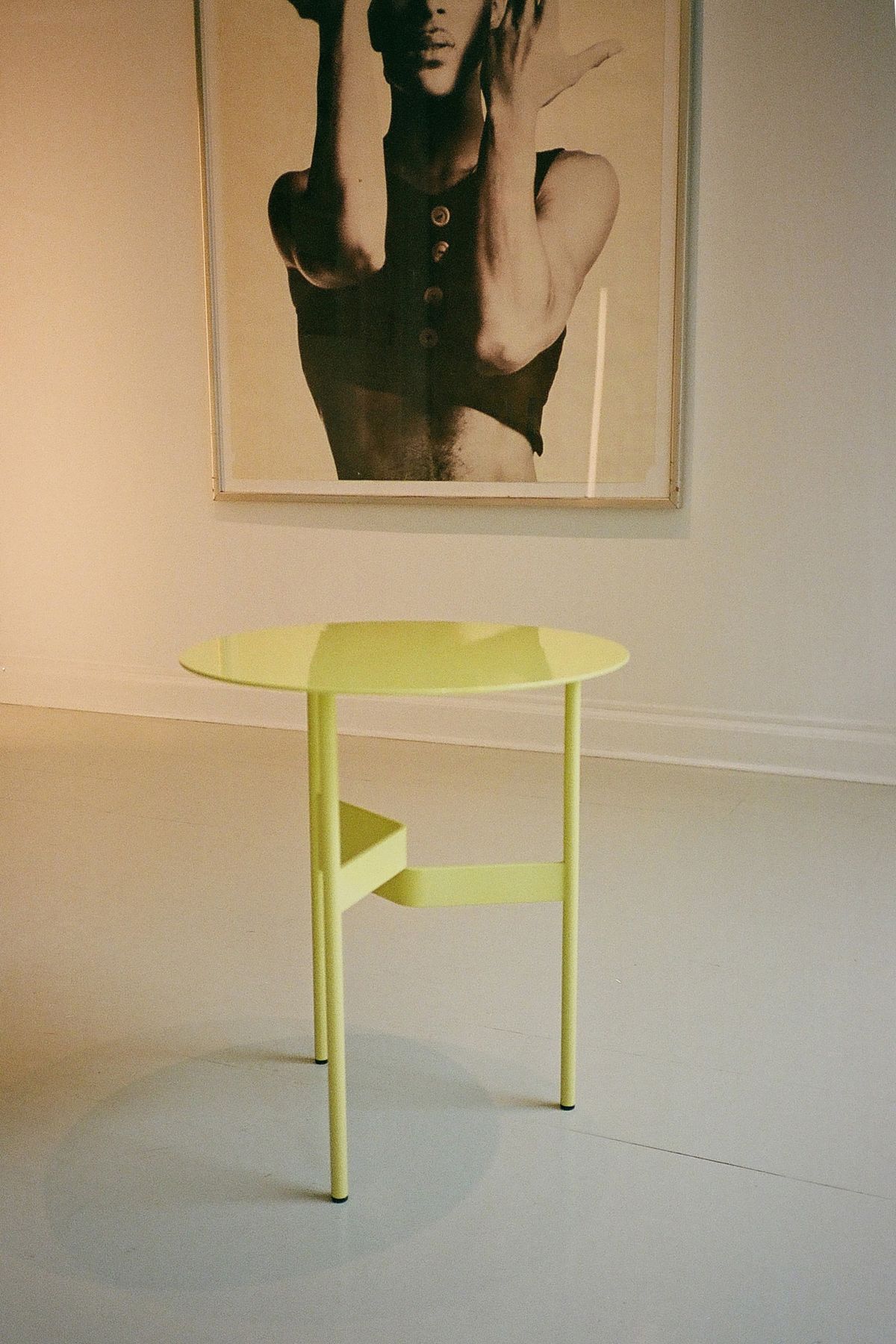
It was inspired by the PK25. Three tubular steel legs support the tabletop, held by a plate-like base structure—an homage to Poul Kjærholm’s method of cutting and bending a single sheet of steel into a unified frame. To achieve a form at once simple and sculptural, I modeled it by cutting and bending the steel myself in my workshop.
©Bobby Mandrup
©Bobby Mandrup
What is it like to work with metal?
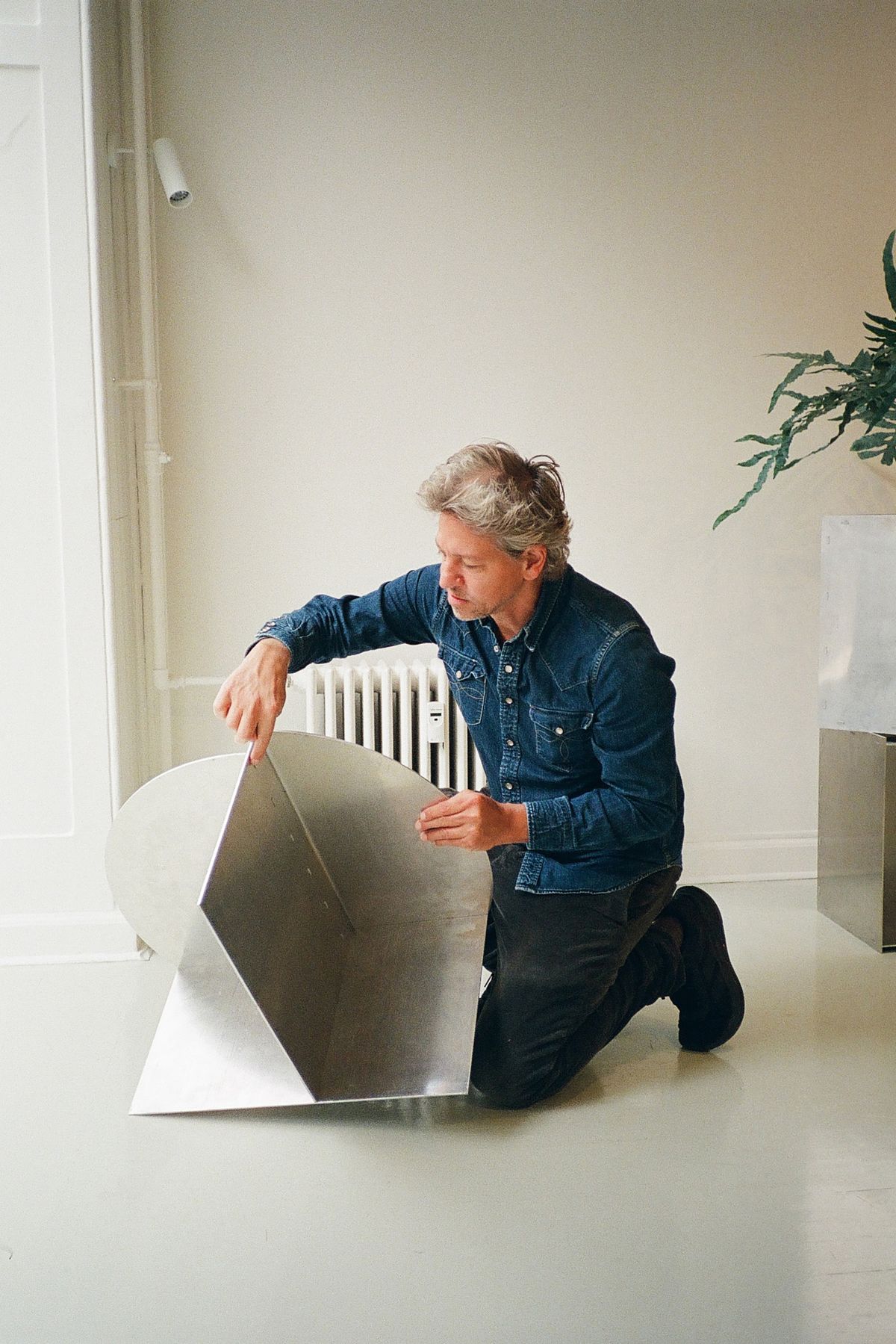
It is flexible and forgiving. Wooden furniture is easily damaged in the making and slow to work with, whereas steel and aluminum are highly malleable, taking shape quickly and easily. Thin metal in particular can be formed by hand, and I love this way of working—it feels like drawing in three-dimensional space.
What defines the Rivet series?
It was designed to reveal the symbiosis of handcraft and industrial production. A rivet is a thick metal pin used to join sheets of metal, a component common in traditional craft techniques. In the Rivet series, aluminum panels are joined by hand, each rivet driven in with a hammer, and leaving the rivets exposed at every joint is the structural signature that runs through the entire series. It began because aluminum is harder to weld than steel, which led me to adopt a handcraft approach—and in the process, I discovered that assembling aluminum panels at ninety-degree angles was both logical and natural. Thanks to this method, the series has expanded with ease: starting with a shelf in 2016, it has grown to eight pieces in all, including chairs, shelves, and tables.
What is the role of furniture in a space?
To add vivid texture. Choose the right materials, and both the space and the furniture grow ever more beautiful. That is why I choose organic materials that change naturally over time and develop a patina, letting the furniture mingle freely with its surroundings. Aluminum, for instance, when left unfinished, scratches and oxidizes and acquires a patina—a process that can even guide the choice of finish. Visually, it is important to approach things in terms of proportion and balance. Sometimes every piece of furniture in a room looks as if it came from a single hand, which can give the impression of a newly opened Airbnb or a badly designed hotel. This is exactly why we should not be bound too tightly to any particular design movement or style. A space and its furniture are not merely elements of styling.
What keywords describe the designer Jonas Trampedach?
Material exploration and a hands-on approach.


Want to dive deeper?

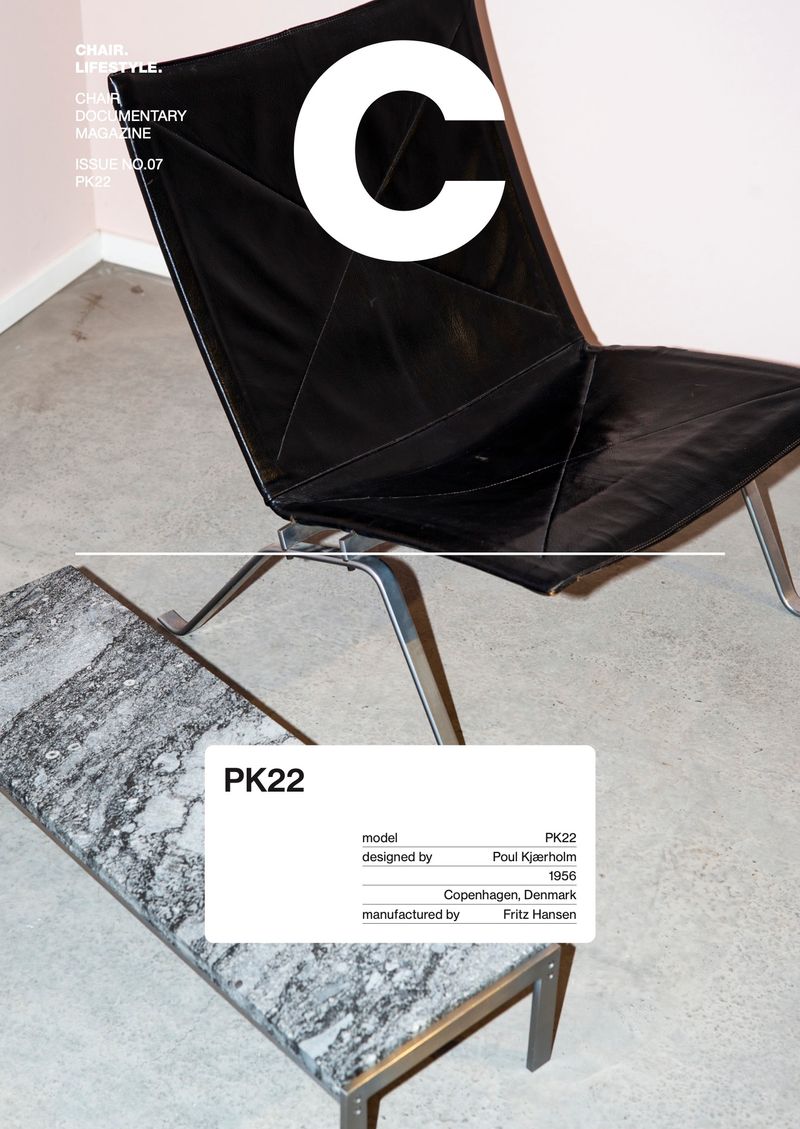
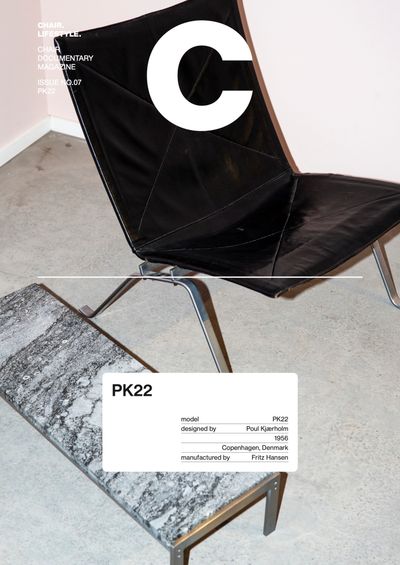
Magazine C PK22 cover

Issue.07 PK22

Introduced in 1956 by Danish designer Poul Kjærholm, the PK22 is concise and clear. Designed so that material and structure become form itself, every element of the chair—from the steel frame to the leather and screws—works functionally while shaping its sculptural identity. A defining work of Kjærholm's design philosophy, which extended the precision of traditional Danish craftsmanship into a modern formal language, it is a chair that blends naturally into any space while exerting a quiet presence.

Related Stories