Furniture Architect Poul Kjærholm's Danish Seaside Home

Editor Dami Yoo | Photographer Soonae Park

About thirty minutes north of Copenhagen, on the Rungsted coast facing the Øresund strait, stands a house: Villa Kjærholm, the home completed by furniture designer Poul Kjærholm and his wife, architect Hanne Kjærholm. Today their son, Thomas Kjærholm, lives among its traces. A dealer who gathers and presents fine furniture, and a partner with Fritz Hansen in carrying on his father's design legacy, he says that keeping this house—still valuable across the decades, still alive with the couple's philosophy—is one of his own essential duties.

The full interview is available in Magazine C Issue 7, "PK22."


Villa Kjærholm, filled with Poul Kjærholm's furniture. The house was designed by his wife, Hanne Kjærholm.
This house, known as Villa Kjærholm, holds your family's story intact. When did your life here begin, and what does the house mean to your family?
The house was completed in 1962, the year I was born, so it has been with me from the very beginning of my life. As is well known, my mother designed the architecture and my father made the furniture. Their ideas about space, light, and how to live with design are present in every corner. Life in this house by the sea has always been in touch with nature. I still vividly remember the clear summer air and watching the colors of the sky and sea shift from moment to moment. The house changes its expression with the seasons and the hours, and it holds so much vitality through those changes that it feels like a living house. Sometimes I picture my father at his worktable, absorbed in his drawings—that spot still brings him back to me most vividly. There were always metal parts and mechanical structures around him, and they often gave him inspiration. The air of quiet, taut concentration—that silent tension—still seems to linger in the house.
What were the circumstances when the house was being built, and how did the two of them come to complete it together?
At the time, they were both teaching at the Academy of Fine Arts in Copenhagen—my mother as a professor of architecture, my father of furniture design—and they shared a creative dialogue, constantly exchanging ideas as they worked. My father created several of his most iconic pieces in that period; a great deal of that work took place while this house was being built. Architecture and furniture naturally interlocked into a single result. My mother valued space, light, and proportion, while my father gave weight to form, material, and detail. That is why I think of this house as the natural convergence of their two ways of seeing.
What philosophy or values did they share in designing the house?
My mother believed a house should blend naturally into its surroundings. She wanted a space open to nature, serene, with light seeping in softly. So she fine-tuned the building's proportions so that interior and exterior would flow into each other. A pergola that once stood on the site—a structure of posts and a roof built to carry climbing plants over a garden or terrace—also became an architectural motif: its repeating rhythm was carried directly into the house. Kalmar pine on the walls and doors adds warmth, and the combination of brick and large windows creates an impression at once solid and light. My father's furniture sits within the same concept—low, simple forms that reveal the honesty of their materials, conceived so that light and air could flow freely. With that shared sense of balance, they created a space both structural and human.
Their architecture and furniture are regarded as the product of a kind of creative dialogue. What role do you think Poul Kjærholm's furniture plays in this space?
Their furniture and architecture were born together from the start; neither could exist without the other. My father designed most of the furniture for this house himself—the PK9 chair, the PK54 table, and the PK33 stool among them—and they are still produced by Fritz Hansen today. Those pieces were made to settle naturally into my mother's spaces: low, refined forms that leave room for light and movement. The dining area, above all, is where their relationship shows most clearly. The PK54 table and PK9 chairs carry the house's architectural proportion and clarity.
Where in the house do you usually spend the most time?
I spend most of my time beside the PK54. From that spot the whole house comes into view, and a picture-like landscape unfolds beyond the window. It is where I can fully feel the proportion, the light, and the quiet atmosphere my parents created together. Sitting there, I naturally sense how the day's light changes and how the weather transforms the mood of the space. It is also a place where time seems to pause, and I find myself watching the years flow by.
Villa Kjærholm on the Rungsted coast, facing the Øresund strait ©Soonae Park


The interior of Villa Kjærholm, composed of Poul Kjærholm's chairs, tables, and lighting ©Soonae Park
How do you use the PK22 chair?
The PK22 is, quite literally, a chair for resting—an easy chair. It is light, simple, and comfortable. One is enough on its own, but a pair facing each other across a low table works beautifully too; its use changes with how you shape the space. My father did not want the chair to dominate a room, so he set the seat low, designing it so that when you sit, the surroundings feel wider and more open. It is a chair suited to quiet moments—perfect for reading, for conversation, or for simply sitting and taking in the mood of the house.
Works by many designers—an Ingo Maurer light, Charles & Ray Eames chairs, a Poul Henningsen lamp—coexist harmoniously with Kjærholm's furniture here.
My parents were always open to good design, so there was never a notion that the house should be filled only with my father's work. The bookshelf in the living room, for instance, is a Mogens Koch design that the two of them chose together. What mattered to them was always the same: honesty of material, clarity of form, and a quiet presence within the space. The Ingo Maurer light is something I added later myself—I think the way it handles light and reflection suits the mood of the house.
How does living right on the sea affect your life, and how does a day unfold here?
The sea is the landscape that defines this house's atmosphere. My mother wanted the architecture to melt naturally into its surroundings. The large windows open toward the water, letting sunlight and air flow straight into the house. You can watch the clouds drift by, and as the weather and the hour change, the light and shadows that enter the rooms shift from moment to moment. That connection to nature is the essence of this house. Perhaps that is why life here moves to a very slow rhythm. In the morning I sit at the table with coffee, watching the light pour in; I swim, or watch through a telescope as ships come into the distant harbor. You can even see the weather turning over the sea. Looking at such scenes, the sense of time passing becomes vivid again. In a word, this is a house that makes you attend to time—rather than urging you to do something, it simply lets you feel the changes around you.
Of the design philosophy your parents embedded in this house, what resonates with you most deeply today?
That they wove architecture and furniture into a single concept. Space, material, and light are in perfect harmony, and that dialogue is alive throughout the house. My mother's architecture gave it ease and openness; my father's furniture added focus and precision. That balance is their true legacy. They pared away the unnecessary and left behind a beauty that endures. The house is now a listed building, so major changes are impossible—and I think that is as it should be. It remains modern, and it remains a living space.


A daily pleasure for Thomas Kjærholm: watching ships come and go along the coast ©Soonae Park
Not far from the house, you run a furniture shop that carries Kjærholm designs. Was it your family's influence that led you into the furniture business?
I originally trained in furniture making, and I always carried the dream of running a fine shop that dealt only in good products. In my late twenties I began to think seriously about furniture as a career and opened a store, and around 1992 I became a Fritz Hansen dealer. A friend who ran an office asked me to find him a PK55 table, but at the time I sold only another company's products. That prompted me to contact Fritz Hansen directly and ask, "If I open a store, could I sell your products?" They said yes, and I became a dealer right away. I have run that store ever since. And starting about ten years before my mother passed away, my elder sister Kristine also joined the meetings with Fritz Hansen, taking part in carrying on our father's legacy. That is how we naturally learned the stories, the philosophy, and the way of asking questions about furniture. Today my children and my sister's children take part in continuing the legacy as well—so that someday they can carry on our roles.
Thomas Kjærholm, son of Poul Kjærholm. Born in this house, he has lived here ever since. ©Soonae Park
In carrying on Poul Kjærholm's design legacy, what values do you hope to keep upholding?
Integrity, and respect for craftsmanship. My father's work was never design for the sake of fashion; it was about precision, honesty of material, and balance. Those values have not changed. What matters is that his designs continue to be made with the same care and devotion as in his day—and that the philosophy behind them, their clarity, simplicity, and truthfulness, remains visible.
Finally, tell us which chair you love most, or which holds the most special meaning for you.
It is hard to choose just one—it differs from day to day. Some days the PK9 speaks to me most; other days it is the PK11. The PK9 carries a sculptural force, I think, and the PK11 a refined precision. Both embody perfectly the sense of balance my father pursued.


Want to dive deeper?

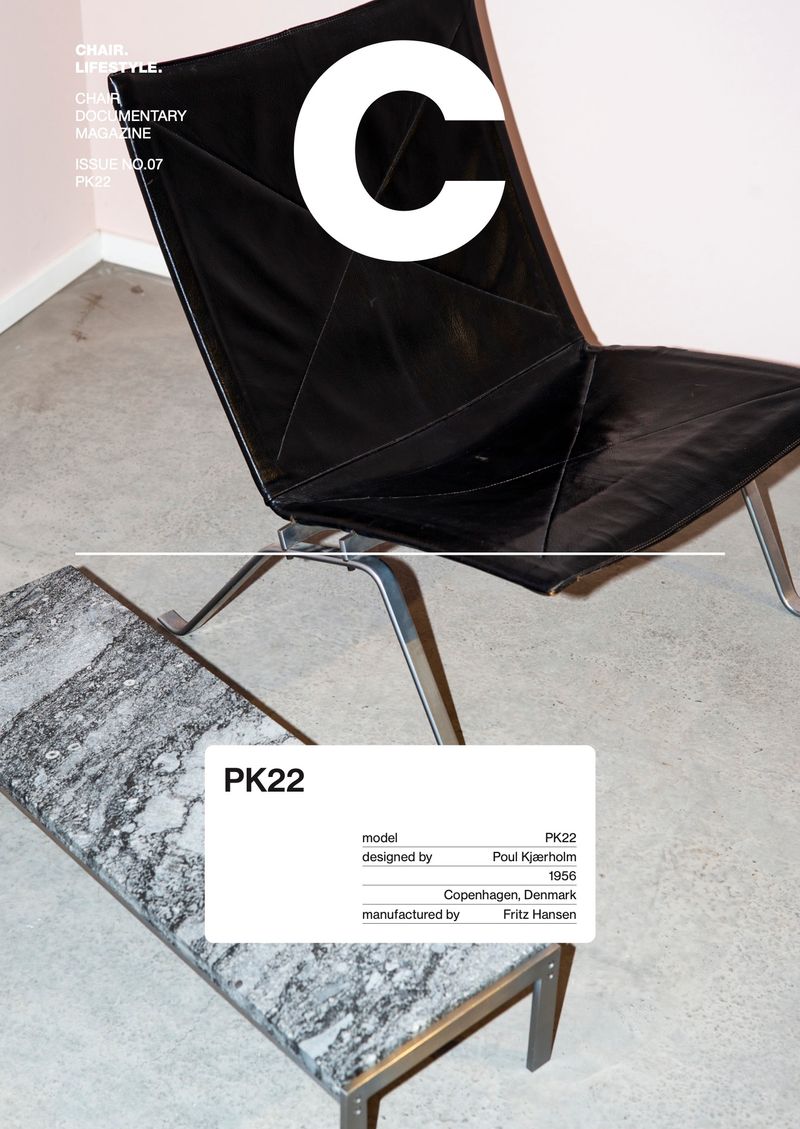
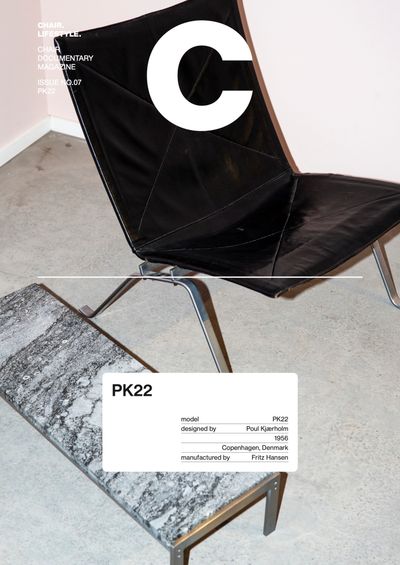
Magazine C PK22 cover

Issue.07 PK22

Introduced in 1956 by Danish designer Poul Kjærholm, the PK22 is concise and clear. Designed so that material and structure become form itself, every element of the chair—from the steel frame to the leather and screws—works functionally while shaping its sculptural identity. A defining work of Kjærholm's design philosophy, which extended the precision of traditional Danish craftsmanship into a modern formal language, it is a chair that blends naturally into any space while exerting a quiet presence.

Related Stories