A Cabin Built in a Dutch Forest

Editor Kyurie Shin | Photographer Valentina Vos

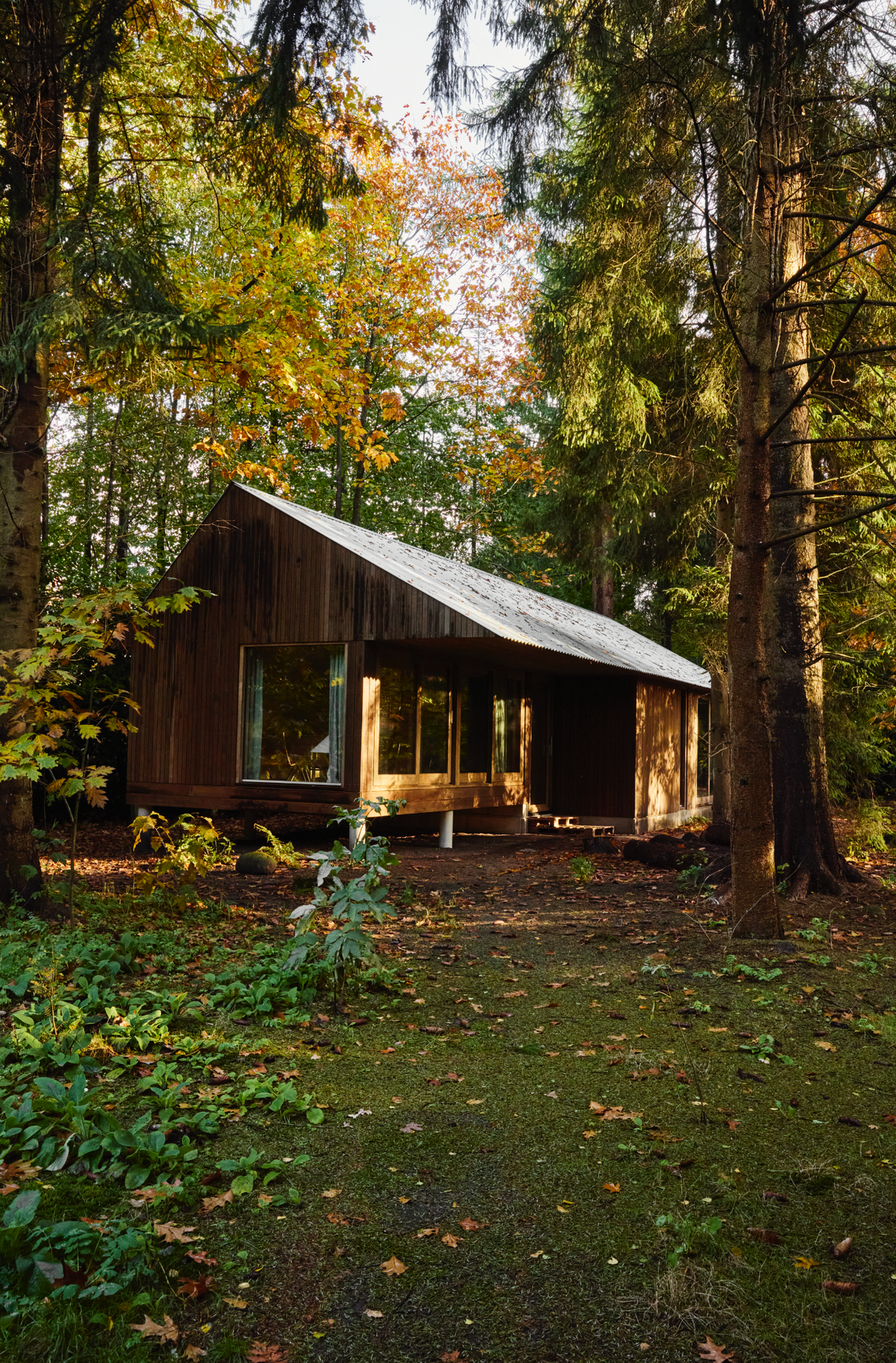
Near Groningen, a city in the northern Netherlands, lies Drentsche Aa National Park, where a winding river still flows in its untouched, natural state. This forest, which looks as though it stepped out of a 17th-century landscape painting, is today the canvas for the free life being created by the couple Gisele Azad and Roemer van Hulzen. The way they cultivate a small house and two cabins, which they share through social media, feels like a scene from a film. The vibrant life the two lead within this tranquil nature is, in itself, a life worth aspiring to.

This interview was featured in Issue 7, 'PK22'.


©Valentina Vos
©Valentina Vos


Tell us about how you came to move deep into this forest.
GA We had both always lived in big cities. Before coming here, we lived in an apartment. At first we had no intention whatsoever of leaving the city, but going through the pandemic, we gradually began to feel we wanted to live closer to nature. Then, while taking walks across various parts of the Netherlands, we discovered Drentsche Aa National Park, where we now live. Most of the houses here have been family-owned for generations, so properties rarely came up for sale, but about a year later we heard that this site had come onto the market. At the time we were staying in LA, so we put in an offer without ever having seen it in person, and fortunately the deal went through. We only actually saw the place after the contract was finalized. The site has a main house for living, one large cabin, and a small cabin that's like a storage shed, and we're renovating these spaces together with an architect. Earlier this year, our first project—the renovation of this large cabin—was completed.
This is a completely different environment from city life, so it must have taken quite a big decision.
GA Going through the pandemic, I realized I didn't miss city life at all. More than anything, I felt a sense of anticipation about creating a space where we could realize our own vision. For the renovation, we commissioned an architect who had designed a forest house that had made a strong impression on us during the pandemic. I think that's when the idea of 'let's try living in nature' really began to take concrete shape in my mind. RH It's not a place far from the city, but it felt like opening a new chapter in life, so it was incredibly exciting. There was a lot to do and a lot to think about, but I actually think it was good that we didn't overthink it too much. Now that we're actually living here, it suits us far better than we imagined.
©Valentina Vos
©Valentina Vos
What changes has forest life brought to your daily routines? Working respectively as a writer and a graphic designer, I'm curious how living here has influenced you.
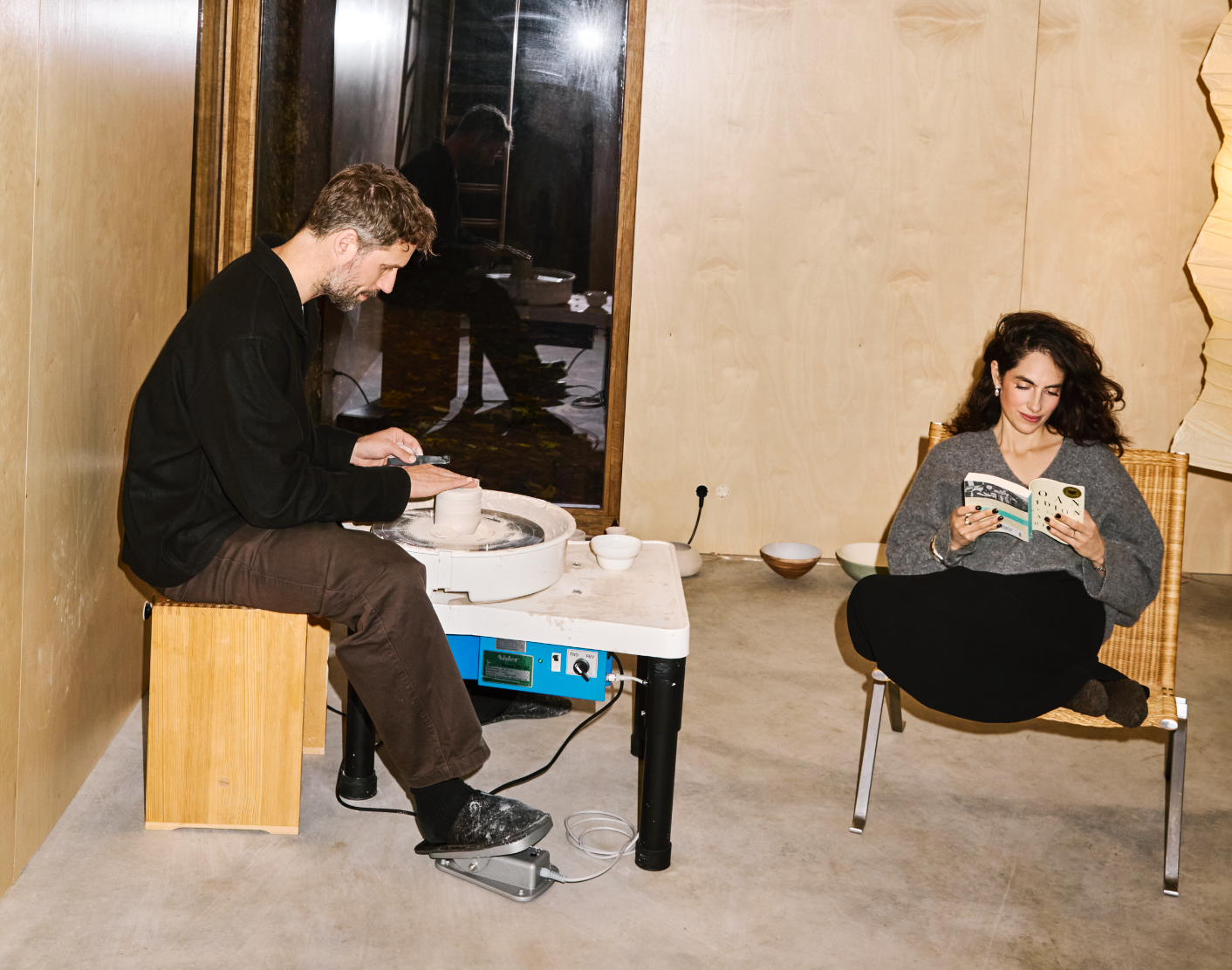
GA I think we both needed a 'completely blank space.' We grew up in different environments, but we had both always lived under the pressure of having to fit into some framework or image. So we wanted a place with no expectations or standards whatsoever—a space where we could build something entirely our own. In that sense, nature is the perfect environment. It's the one place in the world that doesn't force you into 'what you should become.' Without outside interference, you can focus entirely on yourself, your thoughts, your vision. That's why everything we do and every action we take here truly feels like it 'comes from ourselves.' In a world moving as fast as it does today, I think the gift such an environment offers is truly immense. For a creator, it's genuinely a great blessing. RH Over more than 20 years of working as a graphic designer, at some point I increasingly came to realize the importance of 'making things with my hands.' Even when we lived in the city, I found great joy in the process of fixing up the house little by little myself. I also maintained a steady interest in architecture and furniture. In that sense, this site is, for us, 'a space where we can design life itself.' The picnic table we used all summer like a living room was also something we made ourselves for a Nowruz party, the Persian New Year festival. Recently I've also started doing ceramics.


©Valentina Vos
©Valentina Vos


How does your current life in the forest balance with work?
RH I've worked from home ever since the pandemic, but after the cabin was completed, I decided to clearly separate my workspace. Now I go into the office three times a week for graphic design work, and the rest of the time I spend at home thinking about what kind of life we want to live, what we need to do for that life, and how to cultivate this site. GA I'm a writer, so it's a little different for me. I write in the cabin too. But since coming here, the way I work has changed. We deliberately didn't install internet in the cabin. That's so I can decide for myself 'when to connect and when to disconnect.' So these days I write with a pen instead of a computer. I really love that time of quietly writing letters onto the page with a cup of coffee beside me in the cabin.
You named the PK22 as the very first piece of furniture you wanted in this cabin. When did you first have this chair in mind?
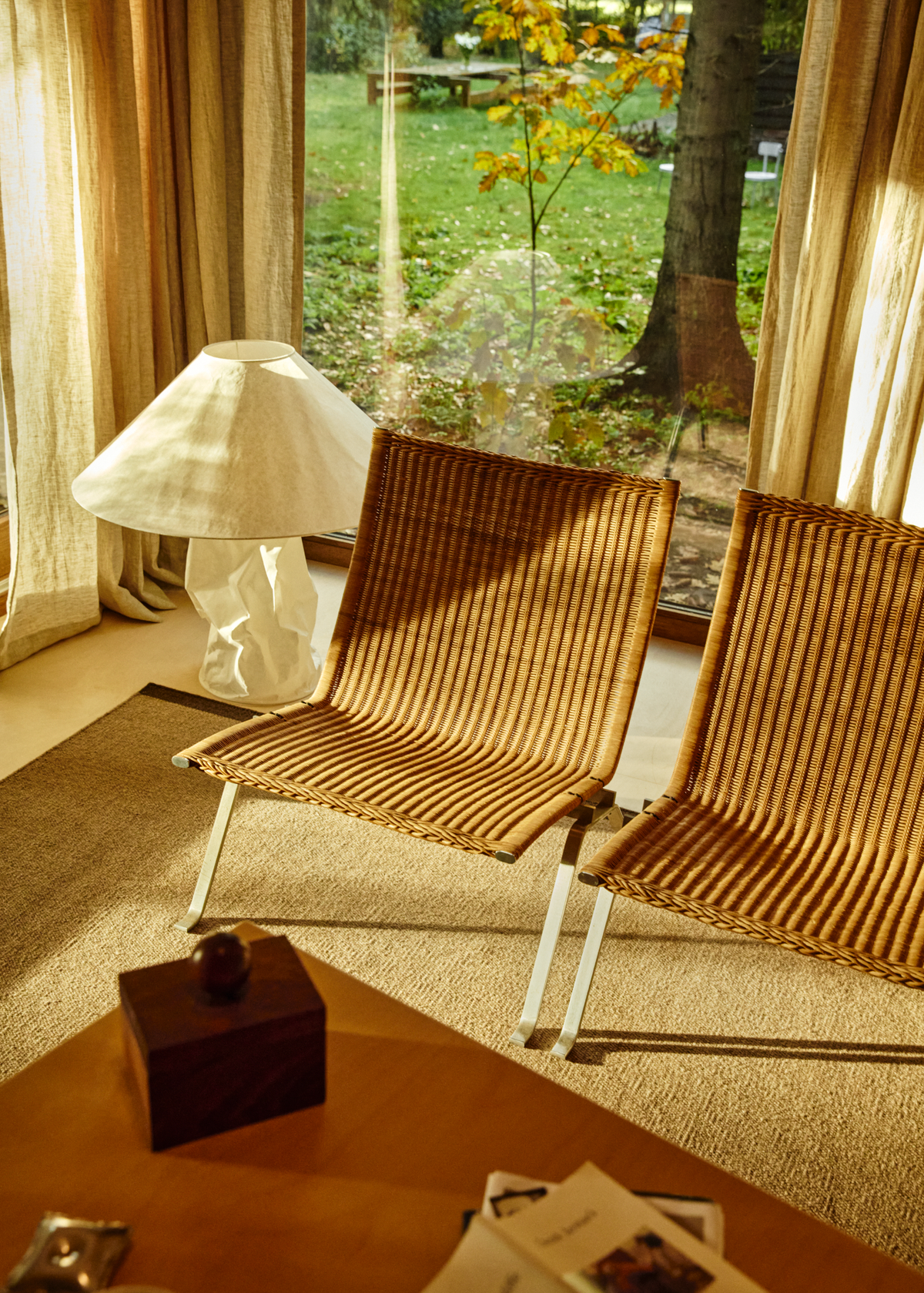
GA When we started thinking about how to fix up the cabin, we made a great many mood boards. Rather than searching for specific pieces of furniture, we focused on gathering images of the impression, materials, textures, and overall atmosphere of the space we envisioned. Then we discovered the 'Cane version' of the PK22 and felt certain. We thought, 'No matter how we decorate the cabin, this chair absolutely has to be here.' In fact, the PK22 is the first and only piece of furniture we bought for the cabin. We wanted this cabin to have a timeless atmosphere—so much so that you couldn't tell whether it was a space just built or one that had existed for 30 years. The PK22 was exactly the right chair for that intention. Rather than being an eye-catching design, it naturally blends into the space while completing the overall balance with its own distinct presence. RH I originally liked the leather-seat version of the PK22. But I thought the cane version would suit this cabin better. I felt that the combination of steel and natural materials captured both of our tastes at once. We share the same broad direction in how we view a space, but the impressions we pursue are a little different. I like minimal, structural forms like Donald Judd's, while Azad has a softer, more delicate and elegant aesthetic. Curiously, those two sensibilities blend beautifully within this cabin, and I think the cane version of the PK22 is the very piece that most perfectly embodies that harmony.
I'm curious about the time you spend sitting in the PK22.
GA It took about two years to design and build the cabin. When it was nearly finished, we brought in a pair of PK22s as our first furniture. At that point the floor and walls were still covered in plastic and tools were scattered all around. It was a messy situation, but we placed the chairs in the middle of the space, sat down side by side, and had our first coffee and breakfast. In that moment we finally realized, 'This really is our home.' Now those chairs are in my studio, and when we take a break from doing ceramics or writing, we sit in them together and talk.


©Valentina Vos
©Valentina Vos


Azad, based on your experience of moving from Iran to the Netherlands as a child, you've often explored the meaning of 'home' and 'belonging' in your work. Moving to the cabin feels like putting that long exploration into practice.
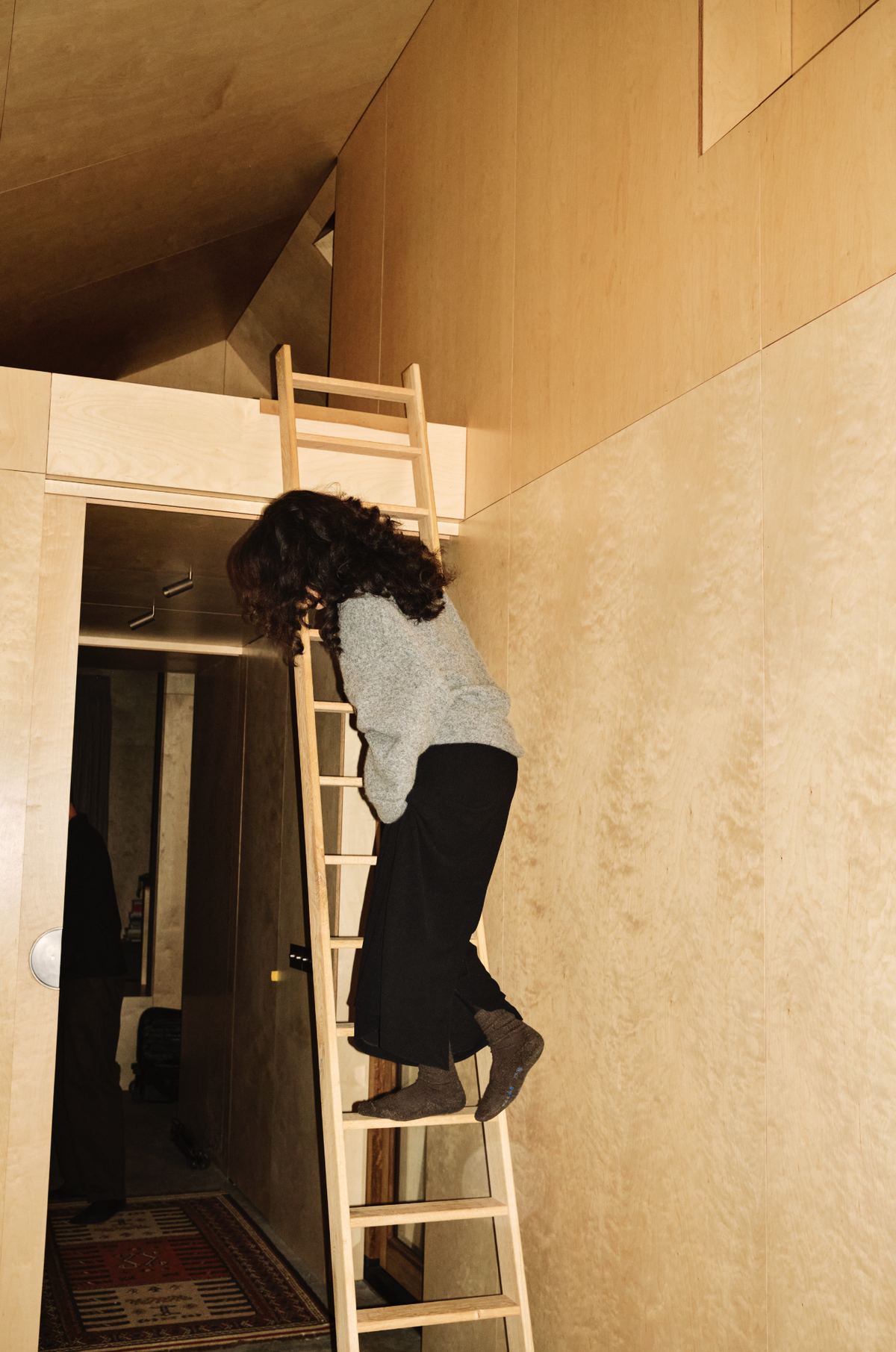
GA Hulzen and I had very different childhoods. Hulzen spent a relatively stable childhood in the Netherlands, but for me, having moved with my family to a different country and culture, it was the opposite. Even so, we share the common experience of growing up carrying a feeling of not fully belonging anywhere. So when we first designed this place, I told the architect, 'I want to create a 'nest' of our own.' As a result, this cabin was designed as an entirely open space. Two large spaces on either side of the kitchen flow together without boundaries, and their function changes freely depending on use. Even the bathroom door has a hidden handle, so only those who know can open it and go in. You could say the desire to live in a way that's true to ourselves is reflected exactly in this space. We envisioned a space that could change at any time, one with breathing room, and it was completed just as we hoped. RH The same goes for the main house, where construction has just begun. We didn't divide it into a living room and bedroom either. Instead, we placed one large kitchen and a few cozy corners to sit in. We thought the sense of being able to move and rest freely, beyond the designated function of a space, is what matters most in a home.
Since this is a home the two of you—with different cultural roots—are building together, I imagine those backgrounds naturally come through in the space and your work.
GA Yes, that's right. Being Persian, I always had carpets at home from childhood. In our culture, a carpet is something that adds warmth to a space, a kind of symbol that finally makes it feel like it has 'become a home.' The floor of this cabin is concrete, and the walls and ceiling are pale-colored wood, so there's a slightly cold feeling to it. That's why I laid a wool rug in the writing space, and in the hallway toward the kitchen, an old Kilim rug that my mother brought back herself from Tehran. Through this rug, the sense of home I felt as a child and the space I'm now creating in the Netherlands seem to connect naturally. This is just my personal view, but I think any space becomes much warmer when a carpet is placed in it. RH I was influenced by my father, who did ceramics for a long time. He's actually my ceramics teacher now, too. After the PK22, the very first thing we brought in was pottery that my father made. At first we just placed it on the floor, and also in the kitchen and other spots. Now it's arranged on the rug together with my own ceramics. I think, unconsciously, we both naturally wove objects connected to our respective families and cultures into this space. In the end, these three things—chairs, ceramics, and carpets—became the most important and meaningful presences to us.
How do you plan to cultivate this cabin going forward?
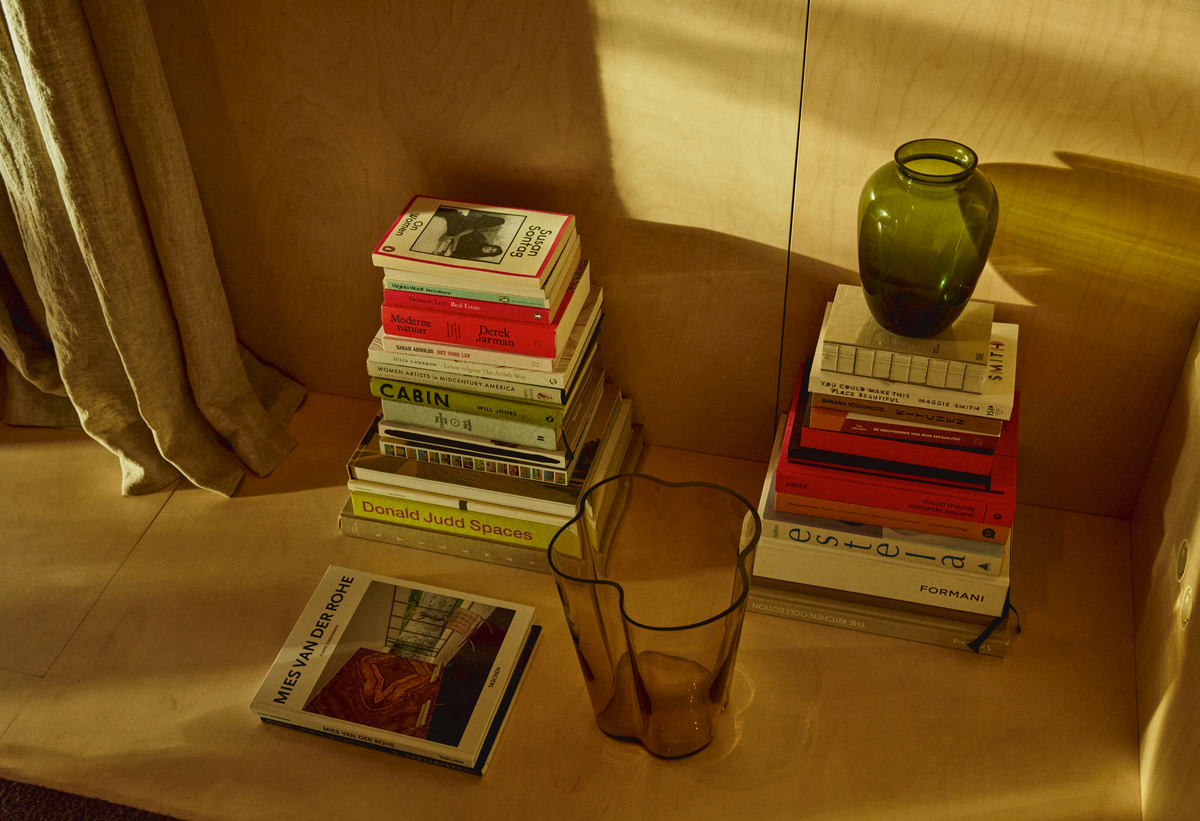
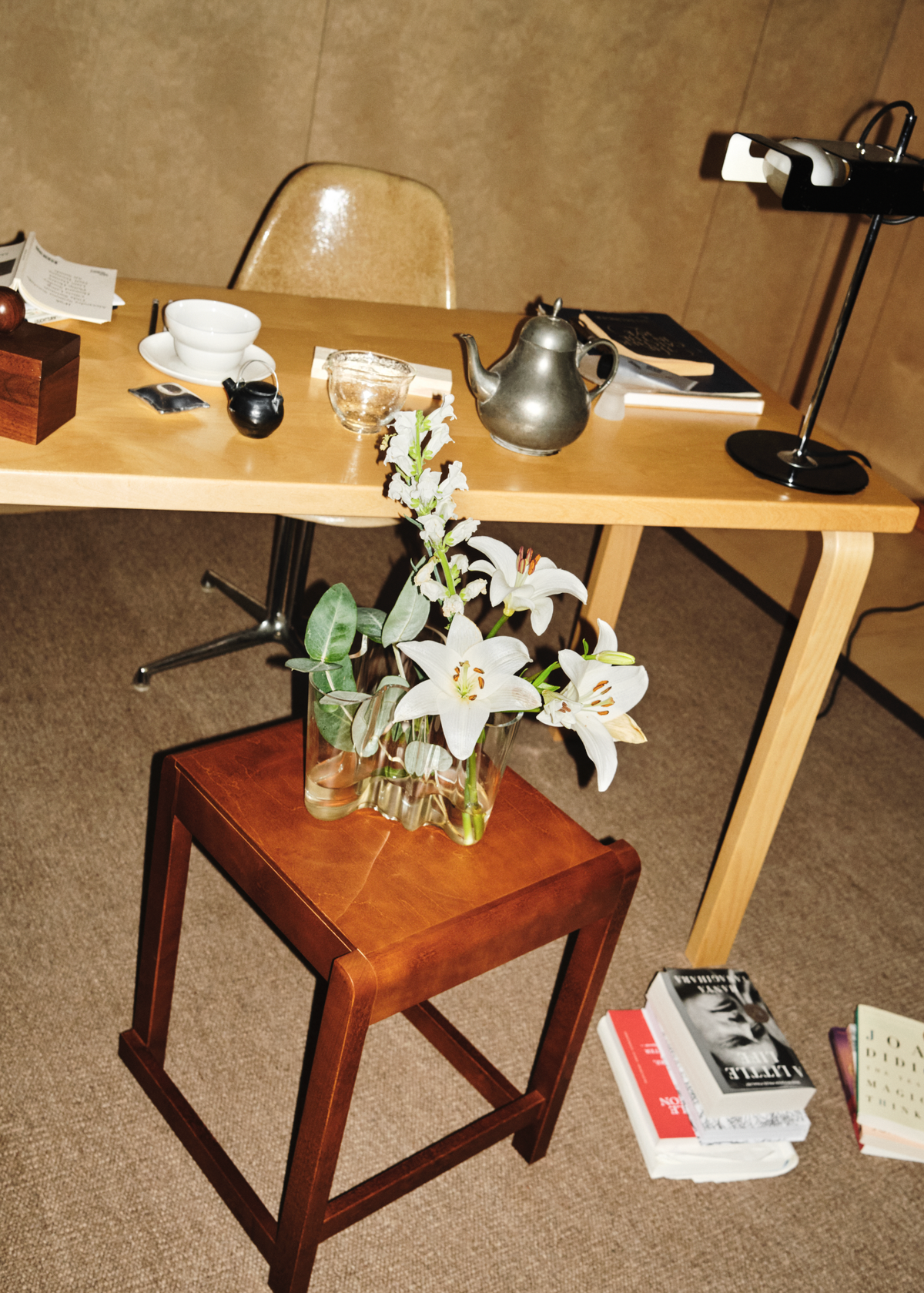
RH We plan to stay in this cabin during the several months it takes to renovate the main house. For that time, I'm planning to fit out the small loft space inside the cabin as a bedroom, arranged so that you can lie in bed and see the stars through the window. GA I want to set up a bookshelf to create a reading space, and add a larger desk along with more of Hulzen's ceramics. With winter approaching, I'm thinking about things to add inside the cabin so we can stay more warmly and comfortably.


©Valentina Vos
©Valentina Vos


Want to dive deeper?

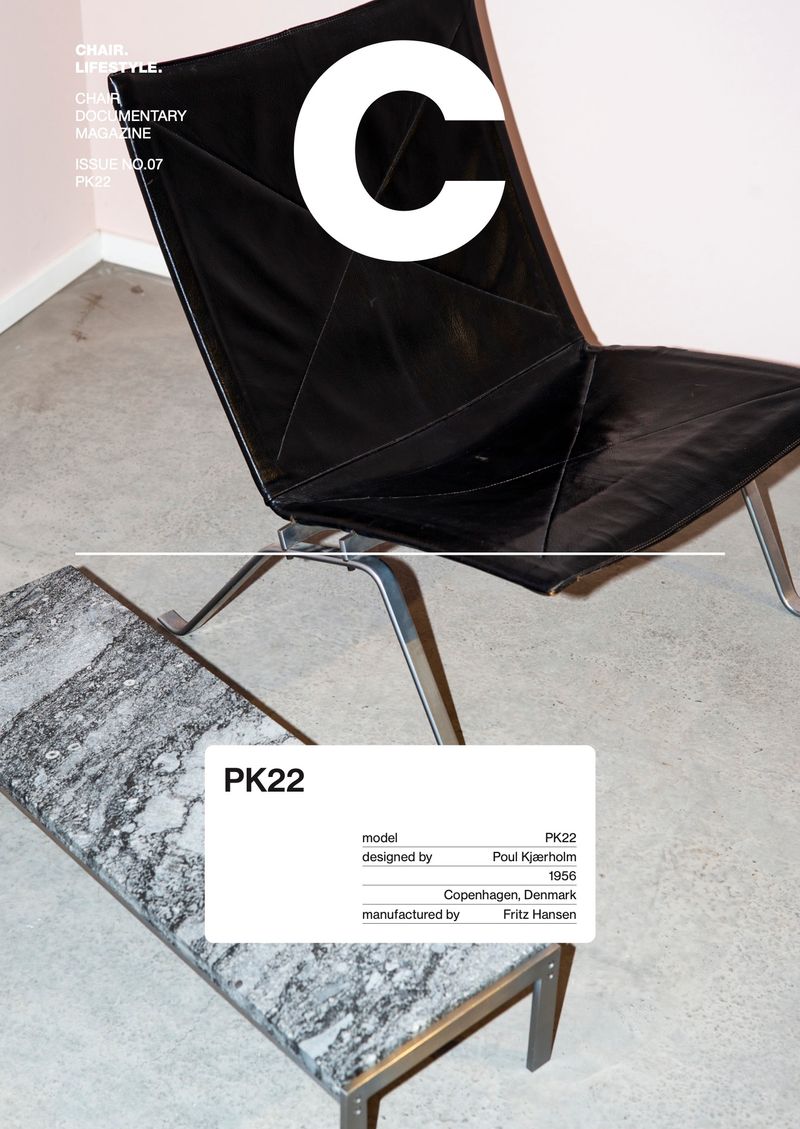
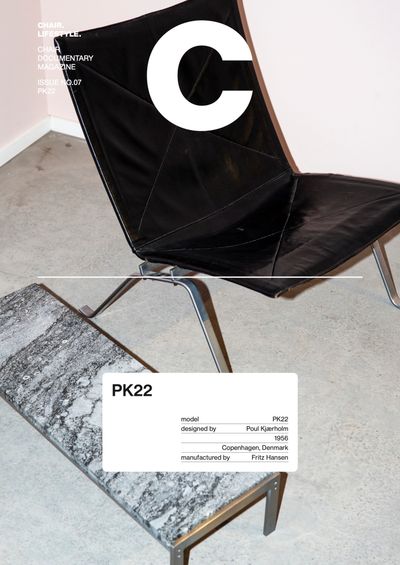
Magazine C PK22 cover

Issue.07 PK22

Introduced in 1956 by Danish designer Poul Kjærholm, the PK22 is concise and clear. Designed so that material and structure become form itself, every element of the chair—from the steel frame to the leather and screws—works functionally while shaping its sculptural identity. A defining work of Kjærholm's design philosophy, which extended the precision of traditional Danish craftsmanship into a modern formal language, it is a chair that blends naturally into any space while exerting a quiet presence.

Related Stories