The Critic Duo Who Dissected a Thousand Chair Designs

Editor Sunjin Kim | Photographer Kane Hulse


Charlotte and Peter Fiell are world-renowned design theorists and critics who have co-authored some seventy books on design, published in more than twenty languages. They studied at Sotheby's Institute in London and ran a gallery in the city centered on mid-century furniture, and over the past thirty-five years they have analyzed and researched the field of design — not only furniture but graphic design, fashion, architecture, and photography. In their books, the Louis Ghost appears as a chair that succeeded at "structural unification," the keyword running through chair design, and as the chair that led us to rediscover the greatness of plastic.

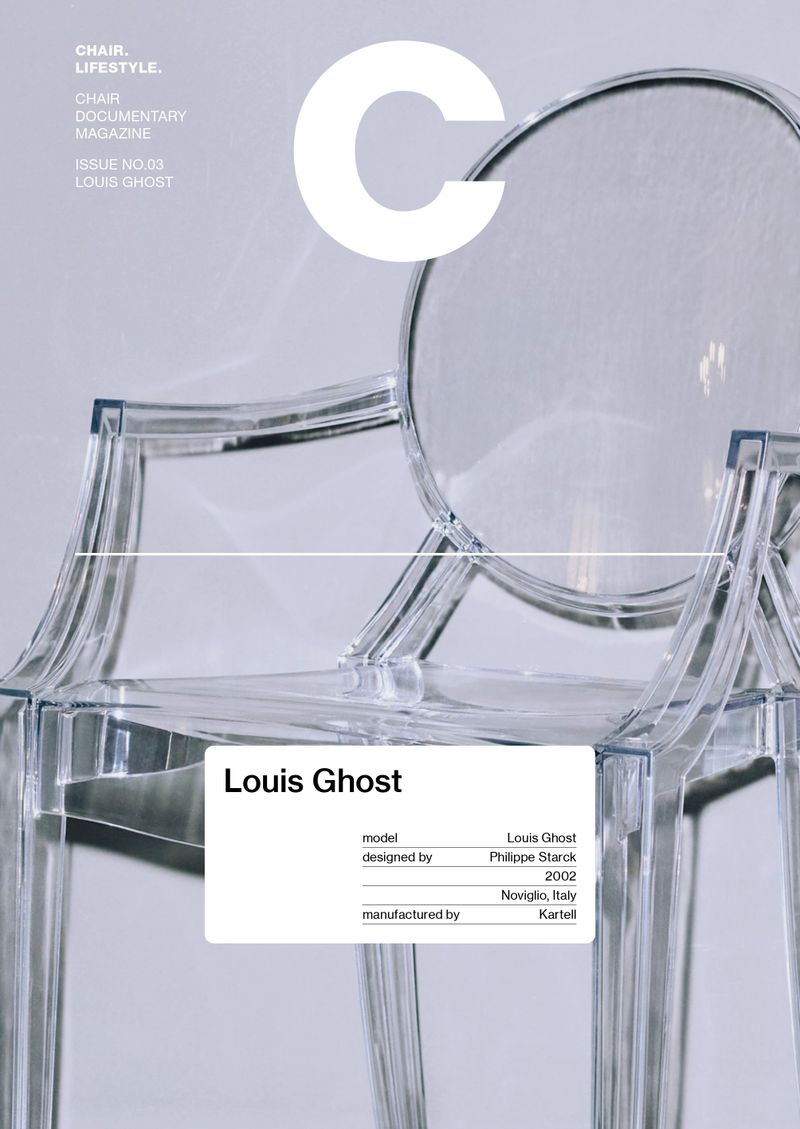
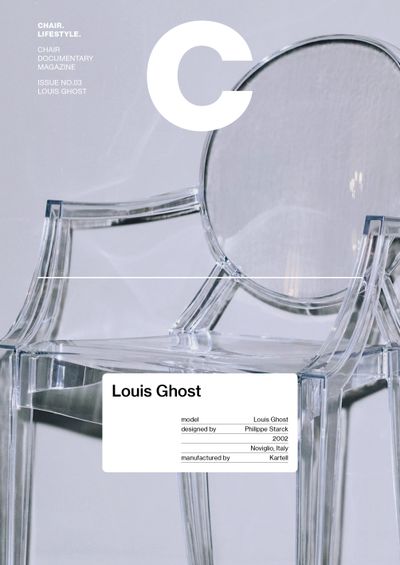
This interview appears in Magazine C Issue 3, "Louis Ghost."

1000 Chairs, which gathers the stories of a thousand chairs, has enjoyed unwavering popularity since its publication in 1997. We would love to hear about the time you were making the book.
It was when we were running our gallery on King's Road in London. One day Benedikt Taschen, the founder of the art-book publisher Taschen, came to see us and asked whether we had any ideas worth publishing. Shortly afterward we visited his office in Cologne and walked him through the synopsis of 1000 Chairs, which we were developing at the time, and Taschen decided on the spot to publish it. That was the beginning of our long relationship with Taschen. 1000 Chairs was a hit as soon as it came out and became by far the most successful bestseller of all the books we have written. Nearly thirty years have passed, and it has never once gone out of print.
What was the idea that first set the book in motion?
We wanted to attempt a sweeping, comprehensive survey of a single product type — an approach close to the eye of a design collector or connoisseur. It may be hard to imagine now, but this was before the internet became widespread, so we gathered material on a thousand chairs by visiting museums, libraries, manufacturers, design studios, and auction houses. We arranged them in an order that considered era, material, and design movement, and condensed everything — design and production year, designer, manufacturer, materials, dimensions — into a single volume. Since then we have continued new series with Taschen, including 1000 Lights, Ultimate Collector Cars, and Motorcycles. Right now we are writing a book on vintage watches.


©Taschen
©Taschen
Why did you choose the chair as your first subject?
The chair's function — sitting — has stayed the same while its shape, color, materials, and technology have kept changing, which makes it well suited to showing the flow of design history. Even someone who knows little about design can leaf through 1000 Chairs and naturally recognize that its forms and styles have evolved without pause. It is also fascinating how vividly each chair reveals its designer's character and cultural background. Alison and Peter Smithson, the husband-and-wife architects active in Britain in the 1960s, said of Ludwig Mies van der Rohe's chair, "The Miesian city is implicit in the Miesian chair." Isn't it remarkable that you can look at the shape of a chair and imagine the world its maker inhabits? This is possible because the chair is a condensed object, carrying meanings varied enough to reward inference and interpretation.
Philippe Starck's Louis Ghost, the subject of Magazine C Issue 3, appears on page 589 of 1000 Chairs. What context and meaning does the Louis Ghost hold within a chronicle of chairs explored across more than six hundred pages?
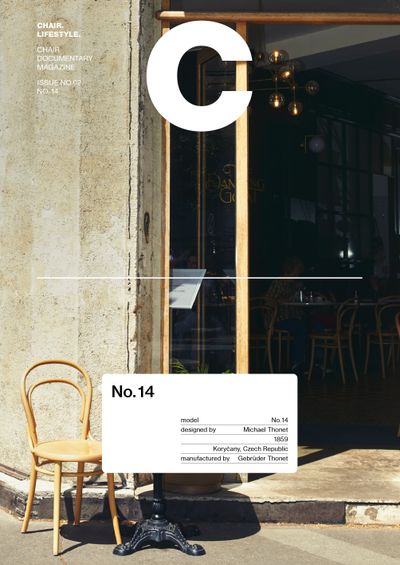
When we first received an email from the Magazine C editorial team asking to interview us about the Louis Ghost, we thought it was a very interesting choice. The Louis Ghost has appeared not only throughout our books but also in a lecture we gave at Thomas Heatherwick's studio in 2016. We consider it important as a chair that realized "structural unification." In design theory, objects of "single form, single structure" — like the Louis Ghost, a one-piece chair made from a single material, transparent polycarbonate — are said to have achieved structural unification. Arne Jacobsen's Series 7 Chair with its one-piece shell and Eero Saarinen's Tulip Chair, which merged the legs into a single pedestal, belong here as well. We feel an instinctive satisfaction when we look at such objects. They are not only visually beautiful but also the most efficient forms in terms of material, energy, and cost. Achieving this took more than a century of research and experimentation after Michael Thonet's Chair No. 14, and out of that process came the most important chairs aesthetically, technically, and commercially. Structural unification became a powerful force driving the chair's evolution — and the Louis Ghost is one of its success stories.
How do you assess the Louis Ghost's transparent design, which used what was then an innovative material, clear polycarbonate? Transparent chairs existed before — Giancarlo Piretti's Plia Chair, Shiro Kuramata's Miss Blanche Chair — but none was completely transparent like the Louis Ghost.
Transparent design has captivated people by offering a lightness and sense of space that wood or steel furniture cannot. It feels relatively familiar now, but in the early 2000s everyone marveled at the Louis Ghost's transcendent allure. It has an elegance that seems to ask to be handled with care, and it is a jewel of a chair that transforms a room into something special. This is a noble design born of handling plastic responsibly and intelligently — not an effect we can expect from just any plastic chair.
What if the Louis Ghost had been made of wood or steel?
It would have been a completely different chair. Since it follows the Baroque style, wood would have made it look like a cheap antique imitation, and metal would have given it a terribly cold impression.


©Carlton Publishing
©Carlton Publishing
The Louis Ghost also appears in Plastic Dreams, your book tracing the development of plastic design through some 120 products. How do you evaluate the Louis Ghost as a plastic chair?
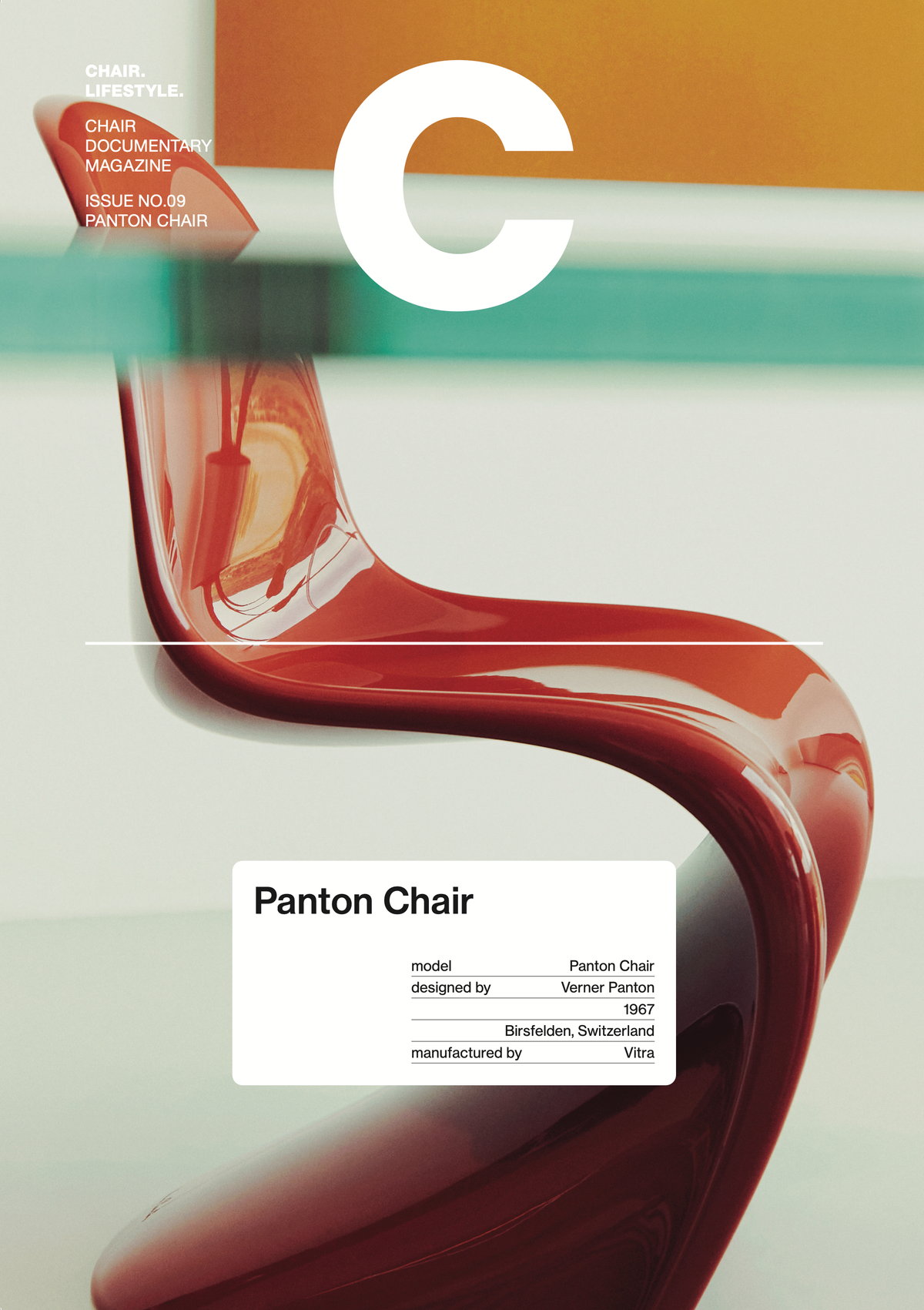
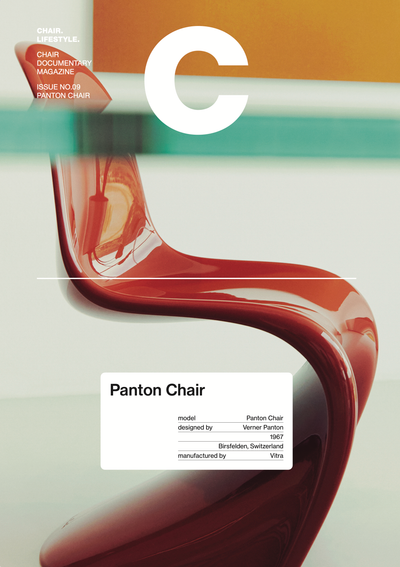
The Louis Ghost symbolizes the "rediscovery" of plastic. The development of plastics is directly connected to how the concept of the chair has evolved artistically. Each time a new plastic material appeared, sturdier and more beautiful furniture followed. Polyurethane foam, for instance, made it possible to design sculptural, organic forms without springs or an internal frame. So excellent plastic chairs existed before the Louis Ghost was released. The shell chair group by Charles and Ray Eames, the first chairs mass-produced in plastic, achieved enormous commercial success with beautiful form at a reasonable price. Verner Panton completed the Panton Chair — the first single-piece plastic cantilever chair, which graces the cover of the revised edition of 1000 Chairs — pulling off one of the most important structural challenges in the history of the chair. The Blow armchair, designed by Jonathan De Pas, Donato D'Urbino, and Paolo Lomazzi, expanded the chair's function further by introducing a concept that was rather pointless as a chair yet innocent and intriguing. But from the late 1960s, as cheap, shoddy products like the Monobloc chair began to appear, the standing of the plastic chair fell fast. Products that ignored plastic's aesthetic possibilities and maximized only convenience and economy stirred misgivings about the material, and through the 1980s and 1990s, compounded by the oil crisis, plastic design struggled. Then, in 2002, Kartell and Philippe Starck together created a technical masterpiece: the Louis Ghost. That was when we were reminded that plastic could yield design of a far higher order of value.
Some see the Monobloc as meaningful in its own right — the most democratic of chairs. What criteria do the two of you use to distinguish a great plastic chair from a poor one?
It's simple. Design and engineering tell them apart easily. The Monobloc is a chair concerned solely with cutting costs. It uses plastic of such low quality that it cannot be recycled, and its rock-bottom price means it is treated almost as disposable. However widely it may be used, it is dreadful to think of the countless Monobloc chairs discarded after a few years. The Louis Ghost, by contrast, uses high-quality transparent polycarbonate that is easy to recycle, hygienic over long use, and highly durable. Making a plastic chair of this caliber requires advanced technology and engineering, and the investment in product research, prototyping, and repeated testing is enormous. What's more, at £642 (about 1,142,500 won), the Louis Ghost is fairly expensive for a plastic chair. You might think a chair mass-produced by machine ought to come down in price, but in fact that isn't so. Considering what Kartell invested to perfect the Louis Ghost, the pricing is entirely reasonable. It is also strategic in that there is no reason to sell cheaply a chair perfected through outstanding design and engineering.
That seems to be why Kartell is said to have made plastic a luxury. Philippe Starck's fame played a large part in this as well.
Of course. Because plastic chairs demand heavy investment, manufacturers typically enlist seasoned designers who can offer confidence of success — which is why creating a plastic chair is a great achievement for a designer, too. Kartell's collaboration with Philippe Starck from the late 1980s was an utterly natural choice, we think. He was the figure who announced the start of the era of the so-called "global designer," and with one worldwide success after another he showed a presence far more striking than contemporaries like Marc Newson, Ross Lovegrove, and Jasper Morrison. In this context, the Louis Ghost can also be called an icon of the period when national design identity was expanding into a global one.
©Kane Hulse
©Kane Hulse
Then how do the two of you view and interpret this chair — designed by a Frenchman and made by an Italian manufacturer — in terms of national design?
That's an amusing question. Judging only by its look, inspired by French palace chairs, or by the designer's nationality, you might call it French design — but the Louis Ghost is unmistakably Italian design. Italian design has the power to claim even things not made by Italians as Italian. (laughs) Above all, the Louis Ghost is a thoroughly "Kartell" chair. Had Kartell not made it, this chair would not exist. Very few manufacturers understand making plastic furniture as well as Kartell does.
Even though it was completed with a world-class designer's ideas and innovative engineering, the Louis Ghost is a popular chair, far removed from being a "collectible piece." Do you think this status could change?
The success of the Louis Ghost is tied not only to its designer's fame and its engineering but directly to mass production. It could establish itself as a product for the many because efficiency was maximized in development and manufacturing — and it is in the same vein that the best-selling chairs in furniture history are mostly plastic. Collectors, on the other hand, usually celebrate a product for its rarity. If the Louis Ghost — a chair beloved worldwide, with phenomenal sales — ever became scarce enough to be a "collectible piece," that would be a truly dismal situation. We would rather not imagine the remaining hundreds of thousands of Louis Ghost chairs being found abandoned in landfills!
Then in a world already saturated, in an age of overconsumption, how do you think we can continue to advance design?
There is a fascinating chair we came to know while curating The Creative Circle: Eco-Conscious Design and Craft, an exhibition at the Court Barn Museum in England. The Rex chair by Dutch designer Ineke Hans is not only made from recycled industrial waste; you can use it for as long as you like, return it, and get back your £20 deposit (about 35,600 won). An ingenious idea. Like the Rex chair, we must keep thinking of ways to keep the world from filling up with clutter. To designers, we would say: take the Danish furniture maker Carl Hansen & Søn as your lodestar — they make products that can endure across generations. Above all, the way we consume will need to change. Shopping secondhand or inheriting old things is wonderful, but we cannot avoid buying new things entirely. So we believe you should buy things of the best possible quality, good enough to use for a lifetime. Buying a plastic chair today could never quite be called ethical. But if you are going to buy one, choosing the Louis Ghost — beautiful and made to last — would be a good choice.


Want to dive deeper?

Magazine C LOUIS GHOST cover

Issue.03 LOUIS GHOST

Designed by Philippe Starck and produced by Kartell in 2002, the Louis Ghost has won worldwide acclaim as the very definition of a beautiful, sturdy, light, and transparent chair. Its classic design, modeled on an eighteenth-century Baroque chair, and the innovation of a single-mold polycarbonate body created an iconic chair of the century—transparent yet unmistakably present. Rather than commanding attention with flamboyance, it quietly gives way to its surroundings with a serene beauty, complementing any space and serving anyone in whatever way they wish. The reputation of this finely made plastic chair endures to this day.

Related Stories