A Chair That Holds Both Switzerland and Japan

Editor Sunjin Kim | Photographer Alicia Dubois


Since its founding in 2004, BIG-GAME has collaborated with global design brands including Alessi, HAY, MUJI, and Nespresso. Led by three friends of different cultural backgrounds — Augustin Scott de Martinville, Gregoire Jean Monod, and Eric Petit — the studio creates designs that are simple, functional, and visually delightful. Through KNS, the line Karimoku Furniture launched in 2009 to focus on sustainable wooden furniture, they weave together seemingly disparate elements — craftsmanship and cutting-edge technology, Swiss design and Japanese manufacturing — realizing the vision of “world-class furniture made from local wood.”

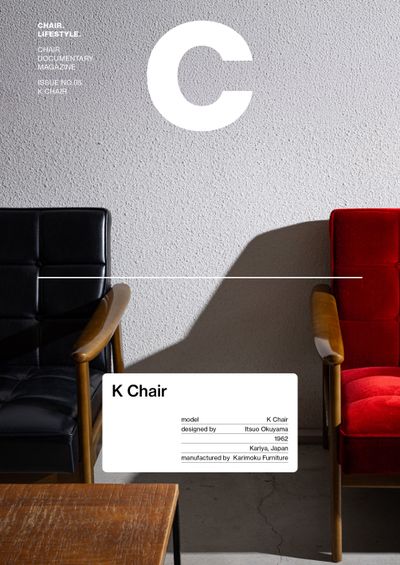
This interview appears in Magazine C Issue 5, “K-Chair.”

©Alicia Dubuois
©Alicia Dubuois
What was your first impression of KNS and Karimoku Furniture?
It was fascinating in many ways. The brand is world-renowned now, of course, but at the time it was a truly quintessential Japanese company. Yet whenever we talked with Japanese people, everyone knew Karimoku Furniture — even in small rural villages, everyone recognized the name. That stayed with me for a long time. I was also struck by their deep respect for design as a discipline. Before we began the collaboration, we received a remarkably detailed briefing on the project, and as we continued working together year after year, we came to realize just how exceptional they are. Japan's traditional woodworking techniques are famously refined, but working with KNS, we experienced their state-of-the-art incarnation.
Could you tell us more about that?
KNS was quite open about what kind of product we designed, but their conditions for the wood were very specific. Most manufacturers say, “We want a chair like this — you choose the material.” KNS said, “We have this material — please make something with it.” They had robots, 3D software, and advanced manufacturing technology that could efficiently combine small-diameter timber, which is rarely used for furniture because of its size. We loved that they made high-quality products in a sustainable way. So many companies tout sustainability but fall short on quality, or have no interest in sustainability at all. KNS sat squarely in the sweet spot where both come together.
The Castor series, created in collaboration with KNS, harmoniously reveals both KNS's identity and BIG-GAME's simple design language. What did you consider most important in this series?
Our top priority was to make furniture that was comfortable, compact, and light. We also thought through details that add convenience: the stools and chairs are stackable, and the tables can be disassembled for shipping and placed together in multiples. The goal was to maintain a simple, unified design overall while achieving a high level of refinement with KNS. Because the Castor series has such a thin, light form, making each wooden part stable was especially difficult. Our designs often look simple but are actually hard to build, and they fully understood that difficulty and made it happen. They never imposed anything on the design. Whenever we hand over technical drawings or 3D files, they always do their utmost to reproduce them as faithfully as possible. When they made the first prototype, they told us, “There's about a one-millimeter deviation. We're sorry” — a difference barely visible to the naked eye. (laughs)
©Alicia Dubuois
©Alicia Dubuois
We heard you also referenced traditional Swiss and Japanese furniture forms when designing the Castor series. Why did you want to incorporate these cultural references, and how did you apply them?
With the Castor chair, you could say details we found around us worked their way in naturally. We wanted it to feel like an old Swiss café chair that stays comfortable however long you sit, so we borrowed the angle and dimensions of the backrest directly. Japanese culture offered so much to draw on. For one, Japan places tremendous emphasis on functionality in design — things have to work well and be practical. So we wanted a chair that was genuinely comfortable to sit in yet didn't take up much space. Public spaces and homes alike are often short on room, and we didn't want to make bulky furniture. We designed the pieces to be stackable — and to look good even when stacked. KNS never actually asked for that feature. We first made a stackable stool, then thought we should apply the idea to a chair, and it expanded naturally from there. Starting with the stool design, we developed the Castor series' design language year by year: a chair the following year, then a table, then a low chair, a sofa, and so on.
Having developed one series continuously for more than a decade, you embody Karimoku Furniture's motto that “furniture should live as long as the tree it was born from.” What has it been like to evolve a single series over such a long time?
The Castor series has grown very slowly, like an oak tree. Adding one new product with KNS each year meant we could consider and engineer every single piece with real care. As a result, the pieces all belong together like a family while each carries its own story: a bar stool whose backrest doubles as a handle, a low chair with meticulously lacquered armrests, a kids' chair that isn't simply a shrunken adult version but entirely re-proportioned. Because the series was crafted over such a long time, we hope that devotion is reflected in the products' lifespan as well. When you design many products at once, their quality tends to be uneven; the Castor series, thanks to the time and care invested, shows a consistent level of finish that remains satisfying even after years of use. A few years ago, Kenmei Nagaoka saw the Castor chair and called it long-life design — the best compliment we've ever received!
KNS harmonizes seemingly opposing elements — craftsmanship and cutting-edge technology, Japanese engineering and Swiss design. How do you think these qualities connect with BIG-GAME's design philosophy of being “simple, functional, and optimistic”?
When we first visited the Karimoku Furniture factory, I was deeply impressed by how astonishingly orderly and clean everything was. What struck me most was seeing industrial robots and artisans working side by side in the same space. Letting robots do what machines do better and leaving to human hands what only they can do is, I think, a wise way to enjoy the best of both. BIG-GAME values that balance greatly as well. We believe it's important to use advanced technology without forgetting cultural heritage and the spirit of handcraft. Our use of the word “optimistic” can be read in this light — an attitude of building a positive future where technology and tradition hold each other in balance.
BIG-GAME has collaborated with companies and design brands around the world, from Korea, Japan, Hong Kong, and Taiwan to France and Italy. What are your criteria for choosing partners, and was there something special about Karimoku Furniture?
From Opinel, the family-run French knife maker, to Rado, the Swiss multinational watch brand, we enjoy working with companies that hold real expertise in their fields. At the heart of it all is a deep affection for objects. We place great value on long-term relationships, and in that respect Karimoku Furniture suited us perfectly. Their impeccable art direction also gives us confidence that the products will always be presented beautifully. In communication, we value humility: taking every task seriously without taking ourselves too seriously. We believe that attitude is what makes a good collaboration.


Want to dive deeper?

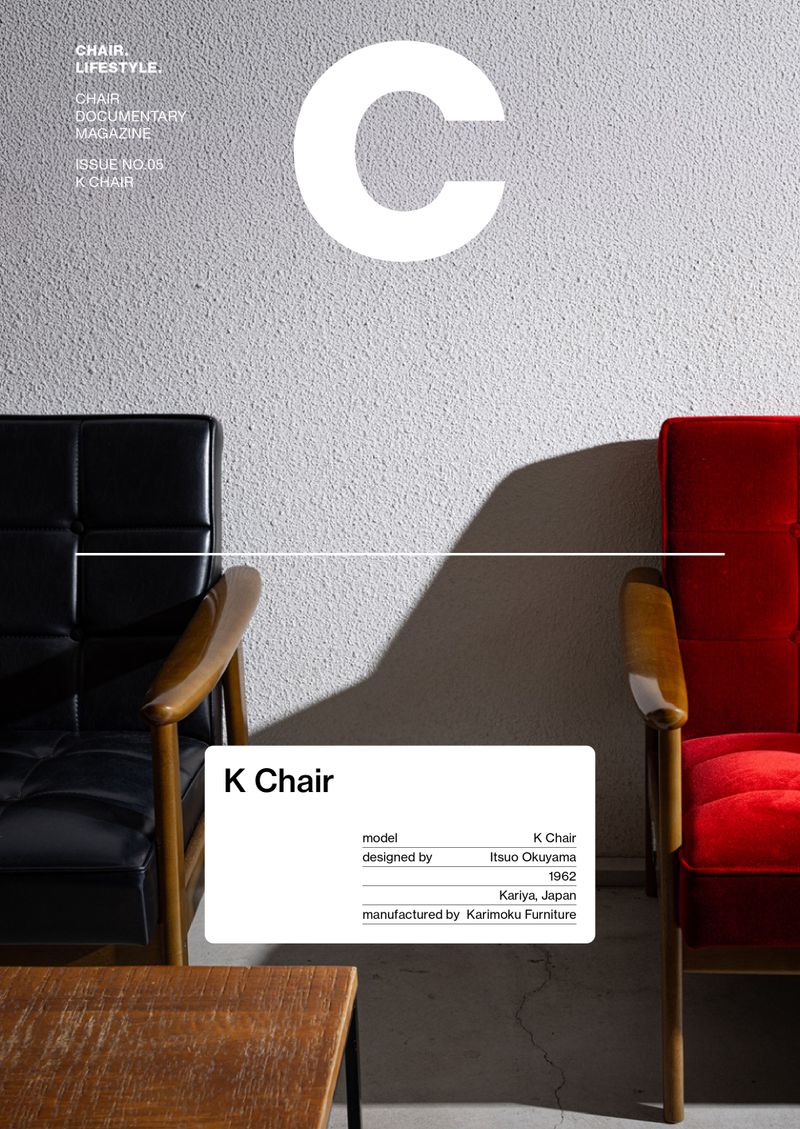
Magazine C K Chair cover

Issue.05 K Chair

Introduced by Karimoku Furniture in 1962, the K Chair is a 'long-life design' product—simple, sturdy, and true to the essentials. A symbolic chair that established Karimoku's quality standards and philosophy of craftsmanship, care, and sincerity, it became widely known in 2002 when designer Kenmei Nagaoka rebranded it as the K Chair of Karimoku 60. Easy to repair thanks to its detachable, reassemblable structure, and possessed of a charm that does not fade with time, the K Chair invites us to rediscover the beauty and value of ordinary, everyday objects.

Related Stories